Working Within Cultures and Contexts – Lessons Learned
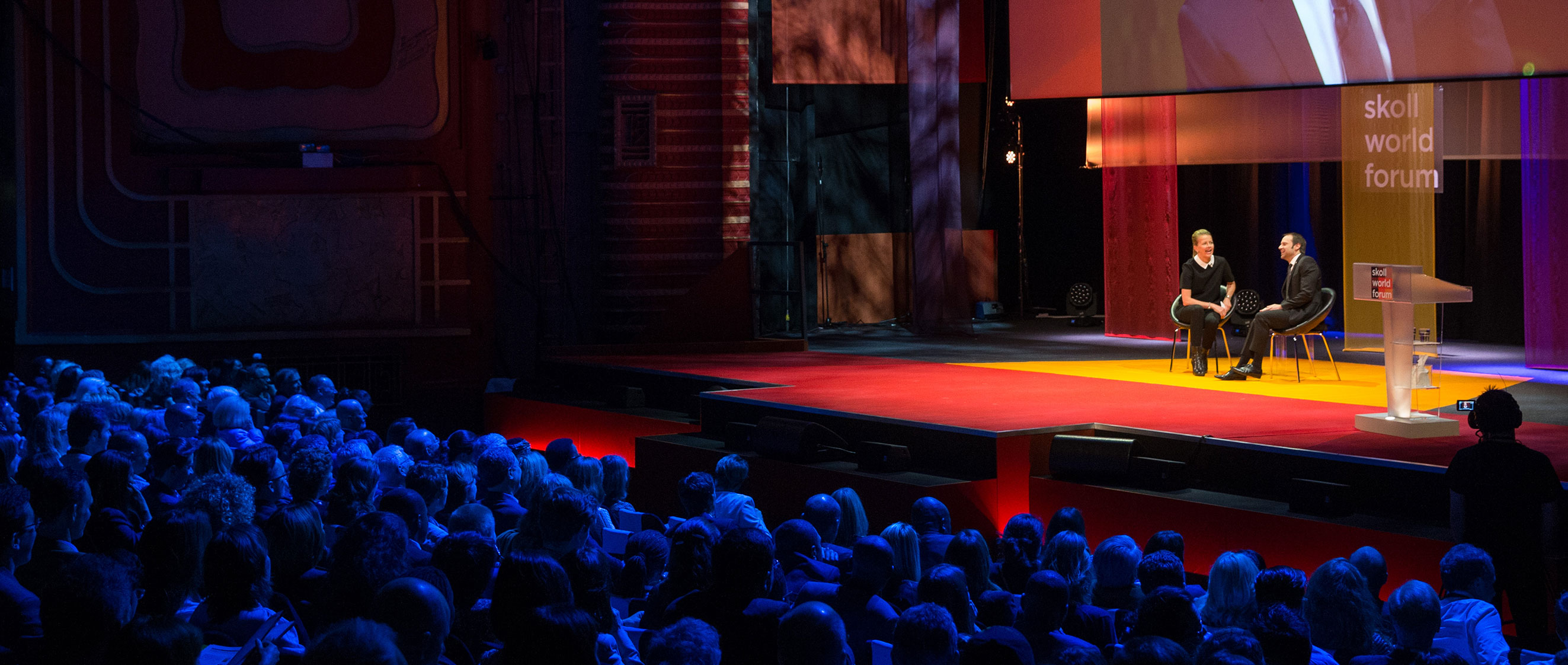
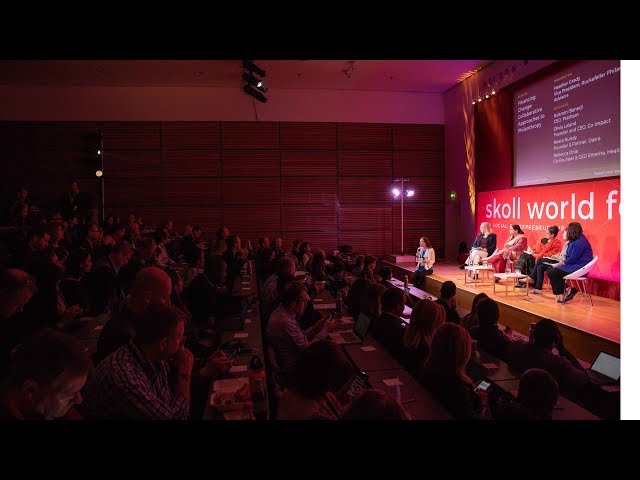
This panel at the 2008 Skoll World Forum was entitled: Working Within Cultures and Contexts – Lessons Learned. David Bornstein moderates, and panelists were, from left to right: Rupert Howes, CEO of the Marine Stewardship Council; Fiona Muchembere, program manager of institutional development at CAMFED; Vicky Colbert, founder and director of Escuela Nueva Foundation, and Jacqueline Novogratz, founder and CEO of the Acumen Fund.
With: Rupert Howes, Fiona Muchembere, Vicky Colbert, Jacqueline Novogratz
this is title panel and check my collar. Really at the of social entrepreneurship which is really about eliciting change in the world, not imposing it, but bringing change in a very natural way and I am just reminded by a very very brief anecdote. I was interviewing someone who is in the business of trying to get people well in a developing world to use very cheap water filters on a regular basis.
And they said "We tried. We would talk about health benefits for their family and so forth.". And then somebody the local person said, "Well, why don't you try asking people to get the water filters, so that they would have the privelege of serving filtered water to their guests?" This was in India and this was actually are more effective than all of the other sales pitches that have been previously used.
And so there's a whole cultural value set a hundreds of years of history behind why that is a better pitch, but to work and appreciate those nuances, is really, really gets to the essence of the ability to really be effective in bringing change. We have four absolutely wonderful panelists here, who's work, you know, literally spans the globe and touches almost every continent and just before I begin, I'm going to bring this back full circle to the opening planeria.
Those of you might remember that Karen C, from International Bridges to Justice, made a wonderful point when she mentioned that there is a global culture in legal defenders, all around the world. Whether they are in Cambodia or China, they share this universal value and that is what really connects them and sews the world together.
And she said that our ability to connect something universal between us is what really helps to move the world forward. So this is something that really comes to very very strongly in the work of these four panelist. So I'm going to introduce all four of them first and then each one is going to tell a story really, from their work that really shows what this means.
Rupert Howes, who you saw the film yesterday. He became the chief executive the Marine Stewardship Counsil in October 2004. It's the world's leading marine ecolabeling and certification program for wild capture fisheries. It has offices in Tokyo, Sydney, London, Seattle and Lehaeg and the organization's overarching objective is to contribute to reversing the decline in wild capture fisheries, perhaps the second biggest sustainability challenge facing the world after climate change and the strategy is of course is to identify and promote the best environmental choice in seafood.
Something about Rupert grew up in a family of actors and musicians and he was the Kelloggs Cornflakes kid for a series of ads that ran in the UK in 1968 to 197 OK. Next we have Fiona Mushambare is the program manager for institutional development for Camfed International, which is also a school award winner.
Fiona is a Zimbabwean lawyer, a Zimbabwean lawyer, whose life bears testimony to the challenges of attaining education for the girl child in Zimbabwe. She grew up in poverty.she had to struggle to be able to attend school, including working every weekend and holiday, to finance her primary and secondary education.
She was one of the first recipients of. Support from Campfed, which stands for the Campaign for Female Education, one of the first to graduate from university. She's also one of the founding members of Camfed Association. which is an alumni organization of beneficiaries of Campfed that seeks to increase advocacy on the importance of girl's education.
It's an emerging social movement that now numbers More than 8000 rural young women in four countries. Zimbabwe, Ghana, Zambia, and Tanzania and her one of her happiest or proudest moments is when as a, as a. lawyers she was representing a poor widow who didn't have any legal documents. She managed to get the registrar to transfer the estate into this woman's name despite the very, very serious challenge of making that happen without any papers.
So that was a there is Vicky Colbert, sorry i was going to say Colbert Report, Vicky Colbert Arboletta[sp?] founder and director of the Escuela Nueva Foundation and co-author and founder of the Escuela Nueva model, which has won world wide recognition for improving the quality of basic Education, particularly in remote and isolated areas.
It was initiated in rural Columbia and has been adapted to urban and migrant populations and now been transferred or adopted. did in sixteen countries, reaching over five million children. Recently, Vicki recieved one of the first four Clinton Global Citizenship awards from President Clinton. And Vicky wanted me to mention that she is a dog trainer, and she has trained all of her dogs to play the piano.
But she wanted to be clear That this was no through Pavlovian methods, but through empathy. Jacqueline Novegrad's fourth is the founder and the CEO of the Acumen Fund, a non-profit global venture fund who's investments focus delivering affordable, critical goods and services to poor people. Healthcare, water, housing and energy through innovative market oriented approaches.
The Acumen fund currently manages more than 25 million dollars in investments in South Asia and in eastern and Southern Africa. And Jacqueline told me a story that her, she had a bit of a revelation about the world when she was jogging in the hills in the Kigali and 12 years earlier she had given a blue sweater to Goodwill in the United States and she saw this boy jogging, this ten year old boy jogging on the hill and he was wearing a blue sweater and so she turned over the collar and it said, 'Jacqueline Novergrads' on the back of the collar.
So she felt very connected to the world at that moment and has devoted herself. Hey Rupert before I start, I've just got to make sure my collar's straight. Thank you for that introduction. As many of you will have seen in that absolutely fantastic film, if I say so myself last night. You'd have got a good overview of the marine Start Ship council.
And what I found so about that film is that it told the story so effectively. And I think that's a challenge that many social entrepeneurs face is how we tell our and stories because they are often very complex and to get it across in a succinct way that engages people and motivates people and ultimately changes behavior is a real and I just have to say at the start of this, that film is gonna be tremendously useful for my organization as we go forward.
A sort of brief summary as you would of seen the marine ecolabeling and certification program. It sounds incredibly dull. We have a standard for sustainable fishing. We operate the certification labeling program with all that with third party, evidence, science,change of custody. But really what we are trying to do is to transform the global seafood industry onto a sustainable footing.
We have a vision of healthy productive marine ecosystems, of vibrant fishing communities and a sustainable seafood supplies for now and into the future. And you would think that with such a clear vision and a common interest across the world, in these diverse cultures we operate in, everybody would sign up for that.
It just makes common sense.
But I can honestly say that my 3 and a half years of chief executive of the MSC, as I've personally and as my organization's engaged with diverse, complex cultures around the world that makes up the global fishing industry, it has really felt like trench warfare. And I don't exaggerate, when we come and deal with some of the vested interests that would really not like us to succeed, and some of the prejudices, suspicions, doubts and just sort of not bothered attitudes that we address when we're dealing from fishers through the whole supply chain of processes, retailers, to governments.
I struggled actually when I was asked to be on this I thought what story can I tell, there are so many ? I sort of wanted to drill down into some of the specific anecdotes. But I thought maybe I'll try and talk more generally.but Depending on how much time I get and I'm notorious for going overtime, despite having my watch in front of me.
I'll try to give the overview. The global fishing industry is the last global industry harvesting a wild resource of food. That's incredible in itself. employs 200 million people around the world. And therefore in a way it sort of connects all of us, whether it's because we love the marine environment and we're concerned about the marine environment whether we eat seafood.
There is a billion people on this planet that depend on seafood for their only source of animal protein. Or whether we just have a sort of general interest in these issues. You know, fishing, marine environments, and all the rest of it. And MSC's trying to operate globally because seafood is the most traded primary commodity in the world.
More than beef, wheat, dairy combined. It's quite remarkable. And half of it comes from the developing world. So back to this issue of diverse cultures and differing views. If MSC is going to succeed in its mission, we have to engage globally, we have to engage with small-scale developing world fisheries, large scale fisheries, we have to engage with the supply chain.
But most importantly we have to engage with every one of you in this room, because what MSC's trying to do is to empower individuals to enable them to make the best environmental choice and, through selecting MSC certified and labelled seafood, and that means we have to get out there, and when I started in this role, I was amazed at the hostility.
We had national governments who are incredibly suspicious of the MSC.
What right did this un-democratically elected, non-government organization have to come into our countries and question our sovereign right to manage our fisheries resources? That was quite hard to deal with. We had a fishing industry that in itself is hugely diverse. You know, I go to Norway quite frequently, and I meet small coastal fisherman operating in very remote, coastal communities up North of the Arctic Circle.
They are completely different fishers to the fishers of the big trawling enterprises that operate offshore. And yet we are trying to engage with all of them, say this is in your best interest. For many of these fishers they felt we are just another green group. You're coming to stop us fishing; you're coming to threaten our livelihoods.
But equally we had huge battles with the conservation community. It's quite remarkable, but when I joined the MSC, there was a concerted effort by some in the conservation community to take the MSC out, which is what I was told in my first few weeks of starting. Apart from discovering that they'd fired a third of the workforce in the few months before I started, they were down to four weeks funding, it was quite interesting to hear that there was one major funder contemplating, two minutes, oh no, contemplating, taking this out in our entirety.
But let's move on, rapidly, to solutions. So the vision sounds like everybody should join up, they haven't. How do we overcome that? Through persistence. We've overcome this by getting on planes and getting out and seeing people. And whilst I worry about the carbon footprint, we do offset our carbon emissions.
This is, I think we've begun to turn the corner by engaging with people. Again back to Karen's opening comments in the [xx], we have so much similarities; we are all inter connected; we're all [xx] visible; if you can connect with people and actually make them understand that you are on their side and just trying to help them, you get them on board.
So we get wonderful pure joy he saw in that film, a local fisherman, who's now a champion for the MSC. You can trust that small scale community fishery with the might of Wal-Mart. that you know on a one hour meeting, they changed their procurement policy to say 100% MSC. Quite remarkable. So in part it's about getting out there.
going back and going back again. I was told Norway and Iceland would never engage with the MSC. You know, in a year we now have seven worwegian fisheries, we have a Japanese [xx] things can change. The other part of the success is getting in country representatives because they have more empathy, more understanding.
So it sounds very grand these offices all over the world. We're opening one in Cape Town this year, one in Hong Kong, we've just opened one in Halifax, we've opened one in Florida. These are one person out fits operating out of their garages but they are out there engaging as foot soldiers, my very last comment sir I appreciate I am probably running over already, is also been formalized structures to bring with us in to help us.
So, the MSE invested considerable sums of money in our governance structures. We have an international board of fourteen, made up of high level history people. Top environmental N.G.O.s, exgovernment scientists and academics. We also have a state hold account so that forty people made up of that constituency stakeholders as well.
And we have a technical advisory board to advise us on the science. Again made up of some of the leading experts. And I think this persistence cultural sensitivity, getting out there, but formalizing these structures; has really helped to overcome the barriers. My final comment is, whilst it all looks very rosie and easy, we're not there yet.
As the film said, we have seven percent of global fisher in the program. We need to get to hundred percent so when any of you go out and eat sea food, just make sure you ask for MSC certified labelled sea food to create that demand pool to bring them in. Thank you. Thank you. Thank you Fiona. Thank you.
Thank you. Let me start by saying that as a young woman who grew up in rural Africa and struggled to gain an education and when my parents were almost succumbing to an economic poverty and not being able to support me to continue with school. An organization Comfit can mean I'm supported made the exit in my case so I feel very priveleged to have my voice heard on this platform.
The campaign for 'Female Education Comfit', the overview is working in different African cultures to empower girls and young women through supporting education or vulnerable children. They support these children through primary, secondary and tertiary or vocational education until they to be economically independence.
Comfit has worked extensively in diverse rural communities in Zimbabwe, Zambia, Tanzania and Ghana for over fifteen years now. In 2007, Comfit supports benefited over four hundred thousand children. In amazing which money to the commitment of African communities to education is that, in all these fifteen years, not once did commit experience, a case of parents turning down an opportunity to have a girl educated or withdraw the out from school.
So we really see the commitment that African communities have to education, and from the outside that we have learned that it is important that we bring men and women together in a problem solving forum to tackled the problems that girls faced in accessing education. This has enabled us to and challenge deep seated notions as to why girls have traditionally girls have been disadvantaged compared to boys and sort of explored their myth rather than culture has been the driving force behind girl's exclusion.
We have established broadly representative communities that create alliances with key people in the community, those who have influenced on girl's lives, bringing together local government authorities from the house, from the police bringing them together with chiefs, school staff, and parents, and our experience is that we have come to appreciate that we have paid so much attention to the agenda in the power dynamics in communities that it affects our ability to operate effectively in solving problems that girls and women face.
This has led to the appreciation of how important it is to have women who have completed school in these communities. To take a place the taboo alongside local authorities, representing tangible shifts in women's status. These young women together we, like myself, founded the community, which, which now has a membership of over eight thousand young women across the four countries.
And we enjoy a new state as its role models in our communities giving us confidence and security to bring the deep seeded problems to our which is vital in the context of poverty and HIV which increases women's. Leaders have become very strong allies in supporting our wake in African communities. One good example I can give you is of a chief called chief in rural Zimbabwe who has been a patron of for fifteen years now.
He has really supported our expansion into the other districts, going to talk with the other chiefs about the effects of exclusion of girls from education. We have been with him Zambia; we have been with him to Ghana to also lobby the traditional leadership to support girls education. And through mobilizing the community In one of the districts in Tanzania, called Iringa, which is known for providing young girls as domestic workers for the people in Jerusalem the parents and local leaders now appreciate the importance of girls education.
and I really hoping for the return of these girls to school through Compete support. One day when the Compete staff was accompanying a girl from Jerusalem big to Iringa to go back to school. After having wig as a domestic vehicle, she meets another woman in town who is in Jerusalem and say to her, oh you are going to Iringa when you are coming back can you bring a domestic vehicle for me and she said can you not realize I'm just taking another girl pig so that she can go to school, so I am not bringing you any domestic vehicle and also we have we are also Reaching out to all the women in the community who have formed themselves into what we call mothers support groups.
And these other support groups are using their own local philanthropy to support children left vulnerable by HIV/AIDS. And I was particularly moved when a group of mothers in one rural area in Zimbabwe, through the exchanges that we have, to hear that girls staying at a school in another district across the country, they were not attending school because they didn't have any food.
And they mobilize themselves to gather maze which they then collected and sent to that district so that the children can attend school. And this is also generated competition with men not wanting to be left behind. They are also mobilising their labor and resources to support girl's effort in schools offering regular maintenance of girls from distant communities have self accomodation near this school.
in one instance where they realised that there was only bathroom for girls, they that the mothers lobbied for this hostel, we are going to build another bathroom for the girls because there are so many girls staying at that hostel. So that they could be near at the school, and finally we've also learned that it is very important to involve beneficiaries in the design and implementation of programs.
Bruno, young women like me who, through, got an opportunity to be educated, they testify to the transforming power education both as an individual well as at community level. My family looks to me for support. I was born in a family of six and I'm supporting all of my younger brothers and sisters to go to school, and I also support other children from my extended family and, I think at the moment, I'm supporting over twenty two children to go to school.
Thank you, so if you can imagine that each and every one of us in the network of 8000 is supporting a similar number of children the reported effect of girls education are really being felt and communities are beginning to really appreciate that, and so it is important that also bring to platforms such as these, the beneficiaries of our programs, and to give them a voice and confidence to say to testify to the support that all the in this room have have been giving them thank you very much.
Thank you. Thank you Fiona. So, I'm told that we only have fifteen minutes left and it is just totally flowing by; I cannot believe it. So you two just take it and. We were very fortunate to initiate [xx] Columbia because of the wonderful diversity, cultural diversity we it's like five countries in one: the Andean, the coffee region, the Caribbean, the Pacific West Coast which is one of the most authentic African groups the Amazonic.
So, this was a good soil for us to think about working in other countries. So,this was a wonderful opportunity. I will describe some examples of the things we have to start looking at; when you have such a rich innocent culture. For example; very simple pratical learning corners [xx] is a very experiential, transformative type of pedagogy, collaborative learning.
So becuase of this he had to introduce good things we know about education models. So, we introduced the learning corners that Mariam Montessori mentioned almost at the beginning of the century, little learning corners in the [xx] classrooms where children replicate the oral traditions; their stories, their jokes, their recipes, their rhymes and they classify all these subjects in little boxes and they themselves produce many of these materials, because learning takes place through a situated context is much more meaningful and relevant, this is the way children learn.
But we had an experience; we got a visit from people from Senegal, so we took them to the most authentic Pacific west coast of African origins in Columbia and they went to visit the schools, and they started finding words that were from Senegal. So this was amazing. So immediately, we saw the importance, not only of having this for learning, for supporting learning for children but we established an alliance with the Museum of Arts and Tradition because, in this way, we started recuperating all the cultures of the five different regions so this was a wonderful, another example was in the coffee region.
Children would have to go and participate in the harvest. That is a family tradition. They participated in that. So, they would leave the school and then repeat and drop out, not come back, so we had to adopt the school to the local context. We had to introduce flexibility, flexible promotion systems, modular ways of working so children would know and come back to the school and pick up where they had left off before, so we had to adopt the school to the situation of the community and of children instead of the other other way around, because this way we do our step and reputation.
Another example is learning materials, textbooks. We could not just go out and buy McMillan and drop meant to the schools, we had to think of a very cost effective way, large scale economy way of providing books for children, but we had to have them locally open ended, so the teachers could incorporate the local community in the process of learning.
And, of course, we had to think of how we could finance all these things. And last, but not least, Escuelan works with the community. It's not only a curriculum its a systemic large scale reform, so we had to look for ways that we could bring the parents into the learning. process that the teachers would know what's in the community with very simple instruments, like family cards, so the teacher would know who is the carpenter, who is the artist To the sportsman to bring alive the local culture and the learning process in a very pragmatic and simple way, and especially to ensure that Children self esteem was boosted, because even if their parents were illiterate they would feel proud that they have knowledge and that this knowledge is very important to respect the culture and the tradition.
So yesterday it was said in one of the panels, Mary Gordan, in the panel of ethics and empathy, which I thought it was wonderful, schools are places where children have a sense of belonging and this is what we try to do. Thanks.
You were under by one minute.
Well.
Impressive. And now Jaclyn.
Allright I'll try to do five points in five minutes. David asked me if I would talk about some of the lessons learned over the last 20 years, navigating culture through the work that we've done previously with micro financing in Rwanda and now with venture capital for the poor with acumen fund. The first one, I can't think of a better story than the one that President Carter so eloquently gave us last night around how to bring what [xx] would call a creative disruption into a traditional community, with respect and empathy.
The way that he talked to the village chief, not saying we're here to help you but we recognize the sacredness of your water and therefore, can move from there to build a solution that makes sense to you and makes sense to what we know is good for the world. That said, I think one of the secondary lessons that I have learned is that there is also a risk of over empathy.
That we've talked about empathy alot in this conference and I haven't heard the over empathy piece, but we, as Fiona said, I think sometimes we attribute to culture what is really due to poverty and we feel sorry for people, so we reduce our expectations rather than setting standards really high and assuming people will reach them.
Rushani Zafar who is a school fellow and also an acumen fund investee talked about when she first started this micro-finance thing, they would sit and [xx] sometimes for ten hours making the women repay them to let them know that they were serious and now they've got pretty much a hundred percent repayment rate.
The third lesson that I've learned through Acumen particularly is that the market is the best listening device that we have. I'm going to give an example that's more on the commercial side. But we are just beginning to understand the transformative power of markets to really listen to who low income people are across culture and it's too difficult navigating the myriad forces that we need to navigate through culture to come in just with our assumptions.
And the example I'll use is medicine shops which Acumen fund saw a great model for delivering pharmacy services into the middle classes in India. We approached the entrepreneur and we said what would it take to experiment with this model into low income markets and clearly it took money. We put a million and a half dollars of equity, we helped build a business plan and we put an acumen fund fellow in for nine months to try to roll out what became the [xx] program.
but we started with a number of cultural assumptions, my own misguided ones included. One being that, let's take the model, this beautiful air conditioned glass fronted model where the doctor would be free and it was twelve hundred square feet and just transplant it into the slum. Because we would build a vision of dignity for people, and if I showed you the first one and you were a first time donor you would probably give me money because they were so beautiful and lots of people were there all the time.
But we listen to the market instead because we were asking people to be customers here. What we found was that people felt that our spending priorities were misguided, that we the glass front was unwelcoming, that a free doctor was obviously of low quality and so within three months the whole business model was transformed in this enterprise.
Charge fifty cents for the doc, well thirty cents for the doctor, and then you. He deducted from the high quality generic drugs in the store. He got rid of the glass so it was open fronted and moved the size of the clinic down to 400 square feet. Those clinics are now not only the most utilized, but they are the most profitable on a square foot basis.
Pocket is an extraordinary listening device. I can't help but respond to what Paul said, because I so appreciate the brilliance of it, but also, this notion of private but public partnerships and I need to share a story because I think one of the reasons we have not been so great at it as a world, and it is so related to culture, is because it is so complex.
The story I'll share, I was just in the third desert in Pakistan this week, and for anyone who's ever been there, it's literally like the moon. There is no water. You see a camel and a random donkey. But of course I was with the social entrepreneur son who, with inimitable optimism kept saying "It's Spring, and look at all the color everywhere.", and I was like.
It is a hundred and fifteen degrees that I see a pallet of gray; you know, but overtime I can see this incredible color and then of driving; driving; driving For eight and a half hours, and then suddenly we see this little line of yellow in the distance and as we drive up it's eight acres of seven foot sunflowers that have been developed from a very complex process that started with our own who's a other school fellow, who had developed often a drip irrigation in India for low income farmers to increase their productivity, when Doctor, who's a, one of the untouchables, left in this isolated part of Pakistan.
Asked us at Accumen, how do we do a technology transfer? Sounds easy but you have to navigate the cultures of Pakistan and India and all of the bureaucracy that entails, then getting energy so that you can get water so that you can use the drip irrigation is not affordable to the farmers, particularly with oil prices the way they are.
So, the government needs to come in and provide solar. Because of Dr. Sono Enkardip, he's got a respected private sector partner that can bring solar in, connect it to the drip irrigation, which is affordable to the farmer, so they're contributing as well. We've got the situation where we're looking at a thousand acres that are providing so much hope and possibility and income to these farmers that for the first time in their lives they don't have to migrate in the off season.
When I talked to the one farmer I said to him, "What would you do now?", and he said, "I will educate my children." And this very cynical Pakistani development worker with me said, "And what about your girls?", and he said, "Well, I'll educate my girls, too." Then the Pakistani development guy said, "But, it may mean that they will not wear the veil." Then the guy said, "Look, I want my daughters not be discriminated against, and I want them to not discriminate against others as well." I think it's such a story of how we have to pull all these pieces together, recognize that it takes money and time, but also not underestimate who human beings are all around the world.
I know I'm out of time, but the final piece is that all of us as human beings really need to change our culture. It's really Really for us to start thinking of ourselves as global citizens, taking on these big thorny issues across sectors, and not being afraid to build models that may be messy at first but over time will bring the kind of clarity that really can create change in the world.
So, thanks. I know we have we're just about of time, we have thirty seconds, just this is absolute whirl wind like swallowing a continent in a bite. Just to pull together some of the very central ideas. I mean, really, Jaclyn is asking the question, can we use markets in ways we haven't even used them?
What does market 2.0 or 3.0 look like? Can markets have emotional intelligence have empathy built into their structures, in the decision making structures at their core. And Vicky was talking about, really how do we create structures that are adaptive to the rhythms of lifeLife of people, in this case rural life where the typical school day cannot, doesn't match the agriculture rhythm of life so you adapt it.
Fiona had mentioned just how important it is to find champions and patrons, especially when you're working with people in leadership positions, you've got to find those individuals who are willing to speak to their peers, and Rupert said you really have to have structures, you have to have structured decision making processes that really force people, and get people together in a systematized listening process and decision making process.
And those have to be built into the methodologies. So, just a very, very quick, some very quick take away points, I'm going to leave you with two quotes, one if from Albert Einstein, "Peace can not be kept by force, it can only be achieved by understanding", particularly apt in today's world. And finally Helen Keller.
For those of you who don't know Helen Keller, she was deaf and mute and blind. And she said, no she wasn't.
Ya.
Yes she was. The best and most beautiful things in the world cannot be seen or even touched, they must be felt with our heart. Thank you. Thank you very much.
And they said "We tried. We would talk about health benefits for their family and so forth.". And then somebody the local person said, "Well, why don't you try asking people to get the water filters, so that they would have the privelege of serving filtered water to their guests?" This was in India and this was actually are more effective than all of the other sales pitches that have been previously used.
And so there's a whole cultural value set a hundreds of years of history behind why that is a better pitch, but to work and appreciate those nuances, is really, really gets to the essence of the ability to really be effective in bringing change. We have four absolutely wonderful panelists here, who's work, you know, literally spans the globe and touches almost every continent and just before I begin, I'm going to bring this back full circle to the opening planeria.
Those of you might remember that Karen C, from International Bridges to Justice, made a wonderful point when she mentioned that there is a global culture in legal defenders, all around the world. Whether they are in Cambodia or China, they share this universal value and that is what really connects them and sews the world together.
And she said that our ability to connect something universal between us is what really helps to move the world forward. So this is something that really comes to very very strongly in the work of these four panelist. So I'm going to introduce all four of them first and then each one is going to tell a story really, from their work that really shows what this means.
Rupert Howes, who you saw the film yesterday. He became the chief executive the Marine Stewardship Counsil in October 2004. It's the world's leading marine ecolabeling and certification program for wild capture fisheries. It has offices in Tokyo, Sydney, London, Seattle and Lehaeg and the organization's overarching objective is to contribute to reversing the decline in wild capture fisheries, perhaps the second biggest sustainability challenge facing the world after climate change and the strategy is of course is to identify and promote the best environmental choice in seafood.
Something about Rupert grew up in a family of actors and musicians and he was the Kelloggs Cornflakes kid for a series of ads that ran in the UK in 1968 to 197 OK. Next we have Fiona Mushambare is the program manager for institutional development for Camfed International, which is also a school award winner.
Fiona is a Zimbabwean lawyer, a Zimbabwean lawyer, whose life bears testimony to the challenges of attaining education for the girl child in Zimbabwe. She grew up in poverty.she had to struggle to be able to attend school, including working every weekend and holiday, to finance her primary and secondary education.
She was one of the first recipients of. Support from Campfed, which stands for the Campaign for Female Education, one of the first to graduate from university. She's also one of the founding members of Camfed Association. which is an alumni organization of beneficiaries of Campfed that seeks to increase advocacy on the importance of girl's education.
It's an emerging social movement that now numbers More than 8000 rural young women in four countries. Zimbabwe, Ghana, Zambia, and Tanzania and her one of her happiest or proudest moments is when as a, as a. lawyers she was representing a poor widow who didn't have any legal documents. She managed to get the registrar to transfer the estate into this woman's name despite the very, very serious challenge of making that happen without any papers.
So that was a there is Vicky Colbert, sorry i was going to say Colbert Report, Vicky Colbert Arboletta[sp?] founder and director of the Escuela Nueva Foundation and co-author and founder of the Escuela Nueva model, which has won world wide recognition for improving the quality of basic Education, particularly in remote and isolated areas.
It was initiated in rural Columbia and has been adapted to urban and migrant populations and now been transferred or adopted. did in sixteen countries, reaching over five million children. Recently, Vicki recieved one of the first four Clinton Global Citizenship awards from President Clinton. And Vicky wanted me to mention that she is a dog trainer, and she has trained all of her dogs to play the piano.
But she wanted to be clear That this was no through Pavlovian methods, but through empathy. Jacqueline Novegrad's fourth is the founder and the CEO of the Acumen Fund, a non-profit global venture fund who's investments focus delivering affordable, critical goods and services to poor people. Healthcare, water, housing and energy through innovative market oriented approaches.
The Acumen fund currently manages more than 25 million dollars in investments in South Asia and in eastern and Southern Africa. And Jacqueline told me a story that her, she had a bit of a revelation about the world when she was jogging in the hills in the Kigali and 12 years earlier she had given a blue sweater to Goodwill in the United States and she saw this boy jogging, this ten year old boy jogging on the hill and he was wearing a blue sweater and so she turned over the collar and it said, 'Jacqueline Novergrads' on the back of the collar.
So she felt very connected to the world at that moment and has devoted herself. Hey Rupert before I start, I've just got to make sure my collar's straight. Thank you for that introduction. As many of you will have seen in that absolutely fantastic film, if I say so myself last night. You'd have got a good overview of the marine Start Ship council.
And what I found so about that film is that it told the story so effectively. And I think that's a challenge that many social entrepeneurs face is how we tell our and stories because they are often very complex and to get it across in a succinct way that engages people and motivates people and ultimately changes behavior is a real and I just have to say at the start of this, that film is gonna be tremendously useful for my organization as we go forward.
A sort of brief summary as you would of seen the marine ecolabeling and certification program. It sounds incredibly dull. We have a standard for sustainable fishing. We operate the certification labeling program with all that with third party, evidence, science,change of custody. But really what we are trying to do is to transform the global seafood industry onto a sustainable footing.
We have a vision of healthy productive marine ecosystems, of vibrant fishing communities and a sustainable seafood supplies for now and into the future. And you would think that with such a clear vision and a common interest across the world, in these diverse cultures we operate in, everybody would sign up for that.
It just makes common sense.
But I can honestly say that my 3 and a half years of chief executive of the MSC, as I've personally and as my organization's engaged with diverse, complex cultures around the world that makes up the global fishing industry, it has really felt like trench warfare. And I don't exaggerate, when we come and deal with some of the vested interests that would really not like us to succeed, and some of the prejudices, suspicions, doubts and just sort of not bothered attitudes that we address when we're dealing from fishers through the whole supply chain of processes, retailers, to governments.
I struggled actually when I was asked to be on this I thought what story can I tell, there are so many ? I sort of wanted to drill down into some of the specific anecdotes. But I thought maybe I'll try and talk more generally.but Depending on how much time I get and I'm notorious for going overtime, despite having my watch in front of me.
I'll try to give the overview. The global fishing industry is the last global industry harvesting a wild resource of food. That's incredible in itself. employs 200 million people around the world. And therefore in a way it sort of connects all of us, whether it's because we love the marine environment and we're concerned about the marine environment whether we eat seafood.
There is a billion people on this planet that depend on seafood for their only source of animal protein. Or whether we just have a sort of general interest in these issues. You know, fishing, marine environments, and all the rest of it. And MSC's trying to operate globally because seafood is the most traded primary commodity in the world.
More than beef, wheat, dairy combined. It's quite remarkable. And half of it comes from the developing world. So back to this issue of diverse cultures and differing views. If MSC is going to succeed in its mission, we have to engage globally, we have to engage with small-scale developing world fisheries, large scale fisheries, we have to engage with the supply chain.
But most importantly we have to engage with every one of you in this room, because what MSC's trying to do is to empower individuals to enable them to make the best environmental choice and, through selecting MSC certified and labelled seafood, and that means we have to get out there, and when I started in this role, I was amazed at the hostility.
We had national governments who are incredibly suspicious of the MSC.
What right did this un-democratically elected, non-government organization have to come into our countries and question our sovereign right to manage our fisheries resources? That was quite hard to deal with. We had a fishing industry that in itself is hugely diverse. You know, I go to Norway quite frequently, and I meet small coastal fisherman operating in very remote, coastal communities up North of the Arctic Circle.
They are completely different fishers to the fishers of the big trawling enterprises that operate offshore. And yet we are trying to engage with all of them, say this is in your best interest. For many of these fishers they felt we are just another green group. You're coming to stop us fishing; you're coming to threaten our livelihoods.
But equally we had huge battles with the conservation community. It's quite remarkable, but when I joined the MSC, there was a concerted effort by some in the conservation community to take the MSC out, which is what I was told in my first few weeks of starting. Apart from discovering that they'd fired a third of the workforce in the few months before I started, they were down to four weeks funding, it was quite interesting to hear that there was one major funder contemplating, two minutes, oh no, contemplating, taking this out in our entirety.
But let's move on, rapidly, to solutions. So the vision sounds like everybody should join up, they haven't. How do we overcome that? Through persistence. We've overcome this by getting on planes and getting out and seeing people. And whilst I worry about the carbon footprint, we do offset our carbon emissions.
This is, I think we've begun to turn the corner by engaging with people. Again back to Karen's opening comments in the [xx], we have so much similarities; we are all inter connected; we're all [xx] visible; if you can connect with people and actually make them understand that you are on their side and just trying to help them, you get them on board.
So we get wonderful pure joy he saw in that film, a local fisherman, who's now a champion for the MSC. You can trust that small scale community fishery with the might of Wal-Mart. that you know on a one hour meeting, they changed their procurement policy to say 100% MSC. Quite remarkable. So in part it's about getting out there.
going back and going back again. I was told Norway and Iceland would never engage with the MSC. You know, in a year we now have seven worwegian fisheries, we have a Japanese [xx] things can change. The other part of the success is getting in country representatives because they have more empathy, more understanding.
So it sounds very grand these offices all over the world. We're opening one in Cape Town this year, one in Hong Kong, we've just opened one in Halifax, we've opened one in Florida. These are one person out fits operating out of their garages but they are out there engaging as foot soldiers, my very last comment sir I appreciate I am probably running over already, is also been formalized structures to bring with us in to help us.
So, the MSE invested considerable sums of money in our governance structures. We have an international board of fourteen, made up of high level history people. Top environmental N.G.O.s, exgovernment scientists and academics. We also have a state hold account so that forty people made up of that constituency stakeholders as well.
And we have a technical advisory board to advise us on the science. Again made up of some of the leading experts. And I think this persistence cultural sensitivity, getting out there, but formalizing these structures; has really helped to overcome the barriers. My final comment is, whilst it all looks very rosie and easy, we're not there yet.
As the film said, we have seven percent of global fisher in the program. We need to get to hundred percent so when any of you go out and eat sea food, just make sure you ask for MSC certified labelled sea food to create that demand pool to bring them in. Thank you. Thank you. Thank you Fiona. Thank you.
Thank you. Let me start by saying that as a young woman who grew up in rural Africa and struggled to gain an education and when my parents were almost succumbing to an economic poverty and not being able to support me to continue with school. An organization Comfit can mean I'm supported made the exit in my case so I feel very priveleged to have my voice heard on this platform.
The campaign for 'Female Education Comfit', the overview is working in different African cultures to empower girls and young women through supporting education or vulnerable children. They support these children through primary, secondary and tertiary or vocational education until they to be economically independence.
Comfit has worked extensively in diverse rural communities in Zimbabwe, Zambia, Tanzania and Ghana for over fifteen years now. In 2007, Comfit supports benefited over four hundred thousand children. In amazing which money to the commitment of African communities to education is that, in all these fifteen years, not once did commit experience, a case of parents turning down an opportunity to have a girl educated or withdraw the out from school.
So we really see the commitment that African communities have to education, and from the outside that we have learned that it is important that we bring men and women together in a problem solving forum to tackled the problems that girls faced in accessing education. This has enabled us to and challenge deep seated notions as to why girls have traditionally girls have been disadvantaged compared to boys and sort of explored their myth rather than culture has been the driving force behind girl's exclusion.
We have established broadly representative communities that create alliances with key people in the community, those who have influenced on girl's lives, bringing together local government authorities from the house, from the police bringing them together with chiefs, school staff, and parents, and our experience is that we have come to appreciate that we have paid so much attention to the agenda in the power dynamics in communities that it affects our ability to operate effectively in solving problems that girls and women face.
This has led to the appreciation of how important it is to have women who have completed school in these communities. To take a place the taboo alongside local authorities, representing tangible shifts in women's status. These young women together we, like myself, founded the community, which, which now has a membership of over eight thousand young women across the four countries.
And we enjoy a new state as its role models in our communities giving us confidence and security to bring the deep seeded problems to our which is vital in the context of poverty and HIV which increases women's. Leaders have become very strong allies in supporting our wake in African communities. One good example I can give you is of a chief called chief in rural Zimbabwe who has been a patron of for fifteen years now.
He has really supported our expansion into the other districts, going to talk with the other chiefs about the effects of exclusion of girls from education. We have been with him Zambia; we have been with him to Ghana to also lobby the traditional leadership to support girls education. And through mobilizing the community In one of the districts in Tanzania, called Iringa, which is known for providing young girls as domestic workers for the people in Jerusalem the parents and local leaders now appreciate the importance of girls education.
and I really hoping for the return of these girls to school through Compete support. One day when the Compete staff was accompanying a girl from Jerusalem big to Iringa to go back to school. After having wig as a domestic vehicle, she meets another woman in town who is in Jerusalem and say to her, oh you are going to Iringa when you are coming back can you bring a domestic vehicle for me and she said can you not realize I'm just taking another girl pig so that she can go to school, so I am not bringing you any domestic vehicle and also we have we are also Reaching out to all the women in the community who have formed themselves into what we call mothers support groups.
And these other support groups are using their own local philanthropy to support children left vulnerable by HIV/AIDS. And I was particularly moved when a group of mothers in one rural area in Zimbabwe, through the exchanges that we have, to hear that girls staying at a school in another district across the country, they were not attending school because they didn't have any food.
And they mobilize themselves to gather maze which they then collected and sent to that district so that the children can attend school. And this is also generated competition with men not wanting to be left behind. They are also mobilising their labor and resources to support girl's effort in schools offering regular maintenance of girls from distant communities have self accomodation near this school.
in one instance where they realised that there was only bathroom for girls, they that the mothers lobbied for this hostel, we are going to build another bathroom for the girls because there are so many girls staying at that hostel. So that they could be near at the school, and finally we've also learned that it is very important to involve beneficiaries in the design and implementation of programs.
Bruno, young women like me who, through, got an opportunity to be educated, they testify to the transforming power education both as an individual well as at community level. My family looks to me for support. I was born in a family of six and I'm supporting all of my younger brothers and sisters to go to school, and I also support other children from my extended family and, I think at the moment, I'm supporting over twenty two children to go to school.
Thank you, so if you can imagine that each and every one of us in the network of 8000 is supporting a similar number of children the reported effect of girls education are really being felt and communities are beginning to really appreciate that, and so it is important that also bring to platforms such as these, the beneficiaries of our programs, and to give them a voice and confidence to say to testify to the support that all the in this room have have been giving them thank you very much.
Thank you. Thank you Fiona. So, I'm told that we only have fifteen minutes left and it is just totally flowing by; I cannot believe it. So you two just take it and. We were very fortunate to initiate [xx] Columbia because of the wonderful diversity, cultural diversity we it's like five countries in one: the Andean, the coffee region, the Caribbean, the Pacific West Coast which is one of the most authentic African groups the Amazonic.
So, this was a good soil for us to think about working in other countries. So,this was a wonderful opportunity. I will describe some examples of the things we have to start looking at; when you have such a rich innocent culture. For example; very simple pratical learning corners [xx] is a very experiential, transformative type of pedagogy, collaborative learning.
So becuase of this he had to introduce good things we know about education models. So, we introduced the learning corners that Mariam Montessori mentioned almost at the beginning of the century, little learning corners in the [xx] classrooms where children replicate the oral traditions; their stories, their jokes, their recipes, their rhymes and they classify all these subjects in little boxes and they themselves produce many of these materials, because learning takes place through a situated context is much more meaningful and relevant, this is the way children learn.
But we had an experience; we got a visit from people from Senegal, so we took them to the most authentic Pacific west coast of African origins in Columbia and they went to visit the schools, and they started finding words that were from Senegal. So this was amazing. So immediately, we saw the importance, not only of having this for learning, for supporting learning for children but we established an alliance with the Museum of Arts and Tradition because, in this way, we started recuperating all the cultures of the five different regions so this was a wonderful, another example was in the coffee region.
Children would have to go and participate in the harvest. That is a family tradition. They participated in that. So, they would leave the school and then repeat and drop out, not come back, so we had to adopt the school to the local context. We had to introduce flexibility, flexible promotion systems, modular ways of working so children would know and come back to the school and pick up where they had left off before, so we had to adopt the school to the situation of the community and of children instead of the other other way around, because this way we do our step and reputation.
Another example is learning materials, textbooks. We could not just go out and buy McMillan and drop meant to the schools, we had to think of a very cost effective way, large scale economy way of providing books for children, but we had to have them locally open ended, so the teachers could incorporate the local community in the process of learning.
And, of course, we had to think of how we could finance all these things. And last, but not least, Escuelan works with the community. It's not only a curriculum its a systemic large scale reform, so we had to look for ways that we could bring the parents into the learning. process that the teachers would know what's in the community with very simple instruments, like family cards, so the teacher would know who is the carpenter, who is the artist To the sportsman to bring alive the local culture and the learning process in a very pragmatic and simple way, and especially to ensure that Children self esteem was boosted, because even if their parents were illiterate they would feel proud that they have knowledge and that this knowledge is very important to respect the culture and the tradition.
So yesterday it was said in one of the panels, Mary Gordan, in the panel of ethics and empathy, which I thought it was wonderful, schools are places where children have a sense of belonging and this is what we try to do. Thanks.
You were under by one minute.
Well.
Impressive. And now Jaclyn.
Allright I'll try to do five points in five minutes. David asked me if I would talk about some of the lessons learned over the last 20 years, navigating culture through the work that we've done previously with micro financing in Rwanda and now with venture capital for the poor with acumen fund. The first one, I can't think of a better story than the one that President Carter so eloquently gave us last night around how to bring what [xx] would call a creative disruption into a traditional community, with respect and empathy.
The way that he talked to the village chief, not saying we're here to help you but we recognize the sacredness of your water and therefore, can move from there to build a solution that makes sense to you and makes sense to what we know is good for the world. That said, I think one of the secondary lessons that I have learned is that there is also a risk of over empathy.
That we've talked about empathy alot in this conference and I haven't heard the over empathy piece, but we, as Fiona said, I think sometimes we attribute to culture what is really due to poverty and we feel sorry for people, so we reduce our expectations rather than setting standards really high and assuming people will reach them.
Rushani Zafar who is a school fellow and also an acumen fund investee talked about when she first started this micro-finance thing, they would sit and [xx] sometimes for ten hours making the women repay them to let them know that they were serious and now they've got pretty much a hundred percent repayment rate.
The third lesson that I've learned through Acumen particularly is that the market is the best listening device that we have. I'm going to give an example that's more on the commercial side. But we are just beginning to understand the transformative power of markets to really listen to who low income people are across culture and it's too difficult navigating the myriad forces that we need to navigate through culture to come in just with our assumptions.
And the example I'll use is medicine shops which Acumen fund saw a great model for delivering pharmacy services into the middle classes in India. We approached the entrepreneur and we said what would it take to experiment with this model into low income markets and clearly it took money. We put a million and a half dollars of equity, we helped build a business plan and we put an acumen fund fellow in for nine months to try to roll out what became the [xx] program.
but we started with a number of cultural assumptions, my own misguided ones included. One being that, let's take the model, this beautiful air conditioned glass fronted model where the doctor would be free and it was twelve hundred square feet and just transplant it into the slum. Because we would build a vision of dignity for people, and if I showed you the first one and you were a first time donor you would probably give me money because they were so beautiful and lots of people were there all the time.
But we listen to the market instead because we were asking people to be customers here. What we found was that people felt that our spending priorities were misguided, that we the glass front was unwelcoming, that a free doctor was obviously of low quality and so within three months the whole business model was transformed in this enterprise.
Charge fifty cents for the doc, well thirty cents for the doctor, and then you. He deducted from the high quality generic drugs in the store. He got rid of the glass so it was open fronted and moved the size of the clinic down to 400 square feet. Those clinics are now not only the most utilized, but they are the most profitable on a square foot basis.
Pocket is an extraordinary listening device. I can't help but respond to what Paul said, because I so appreciate the brilliance of it, but also, this notion of private but public partnerships and I need to share a story because I think one of the reasons we have not been so great at it as a world, and it is so related to culture, is because it is so complex.
The story I'll share, I was just in the third desert in Pakistan this week, and for anyone who's ever been there, it's literally like the moon. There is no water. You see a camel and a random donkey. But of course I was with the social entrepreneur son who, with inimitable optimism kept saying "It's Spring, and look at all the color everywhere.", and I was like.
It is a hundred and fifteen degrees that I see a pallet of gray; you know, but overtime I can see this incredible color and then of driving; driving; driving For eight and a half hours, and then suddenly we see this little line of yellow in the distance and as we drive up it's eight acres of seven foot sunflowers that have been developed from a very complex process that started with our own who's a other school fellow, who had developed often a drip irrigation in India for low income farmers to increase their productivity, when Doctor, who's a, one of the untouchables, left in this isolated part of Pakistan.
Asked us at Accumen, how do we do a technology transfer? Sounds easy but you have to navigate the cultures of Pakistan and India and all of the bureaucracy that entails, then getting energy so that you can get water so that you can use the drip irrigation is not affordable to the farmers, particularly with oil prices the way they are.
So, the government needs to come in and provide solar. Because of Dr. Sono Enkardip, he's got a respected private sector partner that can bring solar in, connect it to the drip irrigation, which is affordable to the farmer, so they're contributing as well. We've got the situation where we're looking at a thousand acres that are providing so much hope and possibility and income to these farmers that for the first time in their lives they don't have to migrate in the off season.
When I talked to the one farmer I said to him, "What would you do now?", and he said, "I will educate my children." And this very cynical Pakistani development worker with me said, "And what about your girls?", and he said, "Well, I'll educate my girls, too." Then the Pakistani development guy said, "But, it may mean that they will not wear the veil." Then the guy said, "Look, I want my daughters not be discriminated against, and I want them to not discriminate against others as well." I think it's such a story of how we have to pull all these pieces together, recognize that it takes money and time, but also not underestimate who human beings are all around the world.
I know I'm out of time, but the final piece is that all of us as human beings really need to change our culture. It's really Really for us to start thinking of ourselves as global citizens, taking on these big thorny issues across sectors, and not being afraid to build models that may be messy at first but over time will bring the kind of clarity that really can create change in the world.
So, thanks. I know we have we're just about of time, we have thirty seconds, just this is absolute whirl wind like swallowing a continent in a bite. Just to pull together some of the very central ideas. I mean, really, Jaclyn is asking the question, can we use markets in ways we haven't even used them?
What does market 2.0 or 3.0 look like? Can markets have emotional intelligence have empathy built into their structures, in the decision making structures at their core. And Vicky was talking about, really how do we create structures that are adaptive to the rhythms of lifeLife of people, in this case rural life where the typical school day cannot, doesn't match the agriculture rhythm of life so you adapt it.
Fiona had mentioned just how important it is to find champions and patrons, especially when you're working with people in leadership positions, you've got to find those individuals who are willing to speak to their peers, and Rupert said you really have to have structures, you have to have structured decision making processes that really force people, and get people together in a systematized listening process and decision making process.
And those have to be built into the methodologies. So, just a very, very quick, some very quick take away points, I'm going to leave you with two quotes, one if from Albert Einstein, "Peace can not be kept by force, it can only be achieved by understanding", particularly apt in today's world. And finally Helen Keller.
For those of you who don't know Helen Keller, she was deaf and mute and blind. And she said, no she wasn't.
Ya.
Yes she was. The best and most beautiful things in the world cannot be seen or even touched, they must be felt with our heart. Thank you. Thank you very much.
Related Videos
-
Stephan Chambers – highlights of the 2008 Skoll World Forum -
Social Entrepreneurship and the Bottom Billion: Why The Poorest Countries are Failing and what can be done about it -
Reflections from a Cross Cultural Pioneer – Paul Farmer -
Message From Our 2007 Nobel Laureate – Al Gore -
Closing Remarks from Sally Osberg at 2008 Skoll World Forum