The Power Paradox: Roger L. Martin
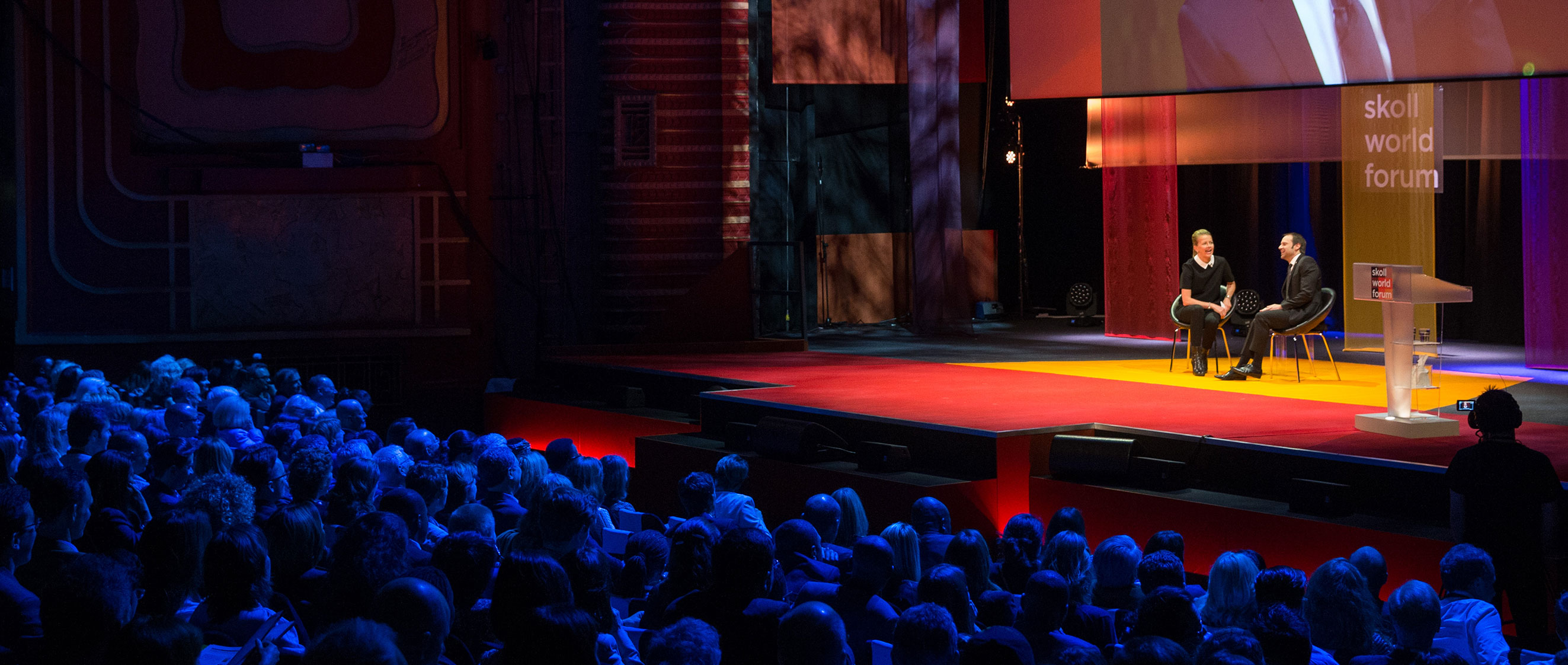
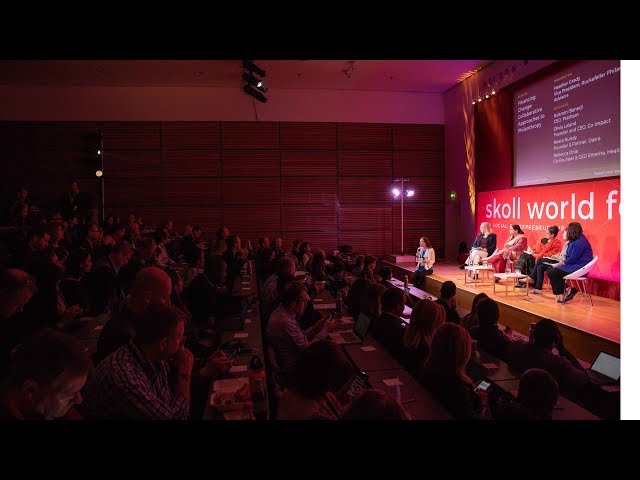
Roger L. Martin, dean, Rotman School of Management, University of Toronto speaks on “The Power Paradox” at the 2009 Skoll World Forum. Martin studies leaders and shares his findings on what qualities they all share.
With: Roger Martin
I'm sure it happens to many of you in the audience, but as i sit there and listen i can't help but wonder who is that guy he's talking about? but i thank you none the less. Whether or not Barack Obama Barack Obama is your president or as the case is for me, another country's leader. Most of you i suspect watched his [xx] speech, with great, rapt interest and attention, was certainly a lovely and motivating and inspiring speech i cried several times even though guys apparently aren't supposed to do that, and i suspect each of you, each listener to that speech, took away something that was unique special to them about what the new president had to say.
I did as well, and, for me, one particular sentence absolutely x me and biwildered me; was one of those hair standing up on the back of your neck movements. And I quote him "As for x Common defense we reject as false a choice between our safety and our ideals. Now-(Applause)- yeah, not bad. Not bad.
Not bad at all. I I studied right about leadership, one of the things I care about, which of course makes it a great privilege to be here, in a room with so many fantastic fantastic leaders. And in my study of highly successful beaters across all sorts of organizations. I studied them across all sorts of public, private sector organizations.
I found the most common theme across previous leader. The most universal characteristic to be a form of thinking that's exemplified by President Obama's sentence. We reject his faults that common theme is that when highly successful leaders are faced with an apparent choice between two or more opposing and unsatisfactory options, they show both the inclination to refuse to choose, and the capacity to instead engineer a course of action that's superior to each of the apparent options.
So, President Obama I think clearly; to the apparent choice, between our safety; on one hand and our ideals on the other. Now if your American President living still within the shadow of world terrorist attack in American history it is . a tough choice. tough choice tough leader would make. Right?
Well, yes, most leaders would make that choice. Most leaders would. Consider another world leader September 20th 2011, no 2001. Eleven days after the terrorist attack on the World Trade Center. in his words, "Every nation, every region now has the decision to make. either you are with us or you are with the terrorists." Now admittedly, this is probably a bit of a cheap shot.
We don't know yet whether Obama will be a great president, we all hope he will, and we have had eight years to watch and judge the presidency of George W. Bush. But for the sake of illustration, the contrast could not be starker. On one hand, choice is the only possibility on the other hand, we reject as false a choice.
Now, as a Canadian, I didn't particularly appreciate George W. Bush's choice, we Canadians are decidedly were not and are not with the terrorists, but we chose not to join the U.S.A. in Iraq. But we are with the U.S.A. I think more than any country in the world. We love the U.S.A. We share with our friends the longest, undefended border in the world and have the greatest bilateral flow of goods and people, commulatively, in the history of the world.
we weren't with the U.S.A. on Iraq or with the terrorists, nor were many of the countries represented by the people in this room. So, to return to the leadership question the statement, "We reject as false the choice between our safety and our ideals as characteristic not of the thinking of leaders generally, but rather of great leaders.
In my work, I found that great leaders harness the inherent power, an inherent power in the tension between these opposing ideas.Options of models and use that tension to forge a better model. And that to me, is the power of paradox. At first blush, the opposing models appear to be big problem, a problem you wish you didn't have; a choice between a rock and a hard place; a choice between the devil and the deep blue sea.
But in fact opposing models contain the seize of a better answer, but only for those who seize the power of that paradox. Successful social entrepreneurs do just that. And I talk about them in my book. Victoria Hale for example. The world saw there being two opposing models for alienating, suffering, and disease through pharmaceuticals.
The first model, the "Big Pharma" model, involved spending raised the fund to fund cures for diseases for those diseases had we suffered by people who could afford to pay or the pharma company just couldn't afford to make those big investments and earn a return on them. That meant this model left behind the diseases afflicting mainly poor people.
The other models is the the public health model. Pressure the big pharma companies to give their drugs away for free or at marginal cost to sufferers in developing countries who couldn't afford to pay. It worked as well but didn't provide an avenue for drugs that didn't exist. Those aimed, again, at diseases primarily suffered by the poor.
Those who were the available models, and choosing between those available models meant accepting a very unpleasant trade off, where people would continue to suffer and die. Victoria Hayle, as I think we all know, didn't choose and that's why she's a former Skoal award for social entrepreneurship winner and McCarthur Fellow, in the face of those two, and only two available models, she said no there is a better model.
A model inspired by the very best of big pharma and public health models. She needed to combine the research expertise of the big pharma model with the collaborative. Real based capabilities of the public health organisation into one combine model Douglas the creation of institute for one role. Health, the world's first non-profit pharmaceutical company.
Victoria herself in talking to me called it a combination of oil in water, but that is what made it wonderful. And it has been particularly gratifying for the sufferers of the pernicious killer of the poorest of the poor, black fever. Who have now a low cost cure, thanks to the institute of one world health new to the world model, or we could point to Victoria's fellow school award winner, Mindy Lover she want to help perverse, the degradation of the environment.
Like Victoria, she faced two entrenched models; a classic business first model, the business of business is business, investors profit and profits first and foremost. Versus the classic civil society model, which promotes societal and goals over profitability. What should Mindy have chosen? Well, the answer is neither.
She took the best of the business model, reached out to the richest and most powerful of all, the mega investors like Goldman Sachs and Carpels and convinced them and seventy other institutional investors to join the investors network at climate risk as in the civil society cars today those institutional investors represent more than 7 trillion in assets.
More importantly, they're insisting that the companies in which they invest must disclose their climb at risk. Their climb at risk exposure. And beyond integrating that discipline into their investment due diligence, these investors are well on their way to becoming activists themselves. So, there was no choice, rather a better answer.
The paradox is that the apparent problem, the oppositional nature of the models facing these leaders is at the root of the solution. A big pharma model verses a public health model isn't the choice but rather the root of the solution. The business model verses civil society model isn't the choice but is rather the root of the solution.
So what's the critical take away for social entrepreneurs? If there is only one thing, it is the following: You must reject the notion that existing models equal reality. If you believe or if others are able to convince you that existing models are reality, which you are going to be told daily, right?
The truth of the matter is The reality is these are expressions that are ingrained in our culture and our vocabulary. If you accept that notion, you will make choices that accept the existing options as the only choices. At the risk of laddering this up too for the implication is a world that accepts the status score even if it is a nasty British and short status score.
If instead, you always believe the existing models are simply the best constructions we've yet been able to produce, you will look for even at the ways to build better and newer models, you will look at and study carefully the existing models given even they oppose one another and use the cues and clues from those models to build a better model still.
The resulting world I would argue That is why I encourage each and one of you to be an inspiring place, a place of opportunity a place that always moves forward embrace the power of the paradox, to create the future, to follow the great Skoal awardees past and present, to build innovative new models that will continue to change the world.Thank you very much.
I did as well, and, for me, one particular sentence absolutely x me and biwildered me; was one of those hair standing up on the back of your neck movements. And I quote him "As for x Common defense we reject as false a choice between our safety and our ideals. Now-(Applause)- yeah, not bad. Not bad.
Not bad at all. I I studied right about leadership, one of the things I care about, which of course makes it a great privilege to be here, in a room with so many fantastic fantastic leaders. And in my study of highly successful beaters across all sorts of organizations. I studied them across all sorts of public, private sector organizations.
I found the most common theme across previous leader. The most universal characteristic to be a form of thinking that's exemplified by President Obama's sentence. We reject his faults that common theme is that when highly successful leaders are faced with an apparent choice between two or more opposing and unsatisfactory options, they show both the inclination to refuse to choose, and the capacity to instead engineer a course of action that's superior to each of the apparent options.
So, President Obama I think clearly; to the apparent choice, between our safety; on one hand and our ideals on the other. Now if your American President living still within the shadow of world terrorist attack in American history it is . a tough choice. tough choice tough leader would make. Right?
Well, yes, most leaders would make that choice. Most leaders would. Consider another world leader September 20th 2011, no 2001. Eleven days after the terrorist attack on the World Trade Center. in his words, "Every nation, every region now has the decision to make. either you are with us or you are with the terrorists." Now admittedly, this is probably a bit of a cheap shot.
We don't know yet whether Obama will be a great president, we all hope he will, and we have had eight years to watch and judge the presidency of George W. Bush. But for the sake of illustration, the contrast could not be starker. On one hand, choice is the only possibility on the other hand, we reject as false a choice.
Now, as a Canadian, I didn't particularly appreciate George W. Bush's choice, we Canadians are decidedly were not and are not with the terrorists, but we chose not to join the U.S.A. in Iraq. But we are with the U.S.A. I think more than any country in the world. We love the U.S.A. We share with our friends the longest, undefended border in the world and have the greatest bilateral flow of goods and people, commulatively, in the history of the world.
we weren't with the U.S.A. on Iraq or with the terrorists, nor were many of the countries represented by the people in this room. So, to return to the leadership question the statement, "We reject as false the choice between our safety and our ideals as characteristic not of the thinking of leaders generally, but rather of great leaders.
In my work, I found that great leaders harness the inherent power, an inherent power in the tension between these opposing ideas.Options of models and use that tension to forge a better model. And that to me, is the power of paradox. At first blush, the opposing models appear to be big problem, a problem you wish you didn't have; a choice between a rock and a hard place; a choice between the devil and the deep blue sea.
But in fact opposing models contain the seize of a better answer, but only for those who seize the power of that paradox. Successful social entrepreneurs do just that. And I talk about them in my book. Victoria Hale for example. The world saw there being two opposing models for alienating, suffering, and disease through pharmaceuticals.
The first model, the "Big Pharma" model, involved spending raised the fund to fund cures for diseases for those diseases had we suffered by people who could afford to pay or the pharma company just couldn't afford to make those big investments and earn a return on them. That meant this model left behind the diseases afflicting mainly poor people.
The other models is the the public health model. Pressure the big pharma companies to give their drugs away for free or at marginal cost to sufferers in developing countries who couldn't afford to pay. It worked as well but didn't provide an avenue for drugs that didn't exist. Those aimed, again, at diseases primarily suffered by the poor.
Those who were the available models, and choosing between those available models meant accepting a very unpleasant trade off, where people would continue to suffer and die. Victoria Hayle, as I think we all know, didn't choose and that's why she's a former Skoal award for social entrepreneurship winner and McCarthur Fellow, in the face of those two, and only two available models, she said no there is a better model.
A model inspired by the very best of big pharma and public health models. She needed to combine the research expertise of the big pharma model with the collaborative. Real based capabilities of the public health organisation into one combine model Douglas the creation of institute for one role. Health, the world's first non-profit pharmaceutical company.
Victoria herself in talking to me called it a combination of oil in water, but that is what made it wonderful. And it has been particularly gratifying for the sufferers of the pernicious killer of the poorest of the poor, black fever. Who have now a low cost cure, thanks to the institute of one world health new to the world model, or we could point to Victoria's fellow school award winner, Mindy Lover she want to help perverse, the degradation of the environment.
Like Victoria, she faced two entrenched models; a classic business first model, the business of business is business, investors profit and profits first and foremost. Versus the classic civil society model, which promotes societal and goals over profitability. What should Mindy have chosen? Well, the answer is neither.
She took the best of the business model, reached out to the richest and most powerful of all, the mega investors like Goldman Sachs and Carpels and convinced them and seventy other institutional investors to join the investors network at climate risk as in the civil society cars today those institutional investors represent more than 7 trillion in assets.
More importantly, they're insisting that the companies in which they invest must disclose their climb at risk. Their climb at risk exposure. And beyond integrating that discipline into their investment due diligence, these investors are well on their way to becoming activists themselves. So, there was no choice, rather a better answer.
The paradox is that the apparent problem, the oppositional nature of the models facing these leaders is at the root of the solution. A big pharma model verses a public health model isn't the choice but rather the root of the solution. The business model verses civil society model isn't the choice but is rather the root of the solution.
So what's the critical take away for social entrepreneurs? If there is only one thing, it is the following: You must reject the notion that existing models equal reality. If you believe or if others are able to convince you that existing models are reality, which you are going to be told daily, right?
The truth of the matter is The reality is these are expressions that are ingrained in our culture and our vocabulary. If you accept that notion, you will make choices that accept the existing options as the only choices. At the risk of laddering this up too for the implication is a world that accepts the status score even if it is a nasty British and short status score.
If instead, you always believe the existing models are simply the best constructions we've yet been able to produce, you will look for even at the ways to build better and newer models, you will look at and study carefully the existing models given even they oppose one another and use the cues and clues from those models to build a better model still.
The resulting world I would argue That is why I encourage each and one of you to be an inspiring place, a place of opportunity a place that always moves forward embrace the power of the paradox, to create the future, to follow the great Skoal awardees past and present, to build innovative new models that will continue to change the world.Thank you very much.
Related Videos
-
Taiko Meantime Perform at 2009 Skoll World Forum -
Opening Remarks: Stephan Chambers at 2009 Skoll World Forum -
“Change history by your passion,” says Stephan Chambers -
Jeff Skoll Welcomes Guests to the 2009 Skoll World Forum -
Power to the People: Citizen Engagement and Social Transformation -
Unfinished Portraits Of Powerful Ideas: Kenneth Brecher