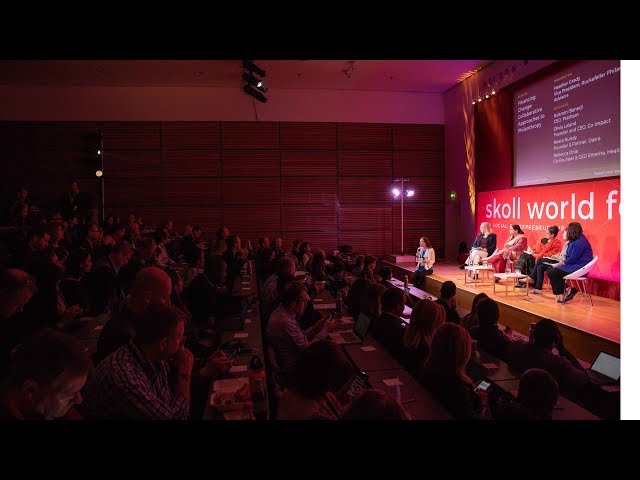
Stephan Chambers welcomes guests to the 2008 Skoll World Forum
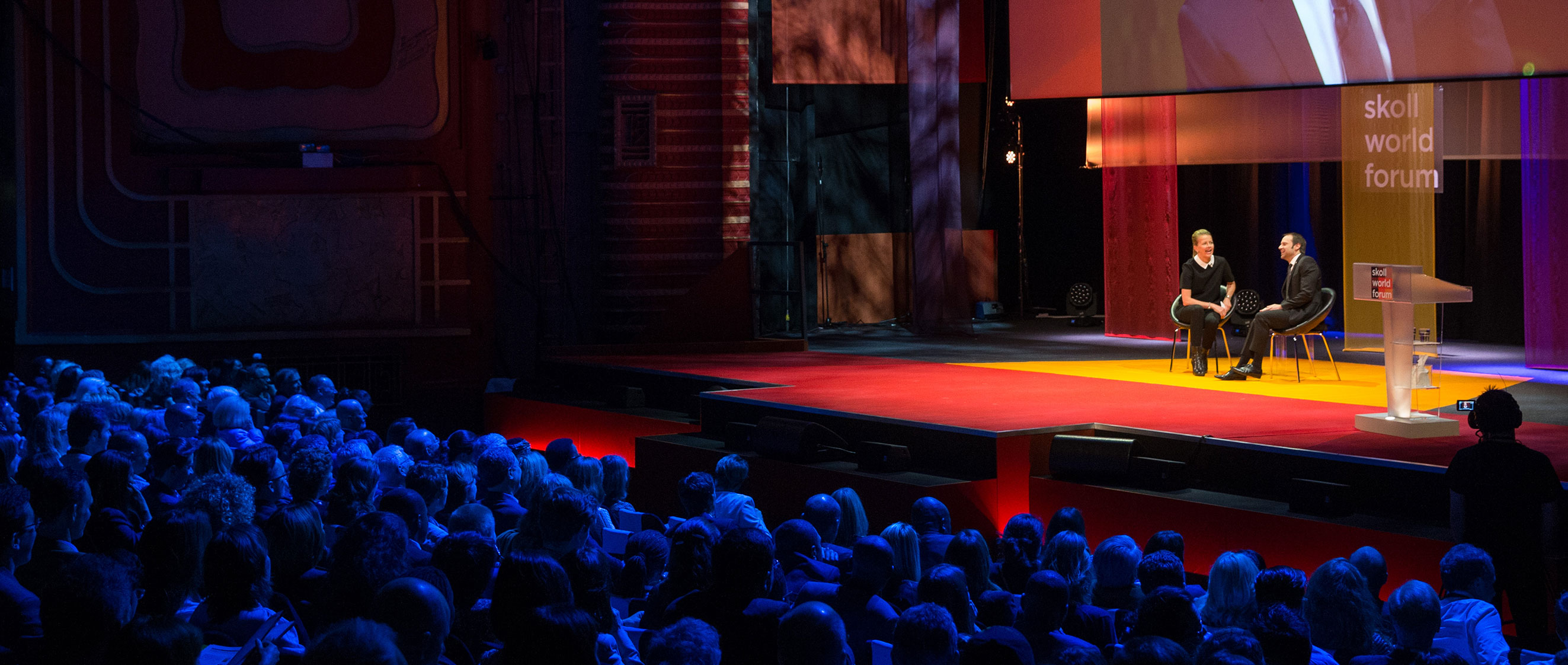
Stephan Chambers, chairman of the Skoll Centre for Social Entrepreneurship, welcomes guests to the 2008 Skoll World Forum.
With: Stephan Chambers
Vice chancellor, distinguished guests, and friends, it is my very great pleasure to welcome you. To the fifth Skoll world forum, in social entrepreneurship. For the next three days, you will coalesce around the question of culture and social change.
You will debate some really hard questions. You will get to know each other and you will, occasionally, agree. You will, we hope, be inspired by this extraordinary university and its beautiful buildings, and leave here infused and invigorated. You are remarkable people. You come from all over the world, from every imaginable sector, and from a wide diversity of positions.
You share a commitment to change to action and to reflection. You'll also share, I think, despite Different biographies. A belief that the gathering complexities of the world, the world's key questions if you like. Require inventive, sophisticated, rigorous, optimistic and joined up delusions that's why you're here.
The Said Business School is very proud to host the Skoll of a social entrepreneurship and proud to be the Skoll foundation's partners in organizing this remarkable event. It's entirely right I think that so many of this ancient and vulnerable universities recent initiatives should explicitly address the most critical questions of our age.
Those, for example, of climate change and global health across a variety of disciplines and From finance to cultural branding. Our own skull center, the James an institute, the twenty first century school, the environmental change institute, the school for enterprising environment and many other departments around the university all seek to develop debates, communities, evidence and progress around these big problems.
Your work this week will, I hope, contribute significantly to that progress. The theme of This year's forum is culture. Culture is who we are. what we believe, how we behave and what we make. We chose this theme because we understand that sometimes the problems we face aren't about cash, or the supply chain, or incentives.
Sometimes the problems we face are about behaviors and habits and histories. And often the solutions we seek aren't about cash, or the supply chain or incentives , there about behaviors or habits or art or sport. Our focus will be on the human reality of the local context. On the complications of culture on the difficult contingent, unpredictable and sometimes, perverse truth of who we are, what we do and what we make.
In his Nobel acceptance speech, The Irish poet Seamus Heaney reminds us that art, like business, or politics is rarely neutral and how we got here, rarely fair. The documents civilization", he writes "have been written in blood and tears. Blood and tears no less real for being remote. We know that the documents of our future civilization must be written hope and idealism, in innovation and in kinship.
This forum Is your blank sheet and your documents will characterize a myriad initiatives and a carry out improvements. Another pert expelled I think from University About one hundred meters from where we sit, described poets as the unacknowledged legislators. of the world. It may not be too greater stretch, since we're here after all to talk about culture, to hope that as social entrepreneurs, you take gone Shelly's job description this week.
It is now my very great pleasure to this one he most definitely has that job description. Jeff Skoll is founder and chairman of the Skoll foundation and of participant productions. He's a great entrepreneur, and a great philanthropist, and above all, a great friend to all of us here. Without his insight and commitment, we would be further behind.
Like Wren, whose building this is, if you seek his monument, look around you. Please join me in welcoming Jeff Skoll.
You will debate some really hard questions. You will get to know each other and you will, occasionally, agree. You will, we hope, be inspired by this extraordinary university and its beautiful buildings, and leave here infused and invigorated. You are remarkable people. You come from all over the world, from every imaginable sector, and from a wide diversity of positions.
You share a commitment to change to action and to reflection. You'll also share, I think, despite Different biographies. A belief that the gathering complexities of the world, the world's key questions if you like. Require inventive, sophisticated, rigorous, optimistic and joined up delusions that's why you're here.
The Said Business School is very proud to host the Skoll of a social entrepreneurship and proud to be the Skoll foundation's partners in organizing this remarkable event. It's entirely right I think that so many of this ancient and vulnerable universities recent initiatives should explicitly address the most critical questions of our age.
Those, for example, of climate change and global health across a variety of disciplines and From finance to cultural branding. Our own skull center, the James an institute, the twenty first century school, the environmental change institute, the school for enterprising environment and many other departments around the university all seek to develop debates, communities, evidence and progress around these big problems.
Your work this week will, I hope, contribute significantly to that progress. The theme of This year's forum is culture. Culture is who we are. what we believe, how we behave and what we make. We chose this theme because we understand that sometimes the problems we face aren't about cash, or the supply chain, or incentives.
Sometimes the problems we face are about behaviors and habits and histories. And often the solutions we seek aren't about cash, or the supply chain or incentives , there about behaviors or habits or art or sport. Our focus will be on the human reality of the local context. On the complications of culture on the difficult contingent, unpredictable and sometimes, perverse truth of who we are, what we do and what we make.
In his Nobel acceptance speech, The Irish poet Seamus Heaney reminds us that art, like business, or politics is rarely neutral and how we got here, rarely fair. The documents civilization", he writes "have been written in blood and tears. Blood and tears no less real for being remote. We know that the documents of our future civilization must be written hope and idealism, in innovation and in kinship.
This forum Is your blank sheet and your documents will characterize a myriad initiatives and a carry out improvements. Another pert expelled I think from University About one hundred meters from where we sit, described poets as the unacknowledged legislators. of the world. It may not be too greater stretch, since we're here after all to talk about culture, to hope that as social entrepreneurs, you take gone Shelly's job description this week.
It is now my very great pleasure to this one he most definitely has that job description. Jeff Skoll is founder and chairman of the Skoll foundation and of participant productions. He's a great entrepreneur, and a great philanthropist, and above all, a great friend to all of us here. Without his insight and commitment, we would be further behind.
Like Wren, whose building this is, if you seek his monument, look around you. Please join me in welcoming Jeff Skoll.
Related Videos
-
Jeff Skoll “All of us are in a race” (and what wooden boats have to do with it) -
Lord Anthony Giddens on the politics of climate change -
The Dynamics of Working Cross-Culturally – Experienced Voices from the Field Panel Discusison -
MP Phil Hope speaks on policy innovation at the 2008 Skoll World Forum -
Stephan Chambers shares closing remarks at the 2008 Skoll World Forum opening plenary