Reflections from a Cross Cultural Pioneer – Paul Farmer

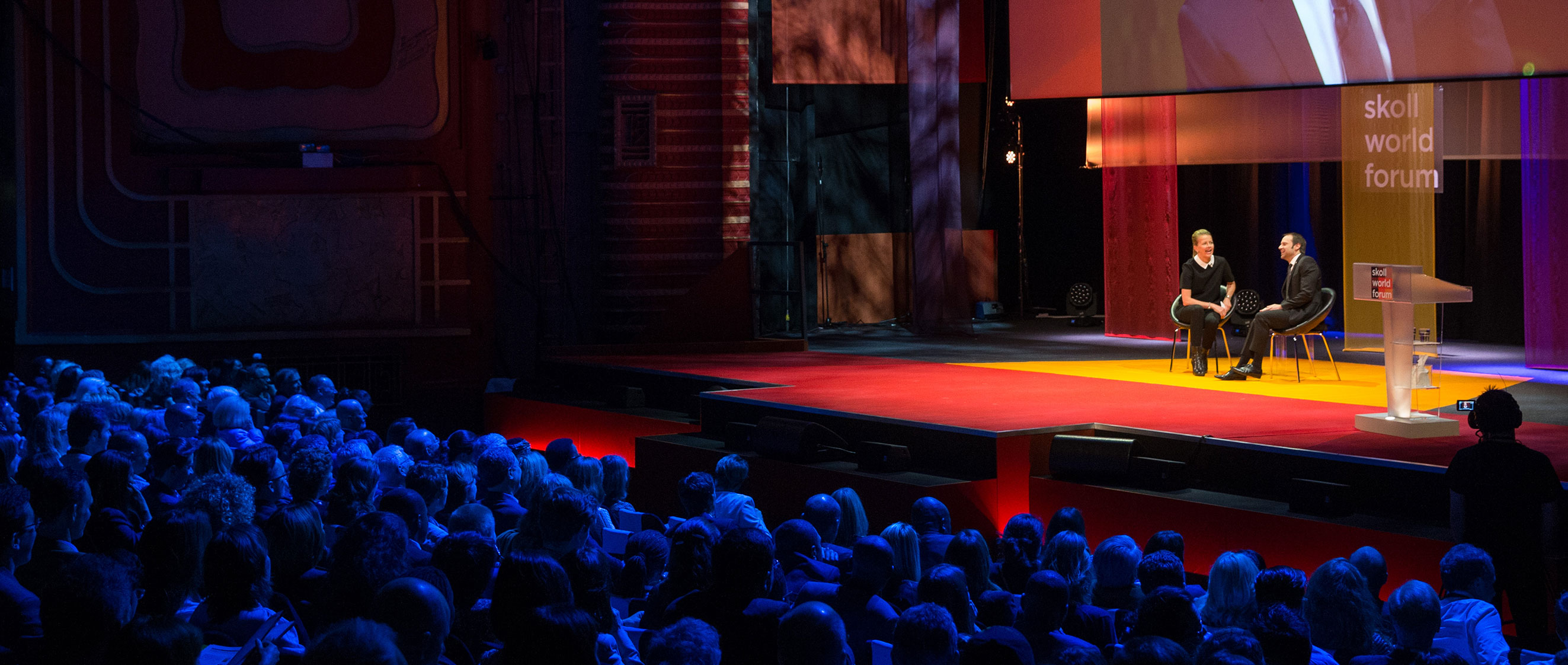
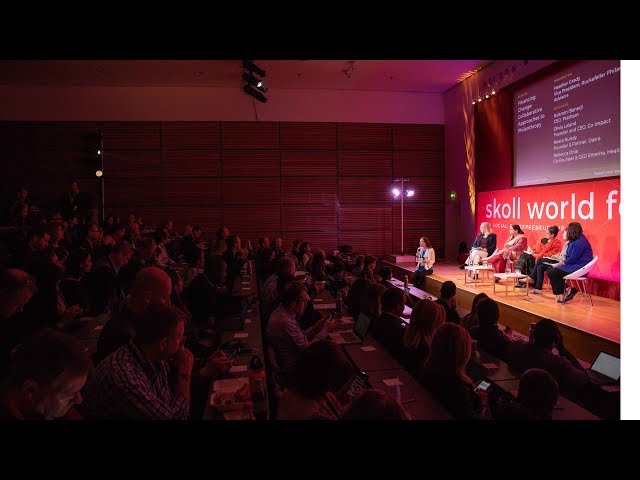
Dr. Paul Farmer speaks at the 2008 Skoll World Forum closing plenary.

With: Paul Farmer
Thank you. I'm sure that some of you are thinking it's very unwise to use a Power point presentation. Presentation when your about to be followed by the man who should have been president of my country. So. And I do have to make one shameful confession. Yes, I'm from Florida, but we are all and I voted for president Gore.

So, it's an honor to be here with you. Unfortunately, on a serious note many of the problems that we've discussed. Would be different, had things been different in 2000. And I planned to say that well before you arrived. Here we are a new year in the third millennium. We are seeing new plagues. AIDS was already several times [xx] drug-resistant tuberculosis, but also drug-resistant super-bugs, of all sorts, that [xx] rapidly across vast swaths of land blurring national boundaries.

There are old maladies that should have been history as small pox is. And they are rooted in long-standing, and increasingly unjust economic and social structures. Malaria, Hookworm and other parasites claim lives or simply drain energy from hundreds of millions. It's hard to work when you're tired and enemic, or pregant a dozen times before the age of 30 people and poor people.

But most economists agree that social inequalities, both global and local, have grown rapidly over the past few decades. The Earth itself is tired and malnourished. Man-made environmental crises dry up lakes, wash top soil into the seas, and smother reefs, and from what we can tell, spark huge storms.

a billion people do not have safe drinking water. A war built on lies will cost, one Nobel Laureate economist tells us, 3 trillion dollars. So what cause have we for hope. As a doctor working in Africa in contemplating the problem [xx] of our wounded earth, i acknowledge that the butcher's bill is high, yet here we are, a gathering of what are termed social entrepreneurs and we are full of hope.

Some of that hope is tied to risk. Some of it is tied to an increasing awareness of the great world around us. There is as is often reported by cheer leaders of commerce vast and rapid growth in the global economy. China and India not so long a go poor and [xx] are our. Ready economic power houses and these economies continue to go rapidly, if unevenly, and if fueled by coal and oil.

With 50 years of peace, Europe is more prosperous than ever. In spite of trade imbalances, a recession, an imprudent war is built on [xx] The United States remains rich, current exchange rates a side. I, i thought that a cup of espresso was bad in New York, but i swear, You can pay 20 dollars for a cup of espresso here.

Our citizens if famously ill-informed about the world are less generous. Almost half of American households responded to the tsunami in Asia, more than any other nation. And even more tried to to the worst hurricane ever to hit our gulf coast. This is a time of great problems. Some new and some old.

And a time for not. all the solutions, it's a time of social entrepreneurs. When Sally and others at the school foundation called me to let me know that after through a workup. Diagnostic testing have proven was i of the special breed. I was driving along a road in southeastern Rwanda. I pulled over to express my thanks to the staff there and to Jeff.

I shared with them, including Johnny and Lance, my deep gratitude for the honor and the support of our work. My puzzlement I kept to myself. What exactly is a social entrepreneur? I know I'm a doctor and anthropologist, hence my invitation to speak about culture, but part of me winced as I acknowledge that yes, we live in an era in which simply seeking to provide high quality medical care to the world's poorest is considered innovative and entrepreneurial.

Thus the diagnosis comes with both honor and shame. Shouldn't we have offered such services to those who need them long, long ago? Shouldn't we have design systems to get around or solve the health problems faced by the world's bottom billions? I've learned a lot this week and made connections with others similarly diagnosed and i think i get it now.

Social Entrepreneurship means many things and those diagnosed do many things. But all of us carrying the diagnosis of social entrepreneur. From [xx] to the latest [xx] displays certain symptoms, that suggest not only the diagnosis but also that it may be infectious. Indeed, we may soon see a global pandemic of social entrepeneurship.

Here are some of the classic symptoms. Of the disease. Refusal to accept the world the way it is and the direction to which it's going and a willingness to. They know this can't be done. Persistance. A certain amount of righteous anger about the injustices done to others. especially the poor and marginalized, and a willingness to fight back against unjust systems and also hope.

Blood tests I've done this week - clandestinely, of course - show that all of us have alarmingly high serum levels of hope. And while you dozed in your rooms in Oxford, I was doing MRI's of your brains. And so I know you have, in fact, strategies to respond to the problems that bring us together. And I hope you don't mind that I did not have you sign consent forms.

I, for one, am not embarrassed by high serum hope levels. As long as our entrepreneurship remains grounded in solving real problems, especially the problems of those left behind, or worse, damaged by the unsustainable development that we have promoted and aggressively so over the past two centuries.

And some have far more damaged than others. Today, I would like to do two things. I wish to share with you some story About transformations. Personal, institutional, and political that I've had the great, good fortune to witness very recently in Rwanda of all places. Rwanda came back from the brink of hell but epidemiological studies there suggest a Endemic of entrepreneurialism that is breaking out in that country.

Then I will close with comments about the achilles heel of our nation movement as social entrepreneurs, and I promised to speak of culture although not in the way you'd expect. Hope in Rwanda. This will surprise some of you. If there's one continent, as Paul Colliar has said, on which economic growth is slowed or stalled or uneven.

It's Africa. This is also the continent with the highest burden of diseases mentioned above and accordingly the shortest life expectancy. The highest rates of maternal mortality. We've all heard the numbers before. There is no shortage of diagnoses and prescriptions for the ills of Sub-Saharan Africa, and many are discrepant.

But many [xx]and prescriptions are not discrepant. To the old question, "Can we break the cycle of poverty and disease?", we have an answer. Yes, we can. Paul Collier said it very well already today: science, innovation, sound policy, good governance, public-private partnerships, along with the needed resources and the offer, the promise of closing the gap between the rich and the poor.

Of promoting genuinely sustainable development; which means development with social justice and less inequality. And this will lead, some of us believe, to a dampening of the violence that continues to afflict hundreds of millions, most of them poor. Violence afflicts people like Faustin, a child I met in Rwanda, on March 22, 2006.

He was the victim of a violence which is never really local, and has almost nothing to do with his culture. On a Wednesday morning, two boys while herding cows, picked up a landmine. In Rwanda this is an increasingly rare event. As many efforts have been made to find and disarm such weapons. Unfortunately, it is still to common an event, elsewhere, within the past decade, as others have noted, it has been estimated that there are one hundred and ten million land mines in the ground worldwide.

And more than twice as many are still stockpiled. Today, thirteen countries continue to manufacture anti-personnel devices, though little as 15 years ago, that number was over 50 countries, and almost 100 private companies, 47 of which were in the United States.

Of those who detonate landmines unintentionally, 80% are civillians. And 1 in 5 are children. About half die, virtually all the rest are maimed, and many of them permanently. Both of the Rwandan boys survived, and I came to know quite well the one who was injured more seriously. As he spent more time in the hospital, needed physical therapy, home visits, and social assistance.

I met Fostant at 10 in the morning on that Wednesday. the hospital to a clinic a couple of hours away. The hospital was, I mean again, in front of the vice president, use power point. It is unfair, I will do my best. I have very little. Very few. The hospital was built and once owned by a Belgian mining company which left Rwanda decades ago having extracted what it came to extract.

After the war in genocide in 1994 the facility fell into disuse, essentially abandoned. As of May 2005, when we, and this is I think the kind of public private partnership that (xx) would prove up we XX help (xx) foundation and Rwandan Ministry of Health rebuilt and opened it as the sole hospital serving more than a quarter million people, most of them the settled refugees, internally displaced persons, and almost all of them living in poverty.

And, back to Jacquie Novogratz's comments about dignity - we did our best to make it clear that we wanted people to feel that this was a clean, safe place where we showed our respect. And as you can see, that, that, this was done in in less than, less than eight months, this transformation. And this is only one of the kinds of transformations I want to speak about.

By March 2006, when this event happened, we had cobbled together a medical and nursing staff consisting mostly of of Rwandan professionals and a handful of expatriate volunteers, some of them my former students. One of my colleagues stopped me that morning saying come quickly to the emergency room two children had picked up a granade.

That's what he said. At that moment I did not think it unlikely that someone in the region would pick up a grenade and pulled the pin. After all, ordinance hangs around for years. The boys told me that they merely picked the thing up and threw it towards the cows they were herding. The cows took the full force of the mine and 2 cows were killed.

It was an hour or so. So after seeing the boys, that I began to think about the thing itself, the landmine - what it was, where it had been manufactured, certainly not in Rwanda. In the meantime, neither I or my colleague were thinking about anything other than trauma care, which is of course precisely what trauma victims need most.

We worked attentively and in near silence. One of the two boys was not seriously injured. The other, [xx] sustained multiple fractures, and had many fragments blown into his skin. I had the privilege of splinting him, pulling the plastic fragments out of him and preparing him for transport. Although we had rebuilt the operating room and this is what we found, this is what the operating room looked like before... and this is what it looked like after.

Although we had rebuilt the operating room, we did not have an orthopedic surgeon on staff. And [xx] needed to have his fracture set in the operating room with what is called an external fixator. [xx] even in the course of interviews conducted at home afterthe device was placed. Did not wish to speak of his experience.

What I would most like to do, he said, only a few days after surgery, is to go to school. Turned out that he was not an orphan after all but that his mother poor and bereft after the genocide had struggled for years with mental illness and had finally placed him with another family in 2004. My mother's not well he told me later.

She can't take care of me so she brought me to a relative and I live here now. I would like to go to school but my adoptive family has no money, so I herd cows everyday, make them sure they eat, move them to new grass. When I asked him about the land mine he was astonishingly to me apologetic. I didn't mean to pick up the grenade.

I'm sorry I did it. I didn't mean to kill the cows. I'm sorry, it was an accident. We didn't know what we were doing, it was not our intention to kill the cows. To me, as grotesque as it is to hear a child apologize for a landmine built in God knows what developed country, this is still a story of hope.

For the desire to go to school is as hopeful as it is universal. Postan is in school, now. And every day we meet people who are sicker, much sicker than Postan, but they too have some hope or they would not have come to see us. Sometimes they are of course almost without hope and then, we go to see them.

This is John. Who has, at the same time, three of this centuries worst diseases: AIDS, Tuberculous, and poverty. We cured his TB with antibiotics of course and he will be treated for AIDS But he also received the only known treatment for hunger. Something called food. I've said this before, although this is a fairly recent couple of pictures that goes from looking like Skeletor to looking like he needs Lipitor.

Can you believe that we have to spend spent an endless amount of time arguing that food is the proper treatment for malnutrition. We waste our time, the doctors, the nurses, and health workers, arguing with our peer about this. I ran into John at the hospital last week and he reminded me that what he most wanted and in fact had been promised with a cow.

Again, John has hope because he feels well enough to work. It's what he wants to do. Jobs, as Paul Collier said. Now these are individuals stories which are not to be discounted and I will not apologize for sharing them with you but social entrepreneurs and our supporters are all obsessed it would seem with something called scale.

The fetishesation of scaling up our work is a source of both anxiety and hope. Bringing a new innovative project to scale often feels like the only. [xx] to leave a footprint of the good kind in an afflicted world of new ideas. Just so you know, we have worked with the Rowandean government [xx ] to scale up comprehensive health care not ace care but comprehensive health care in three of the four districts in which there were no district hospitals at all And from the North of Rwanda to the South.

And if i may brag, my Haitian colleagues have been with us from the beginning. In Rwanda our biggest obstacle is still scaling, is still funding the scale, up and again grotesquely the battle [xx] [xx] over paid community health workers. There's no real argument about paying ourselves and our peers.

We all [xx ] get paid for our labor. It's the poor who are being asked to volunteer and since we know that doesn't work we are searching... high and low for the modest funds to pay them. Indeed the Scholl [sp?] award would go a long way in helping us to see this model adopted more widely. I have been given the warning and so I'm going to close by saying, I know that medicine and public health will not solve the growth problems, but we can offer further solution, and what's been shocking to me over the past 25 years is the lightning speed at which policy makers themselves shielded from the risks faced by Fasten or John.

Decide that a complex intervention is to difficult, or not cost effective in Haiti or Africa, or not sustainable. In microfinance parlance, many of my patients are poor credit risks, but aren't they the very people we claim to serve in the first place and this is why I turned my speech a loyalists critique of our movement.

We need to be aware that each of the terms and concepts and tools we developed can be used to deny the destitute, access to goods and services that sometimes should be rights, not commodities. Does anyone really believe that a mother loves her newborn more if she had to pay some sort of users fees for prenatal care and obstetric care.

Such claims are piffle as you say in your country. I thought I'd throw that in, but there are also reflective ideology that has crept into our entrepreneur movement. This way of seeing the world has deep, deep roots but has been noted already by Jackie and by Karen. It's our culture that's hard to see.

It's our culture that needs to change. Look around you and you will see people of every hue but there are not poor people here and its not that they need an invitation to Oxford it's that they need us to include them in our movement and allow them to be social entrepreneurs. Let me close by reflecting on how social entrepreneur.

can be part of a genuine broad base social movement for social justice. I believe that when we look back over the next quater of a century, we'll be consoled most by our contributions to a movement that continues to grow not only in villages, slums and squatter settlements, but also on campuses such as this one.

It's a movement that will come to include a growing concern with the way in which the earth itself has been damaged, polluted by greed and war and feckless policies handed down by from on high. But it's a movement that pays heed not only to the environment, but also to the poor who are the chief victims of greed, war and unjust policy.

[xx] who is almost always right once argued that the compassion of the oppressed for the oppressed is indispensable. It's the world's one hope. I fear that at this late day, an additional kind of solidarity is necessary. A social justice movement that links the rich world and the poor. Mandela Auditorium at Oxford The village[sp?] in Rwanda, to which I return tomorrow, the movement that links concern with the Earth with respectful solidarity towards its poorest inhabitants is our last greatest hope for a world marked by less suffering and violence and premature death.

It's our last great hope for the generations to come and for our own children. Paul Hawken, in a book called "Blessed Unrest", wrote the following paragraph, "It is time for all that is harmful to leave. One million escorts are here to transform the nightmares of empire and the disgrace of war on people and on place.

We are the transgressors and we are the forgivers. We means all of us. Everyone. There can be no green movement unless there is also a black, brown, and copper movement. What is most harmful resides within us: the accumulated wounds of the past, the sorrow, shame, deceit shared by every culture passed down to every person as surely as DNA, a history of violence and greed.

There is no question that the environmental movement is critical to our survival. This is still Paul Hawkin. Our house is literally burning, and it is only logical that environmentalists expect the social justice movement to get on the environmental bus but it is the other way around, he writes. The only way we are going to put out the fire is to get on the social justice bus and heal our wounds because in the end, there is only one bus.

Entrepreneurs need to learn to be at time, at times quiet passengers on this bus. Sometimes we'll take our turn at the wheel. Sometimes we'll be the mechanic, but all of us need to get on the social justice bus. That's the bus on which on the real sustainable green movement will be traveling. It's on the bus that we'll have epidemics of social entrepreneurship.

Don't get on the chartered plane. We have a lot to offer in putting hope. As a friend of mine likes to say, hope is not a plan, but we need hope and courage and a plan to end for example, an unjust war. We need hope and energy to tackle the diseases that should have been wiped out decades ago or never allowed to spread so rapidly.

We need hope to counter the neo-Liberal policies that have weakened and even wrecked public sector institutions without ever delivering on the promise to lift all votes. We hope to speak to people in powerful positions whose hearts, unlike the polar ice caps, show little signs of melting. We need hope and we need each other.

To Jeff, to Sally, to all of you who share this diagnosis with me, thank you. Thank you for including me. In your ranks. I'll see you on the bus.
Related Videos