Pamela Hartigan on an ecosystem approach to issues

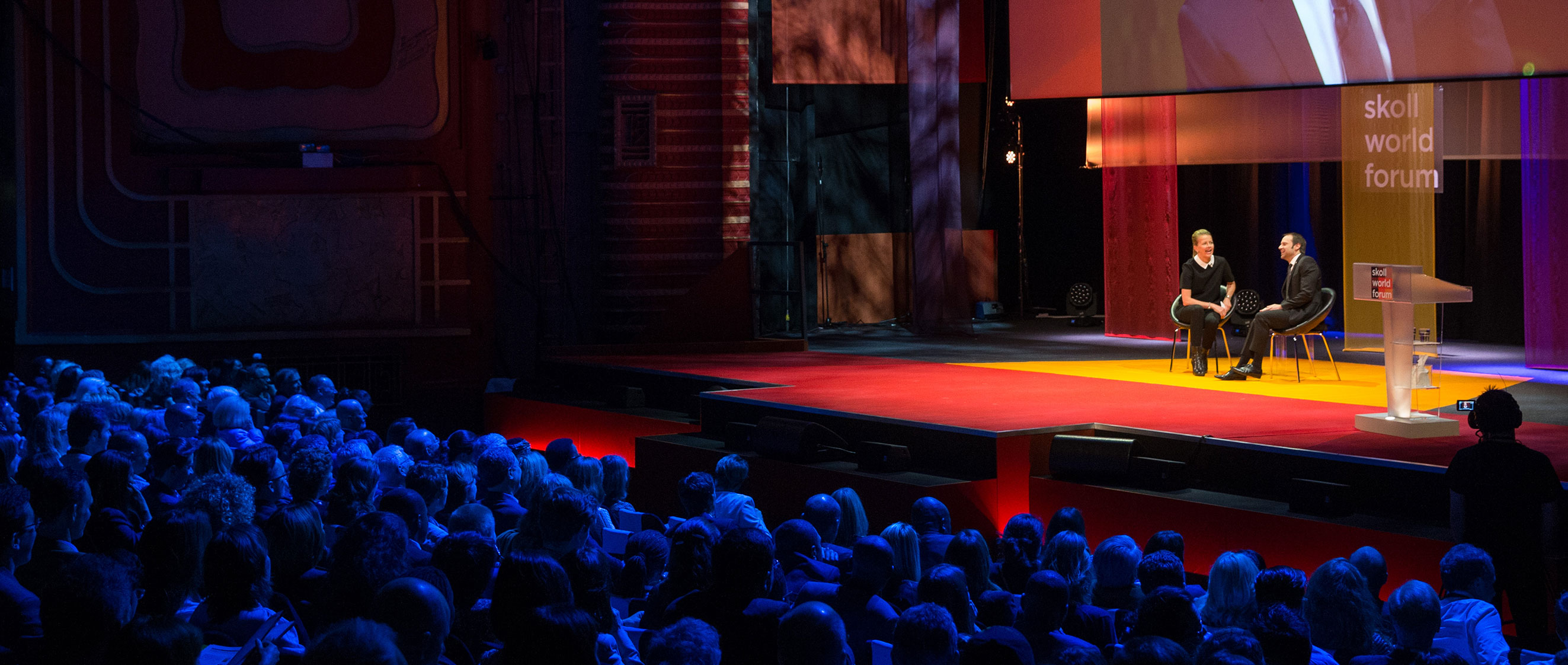
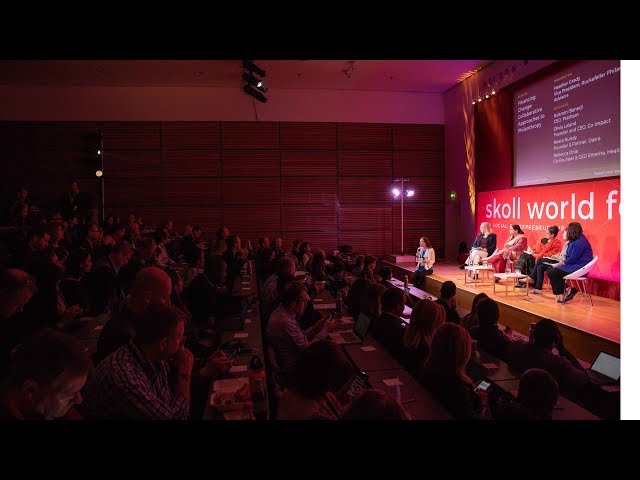
Pamela Hartigan speaks at the closing plenary of the 2011 Skoll World Forum. Hartigan is the head of the Skoll Centre for Social Entrepreneurship. She believes an ecosystem approach is the only way to address systems change.

Good evening. You're still here. It's an honor for me to preside over the concluding plenary of this eighth Skoll world forum, and to be a partner with the Skoll Foundation in its conceptualization and celebration although I have been here at Oxford for only two years I have been coming to the form every year except for one since it first of place in 2004 and over these a years the most notable feature of the score of forums evolution for me as how closely the program, the content and delegate mix near which taking place in the field itself.

Most significantly The program reflects our recognition that, while it takes individual entrepreneurs to make change happen Their innovative approches must be supported by a host of other stake holders who may not be aware of them, stakeholders that include the public, the corporate, academic, media, and philanthropic sectors.

And while we still have a lot of work to do in engaging many of the skeptics in these sectors, who question the large scale impact of these change agents. The imperative to showcase and amplify innovative solutions to the global problems we face grows every day a greater, hence our strategic focus on an ecosystem approach in generating widespread social change.

In the moments I have before introducing to you our stellar contributors to this closing ceremony, I'd like to reflect very briefly on what an ecosystem approach actually entails. It asks much more of us than engaging in private-public partnerships, where each sector comes to the table with its own set of interests.

To adopt an Eco system approach, changes the way our societies have been developed over the past 200 years, during which individuality and singularity have been increasingly emphasized even whilst the world becomes ever more interconnected and interdependent. The most important characteristic about an ecosystem approach, is that it puts the change we seek to effect at the center of how we operate.

It demands an engagement among stakeholders that surpasses organizational and personal egos. An ecosystem approach is not about you, it's not about your organization It's about the issue we are trying to address with others. It requires a complete mind shift, but it urgently needed. It's an urgently needed mind shift, and it's the only way that we're ever going to affect wide scale systems change that addresses the good causes of the seemingly interact able problems that we face today.


Offers a compelling and complete vision of what a ecosystem approach entails and the promise it holds for humanity. A palaeontologist and a philosopher who happen to be a Jesuit priest. He wrote the "Phenomenon of Man," which was published posthumously. In 1955, at the risk of simplifying a very complex book believed to be truly itself.

Humanity must advance in the direction of convergence, and that to be truly a person means leaving conscious and assertive individuality behind. I quote, "To be fully ourselves, it is the direction of convergence with all of the rest that we must advance, towards the other." The peak of ourselves, the acme of our originality, is not our individuality but our person, and according to the evolutionary structure of the world, we can only find our person by uniting with others.

Theoph D'Shonda envisaged the process of convergence as commensurate with the evolution of the human spirit. It is a phenomena the cannot be reversed. I think most of us in this room would agree with this philosopher's vision, given that the way social entrepreneurs embrace the notion, that we are embarked in a collective endeavor that has no historical precedent in it's ambition.

It is an ambition not focused on getting the most for ourselves, but rather to contribute the most to the world and to recognize and celebrate the contribution of others. As we know, to embrace an ecosystem approach is anything but simple. There are complicated tensions in advancing towards convergence.

Social entrepreneurs and those of us who work closely with them struggle with those tensions everyday, and as a result of the growing shortcomings of the systems and practices we have taken for granted, and want to continue believing in but uncomfortably, we realise we can no longer count on to solve the looming challenges before us.

Our world has become way too complex we're headed seems less clear than ever before. Steven Greene, an ordained Anglican minister, former chairman of HSBC and now UK minister of trade and environment acknowledges our discomfort with ambiguity and uncertainity. Noting that the way we deal with these, is by seeing refuge in separating the worlds in which we operate.

In other words, we compartmentalize the spheres of activities that comprise our lives. Compartmentalization allows us to simplify and separate the rules that apply to how we operate in our work life from those that apply to how we operate with our families, our communities and our spiritual life.

As he says, compartmentalisation, dividing life up into different realms with different [xx] subject to different rules is a besetting sin of human beings. I know primarily with graduate students, specifically those who seek business-related career many of them are avidly searching for careers where they can contribute their business savvy and other talents to improve human welfare.

They don't want to wait till they're 50 to give back, so they're looking to those who have successfully been able. To bring the most XX fears of life together from me outside some MBA'S are entrepreneurs themselves while others like younger doubts everywhere seek to contribute to endeavors better, fundamentally innovative, philosophically positive, and morally compelling.

So, how do we rewire our systems, and practices, and our mindsets, to bring us towards greater convergence, rather than fragmentation of efforts. That for me, is the great challenge before us. No matter where our life journeys take us, that is what we aim for, when we underscore the importance of supporting ecosystems for the entrepreneurial leaders who pursue transformation of systems for change for human benefit.

This evening we have the honor of having with us, leaders who have refused to separate their professional from their personal life and passion. And they have done so with consistency, with humility and with integrity. They are proof positive that it is possible to find completeness and balance as we go through life although I confess, I havn't gotten there yet.

Lord David Sainsbury has had successful careers in business, politics and philanthropy. In that way he is himself a human ecosystem driving large-scale change by working through multiple networks. Indeed rather than engaging sequentially and each of its spheres in a different point in its life as many due till at age of money to get back rather at the age of 27 word trust using an approach deeply and formed by science is passion his impact has been significant and he continues to drive cutting edge research and knowledge, particularly in the field of Neuroscience.

Lord Sainsbury will be joined in conversation with Bridgette Kendell the BBC's award winning diplomatic correspondent who covers top foreign stories for radio, television, and online news. She is also host of the forum, the BBC World Service Global Exchange of Ideas program. Most importantly, British is an and attended two Oxfrod colleges, Lady Margret Hall and St. Antony's.

She also has degrees from Harvard and Moscow University. Please join me in welcoming Lord David Sainsbury and our Bridget Kendall.
Related Videos