Opening Remarks: Stephan Chambers at 2009 Skoll World Forum
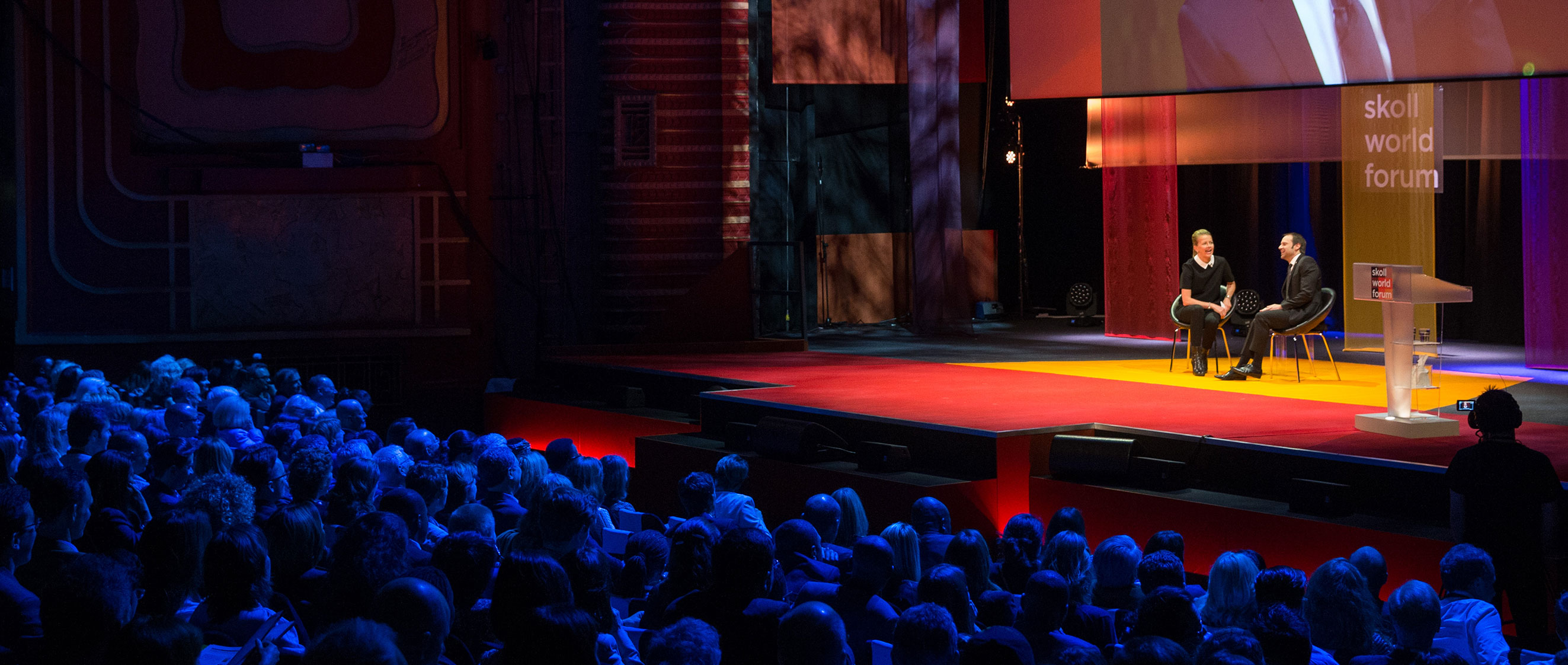
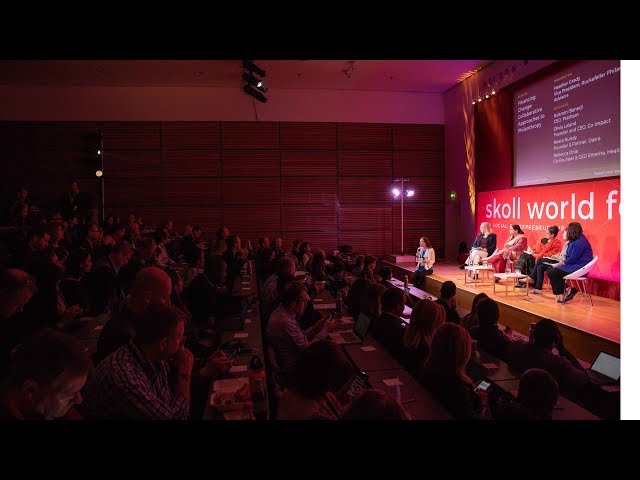
Stephan Chambers, chairman of the Skoll Centre for Social Entrepreneurship, welcomes guests to the 2009 Skoll World Forum.
With: Stephan Chambers
Thank you tycometime [sp?] the wonderful tycometime [sp?] are from Japan i wear grenedge, and i help this view from different times i since enjoyed sharing tyco time Vice Chancellor, ladies and gentlemen, distinguished guests, friends. It's my very great pleasure to welcome you to the sixth Skoll World Forum.
For the next three days you will create a haven where the easing is mostly quantifiable but never quantitative. I welcome you here on behalf of the XX Business School, The Skoll Center, The Skoll Foundation and the University of Oxford. We are proud to host this remarkable event and proud that you have made this the most important gathering of it's kind in the world.
This year sees the biggest forum ever; it has more programs sessions, more delegates and more speakers then ever before. For the first time, we're joined by all five years of the Skoll scholarship recipients and they constitute a really formidable and impressive alumni group. They and you have been instrumental in making making this program as rich and rewarding as possible.
This forum does what we passionately believe should be done. It convenes great people. It celebrates great achievements. It provokes new thinking. It educates brilliant minds from all over the world. And it runs counter to an instrumental world in which only incentives and private rewards have meaning, and it descends from all orthodoxy's but one, the one that charges us to take on the biggest problems of our time.
We're grateful to have you here I hope these three days will change your lives a bit and we hope that these three days will change the world a lot more. We meet, of course, in the teeth of a recession that threatensus all, even as it impoverishes numerical superlatives. However calamitous, however hard, however challenging this recession is, I contend good for social entrepreneurs and good for us.
It nudges us from periphery to center. It increases access to talent; it highlights the case for responsible, intelligent management of risk and it expands our definition of risk to encompass social and environmental questions. It makes our consistent, considered, clarion calls less Cassandra-like.
Most importantly of all, the recession put pressure on all those externalities, those things not in the cost of things. It puts pressure on them to be properly, internally, accounted for. The balance sheets of our companies will come to express the real costs of pollution, of insecurity, of water shortage, of poverty, of war and disease and when they finally really we will have reconciled the genius of capitalism with its shortcomings.
Its incentives for innovation, with its reluctance to account properly for the costs of those incentives. It's a big project but one that we're all here to work on and one that I encourage you to relish. Our theme this year is power, or Properly for those of you who've studied the program. The shifting power dynamics and the President participial, shifting, suggests the power dynamics are in the process but at the same time it suggest we much shift them by our own efforts a challenge for us all.
In writing that theme, we wanted to combine Patient View, he memorably wrote that power is a compound of time and patience. With the less patient view of our own Paul Farmer, who also memorably wrote, now is the time to get on the social justice bus. We choose this theme of shifting power sometime before it became clear that some things were already shifting.
Obama's victory was a shift. Our loss of trust in the unsupervised management of global finance was a shift. Any residual belief that the world's economies were decoupled, and that disasters in one place would leave others unaffected was a shift. Deserting a wholehearted commitment to consumption in favor of a more anxious, more revolved sense of our place in the world was a shift.
These are big shifts. And we also chose this theme because it is clear that things haven't shifted anything like enough. There remain problems of intractable Complexity and planetary seriousness. Conflict, corruption, disease, water, climate change, and billion of people in. Poverty are problems that require much bigger shifts still.
We understand nudge, we want shift. The philosopher Immanuel Kant predicted, that there would one day be universal peace. "The only question", he wrote. peace would come about by human insight or by catastrophe. Someone very clearly resolves this question in favor of insight over catastrophe, and someone who really understands.
shift is Jeff Skoll. Its my pleasure to introduce founder of Participant Media, Founder of the Skoll Foundation, the Founder of this enterprise, and a friend of us all here - Jeff Skoll.
For the next three days you will create a haven where the easing is mostly quantifiable but never quantitative. I welcome you here on behalf of the XX Business School, The Skoll Center, The Skoll Foundation and the University of Oxford. We are proud to host this remarkable event and proud that you have made this the most important gathering of it's kind in the world.
This year sees the biggest forum ever; it has more programs sessions, more delegates and more speakers then ever before. For the first time, we're joined by all five years of the Skoll scholarship recipients and they constitute a really formidable and impressive alumni group. They and you have been instrumental in making making this program as rich and rewarding as possible.
This forum does what we passionately believe should be done. It convenes great people. It celebrates great achievements. It provokes new thinking. It educates brilliant minds from all over the world. And it runs counter to an instrumental world in which only incentives and private rewards have meaning, and it descends from all orthodoxy's but one, the one that charges us to take on the biggest problems of our time.
We're grateful to have you here I hope these three days will change your lives a bit and we hope that these three days will change the world a lot more. We meet, of course, in the teeth of a recession that threatensus all, even as it impoverishes numerical superlatives. However calamitous, however hard, however challenging this recession is, I contend good for social entrepreneurs and good for us.
It nudges us from periphery to center. It increases access to talent; it highlights the case for responsible, intelligent management of risk and it expands our definition of risk to encompass social and environmental questions. It makes our consistent, considered, clarion calls less Cassandra-like.
Most importantly of all, the recession put pressure on all those externalities, those things not in the cost of things. It puts pressure on them to be properly, internally, accounted for. The balance sheets of our companies will come to express the real costs of pollution, of insecurity, of water shortage, of poverty, of war and disease and when they finally really we will have reconciled the genius of capitalism with its shortcomings.
Its incentives for innovation, with its reluctance to account properly for the costs of those incentives. It's a big project but one that we're all here to work on and one that I encourage you to relish. Our theme this year is power, or Properly for those of you who've studied the program. The shifting power dynamics and the President participial, shifting, suggests the power dynamics are in the process but at the same time it suggest we much shift them by our own efforts a challenge for us all.
In writing that theme, we wanted to combine Patient View, he memorably wrote that power is a compound of time and patience. With the less patient view of our own Paul Farmer, who also memorably wrote, now is the time to get on the social justice bus. We choose this theme of shifting power sometime before it became clear that some things were already shifting.
Obama's victory was a shift. Our loss of trust in the unsupervised management of global finance was a shift. Any residual belief that the world's economies were decoupled, and that disasters in one place would leave others unaffected was a shift. Deserting a wholehearted commitment to consumption in favor of a more anxious, more revolved sense of our place in the world was a shift.
These are big shifts. And we also chose this theme because it is clear that things haven't shifted anything like enough. There remain problems of intractable Complexity and planetary seriousness. Conflict, corruption, disease, water, climate change, and billion of people in. Poverty are problems that require much bigger shifts still.
We understand nudge, we want shift. The philosopher Immanuel Kant predicted, that there would one day be universal peace. "The only question", he wrote. peace would come about by human insight or by catastrophe. Someone very clearly resolves this question in favor of insight over catastrophe, and someone who really understands.
shift is Jeff Skoll. Its my pleasure to introduce founder of Participant Media, Founder of the Skoll Foundation, the Founder of this enterprise, and a friend of us all here - Jeff Skoll.
Related Videos
-
Taiko Meantime Perform at 2009 Skoll World Forum -
“Change history by your passion,” says Stephan Chambers -
Jeff Skoll Welcomes Guests to the 2009 Skoll World Forum -
The Power Paradox: Roger L. Martin -
Power to the People: Citizen Engagement and Social Transformation -
Unfinished Portraits Of Powerful Ideas: Kenneth Brecher