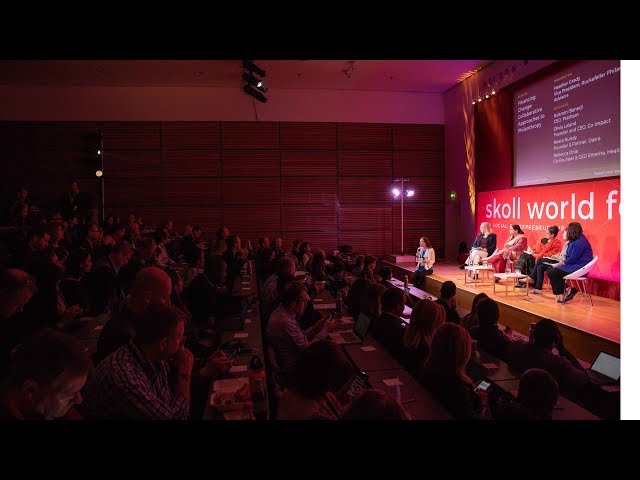
MP Phil Hope speaks on policy innovation at the 2008 Skoll World Forum

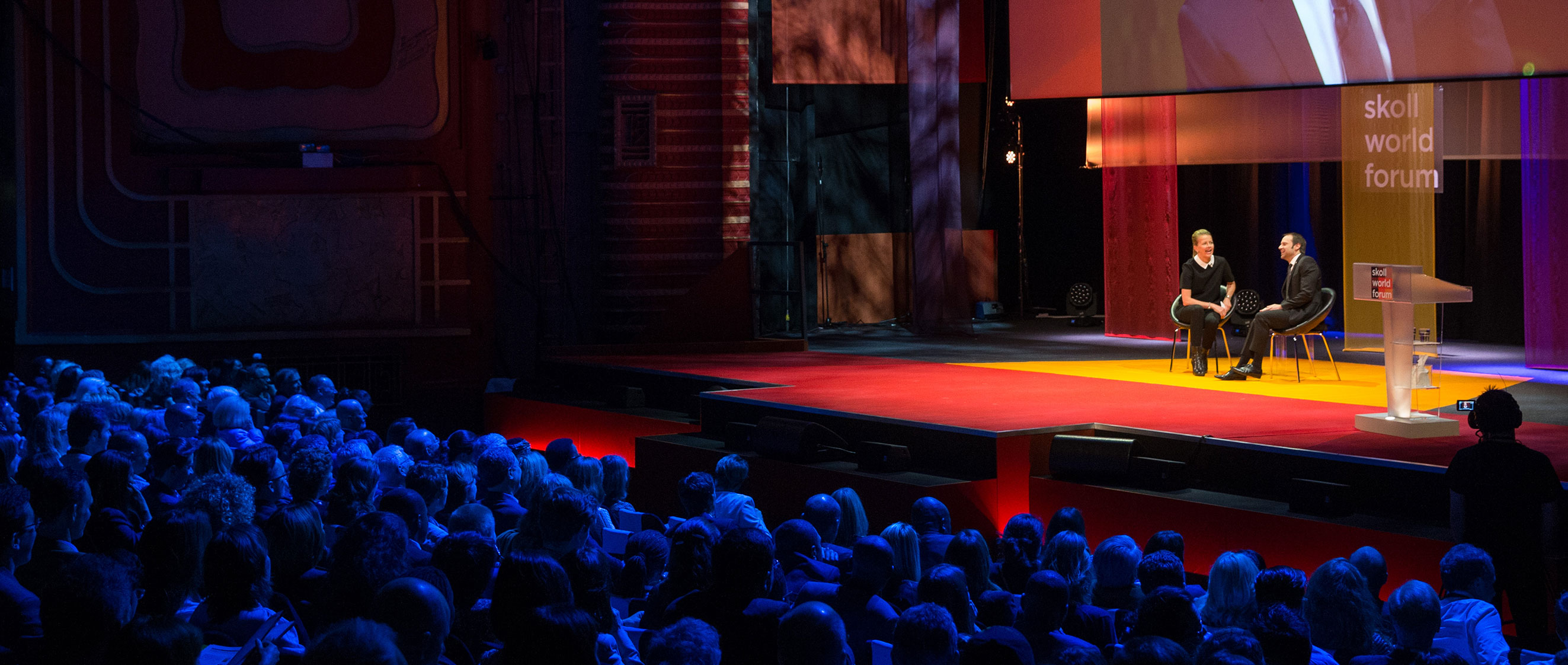
Phil Hope, MP, parliamentary secretary, Minister for the Third Sector, speaks on Culture, Context and Policy Innovation at the opening plenary of the 2008 Skoll World Forum.

With: Phil Hope
Jeff, thank you, Stefan and Jeff rather, thank you very much indeed for inviting me to this very prestigious world event and following somebody like Tony is a bit of a hard act to follow, but it's a pleasure to be here in such illustrious company. My perspective today is as a British labor politician, so when I hear about great social progress and about new steps to tackle in justice, I don't just look around the world as it's taking shape today.

But I think back to the foundation of the modern welfare state 60 years ago. Now, many of you will know how the beverage report wrote the blueprint for our social protection, how an Indian born academic with a two hundred thousand word detailed analysis of technical challenges caught the public imagination by talking about five jobs on a road to reconstruction and that you sold to 600,000 copies and one commentator said that it ranks alongside Steven Hawkins, a brief history of the time is one of the most bought probably one of the least read books that I've published and written.

What I want to talk about today is how the world we look at now is actually stopped by new giants that threaten us more than ever as communities, not just as individuals. I want to talk about how this means a particular social entrepreneurship allied with empowering government action and vibrant markets what i think that means for business and for government and in particular how we can tackle what can be the biggest frustration, social enterprises access to capital.

So first, how are the challenges that face our generation different from the ones that went before. And what's interesting when we think about the giants that face the 1940's is that they were mainly about individual problems, and today they are far more about collective problems. The giants don't attack because it'll only attacks the bonds that lie between us.

So when beverage saw want, today was individual poverty still urgent in Africa around the world. Equally important to us now is inequality. Beverage squalor and today the problem as we've just been hearing is not just squalor in our own housing but pollution in our skies and the changing catastrophe of climate change.

Beverage saw the giant of ignorance and and today, we must look not just to improve into an individual knowledge but also knowledge of each others out communities absorbing increasing flows of operation. A disease and today, as we make progress against individual disease in rich countries, we come up against social epidemics like obesity and diabetes and globally we face the societal problems of HIV AIDS and drug resistant TB.

And finally, Beverage saw idleness. And today we can see untapped energies. Not just for employment but for social action. And we see it from fair trade to community actions individuals not content anymore to leave important decisions for others to make but then analysis also shows how our generation's giants can be defeated, and in fact why social entrepreneurship is so important.

Because, yes government action, of course is important. Nothing can replace it in providing decent funding and public accountability. But partly because the new giants are social, not just individual, the power of the state needs to work with the restless impatience of the market and the moral concern of the individual.

And social entrepreneurship, you lie at the overlap of these three spheres. It has a force of gravity that is bringing each sphere closer to the others. So let me just say a few words about what I think the effects of this will be starting with business. Now as a global society, I think we need to recognize that maximizing financial return is not the only, and indeed, often not the best way of doing businesses.

And I think we need to be more grown up about what we really mean by profit. Concentrating on financial return alone with little care to social or environmental detriment, actually pits businesses against the societies in which they operate and ultimately against their. So mobilizing social entrepreneurs has got to be a part of the art to show that there is the way.

And that's important for two reasons. Because of what the social can do. They fulfill a vital and catalytic role as a change maker, but also because of how they function, their very values and its both of these I think that challenge the way that mainstream businesses operate. They offer challenges to businesses in developed economies, for example how to deliver much better services to the neediest in our society, how to staff interested and motivated how to offer more value, how to differentiate themselves from the competition.

While just an example fifteen years ago, the Cooperative Bank in the UK started ethical reporting setting out its social and environmental impact, and I have to say people at the time thought this was some sort of commercial madness some woolly hippy thinking. Now it's becoming the norm for businesses to tell their customers about their ethics, because its customers that are demanding this information.

The co-op challenged the mainstream and the end has changed that mainstream and just as importantly social enterprises offer challenges to global business. Fair trade of course being the most obvious example, and here in the UK more and more people are choosing to buy fair trade. Consumers are showing that they are prepared to use their buying power to drive social change.

But one thing I am sure about, and many social entrepreneurs have made this point before me. One of the biggest tricks to solving the new giant evils in our world is to harness the power of the market. so what does all this mean for government? And I think the siren we must resist, is the idea that somehow government action is no longer needed.

Governments can lead the way. Governments are unlikely to solve the giant evils on their own, but without them, progress I think will be slow if not non-existent, because government can signal big shifts in behaviour, and I want to give you just a flavor of where I think the UK government thinking is particularly relevant to this conference, and I want to suggest that access to finance is one of the biggest challenges with the biggest prize for social entrepreneurs.

But first, let me mention regulation. I want to give you a different example to the one that Tony gave us. I think social entrepreneurs are often in there early on challenging the status quo. And one example in the uk is a relatively small organization through direct action starting movement to encourage shoppers to reuse shopping bags rather than take the free ones on offer at the supermarkets.

Now that thing got taken up. by the media in a big way. It has culminated now in measures in the recent UK budget to discourage the use of plastic bags. So in the end, behavior right across the board has changed. And its the right way for government to act is to spot opportunities and helpful challenges to the market to develop policies and use it's power often regulatory to create the space for this much bigger shift, possibly, a cultural shift in the whole economy.

Second, I think the government itself needs to be a better customer. In the U.K., the government spends billions of pounds a year on goods and services. We need to think about spending that money much more wisely and much more sustainably. We're encouraging, for example, the use of social contracts in commissioning of public contracts.

These social clauses specify why the social outcomes as part of public sector tenders, and that means that provides more opportunities for social enterprises to win contracts to grow their businesses. By growing larger of course they touch more lives and have more significant. Thirdly I want to mention our approach to enterprise and I think this is particularly relevant to young people.

Because we're passionate about equipping our young people to have that can do attitude that we talked about earlier. And therefore to solve the problems that they come across in their lives and I'm pleased to say that all young people in the UK have guaranteed time in the curriculum for enterprise activity.

But among my main points that I want to make here are about money, because I do think that it is only by mobilizing mainstream finance that we can make social enterprise sustainable, and to enable massive growth, huge growth, on a scale that we need to tackle those giants. That's not necessarily for government, but it can be made possible by government.

On the UK, I'm pleased to say is leading the way in understanding how this works for the third sector. If we can crack a new way of finance business, which takes account of the social and environmental value, as well as, the financial bottom line. And I think we will come a huge step towards joining the power of the market with the power of the social entrepreneur.

Is that real change cannot be financed by small change. And that means mobilizing public and private wealth in a much bigger way. We need to develop concrete mechanisms but how, for harnessing the potential of the millions in the mainstream markets and the pennies in peoples pockets. You might have heard the old adage "you can give a man a fish and feed him for a day, teach him how to fish and you encourage over fishing contributing EU quotas, you deplete already fragile fish stocks and you reduce the biodiversity of the world's oceans.

But seriously, whether we're talking about aid, trade, all paying for public services. We must always be working our way towards sustainable finance. In an uncertain world that is more important than ever and enabling people to catch their own fish, to look after their own families, to build communities that are healthy in mind and in body, is what we must achieve.

And to that end, we've been exploring new mechanisms to drive sustainable finance into the sector. Now we have a third sector which is under capitalized, but I have to say is full of ideas and new solutions. And, we have a private sector looking for profit and looking for new opportunities. We need to find a way of bringing these two worlds together.

A social investment wholesaler could give new impetus to our aim to address the poverty and inequality that I spoke about earlier.

In the U.K., we are introducing legislation to enable unclaimed money in dormant bank accounts to be used for social investment which could amount to many millions. If resources permit, and subject to some state aid implications, we want to see if a portion of those assets used to strengthen finance provision for social investment.

And like an investment bank, a social investment wholesale institution could support the activities of existing investors in the third sector, community development finance institutions for example, but it could also champion social investment. It could raise and provide capital, could provide advice, and crucially it could develop the market itself.

Ultimately, it could be the mechanism that enables the third sector to access significant new secure and sustainable finance. Along side that social investment wholesaler, I want to increase the use of social reporting to measure and quantify the real impact of the third sector. Those things that we know when we see.

Communities more at ease with themselves. Greater self esteem in vulnerable people. Outcomes that are rather more intangible, but we know are the outcomes that we achieve if we are effective and if we can understand more about impact,and be more transparent about that value added, then investors and governments will have more confidence.

And I firmly believe we need to start to measure outcome more effectively. And I also want to touch on ideas for a social stock exchange. This is a mechanism which could potentially engage with millions of people, giving them the opportunity to invest in social value. In normal markets, we agree on values through prices in the market mechanism supply and demand.

Now this social stock exchange is a controversial idea. But it is one that could have real merit in terms of opening up new investment Opportunities. An exchange would operate within the social capital market, in which investors interested in a blended social and financial return might be able to make and trade investments.

That's why I'm very interested in the work being funded by the very forward thinking Rockefeller foundation to explore the feasibility of a social stock exchange. And while that idea, a social stock exchange, may have legs or may not stand up in practice but this time, we in govern are very excited by it's potential to bring people together to connect individuals with the choices they make and the way they spend their money and to capture the engagement of citizens right across the country.

And before I end, I just want to share with you a story which I think and illustrates my central thoughts about the idea of a community's central capital and why it's so important. Last summer I visited a charity called St. John's trust. they work with ex-offenders and disadvantaged people. They help them to get their lives back on track.

Now St. John's was a paid to provide advice to offenders. But the St. John's approach is to train ex-offenders so that they themselves become qualified advice workers. So that means the services are provided by those individuals who have got first hand experience of the issue that they're addressing.

And by working in that way, they, they, they do much more than simply provide advice. They create good will. They show other ex-offenders how others have changed and they become an inspiration and a role model for those people there. They're often able to offer employment to those ex offenders that they had trained in the round.

They had created something very precious to our communities. They created social capital and one volunteer in St John's Jim and I met have been in and out of prison since the age of 15. Served 9 custodial entities and he first came into contact with trust while he was in prison. Six months after coming out he successfully applied for a job supervising and mentoring a team of twelve ex-offenders who have been trained themselves to earn formal qualifications.

I strongly believe that we can help to scale up these enterprising models which in turn scale up the building of that vital social capital. But let me end by returning to Beverage. I said at the start that he laid the blueprint for our welfare state but that's actually not the whole story. In the end of the nineteenth century, the social researcher, Charles Booth confronted the arguments that there was no real policy in Britain.

He showed there was exactly where it was and just how deep it was. And working for him was a young woman, later known as the socialist campaign who are a quarter of a century later confronted the arguments with the best response to property was the workhouse and penal conditions. A beverage worked for web on that report and thirty years later drew on it's ideas for his own report.

Working for beverage was a young academic called Howard Wilson who twenty years later was laid up Prime Minister and help extend the world of estate to the challenges of his time. Now that kind of change and the change now takes risk and it takes experiments. And in a sense I think we should see social entrepreneurship as the latest form in And continuing evolution.

A new experiment in the journey from philanthropy to state action to a new partnership between state, the market and the individual. And I am profoundly hopeful of what social entrepreneurship can achieve. So, I'd like to add my welcome to you to this conference on behalf of the government for those of you welcome to Britain.

And I'm sure in the coming days we will hear new expressions of Beverage's favorite invocation, the driving power of social conscience. Thank you very much.
Related Videos