Lord Sainsbury – Science, Philanthropy and the Quest for Change – Skoll World Forum 2011
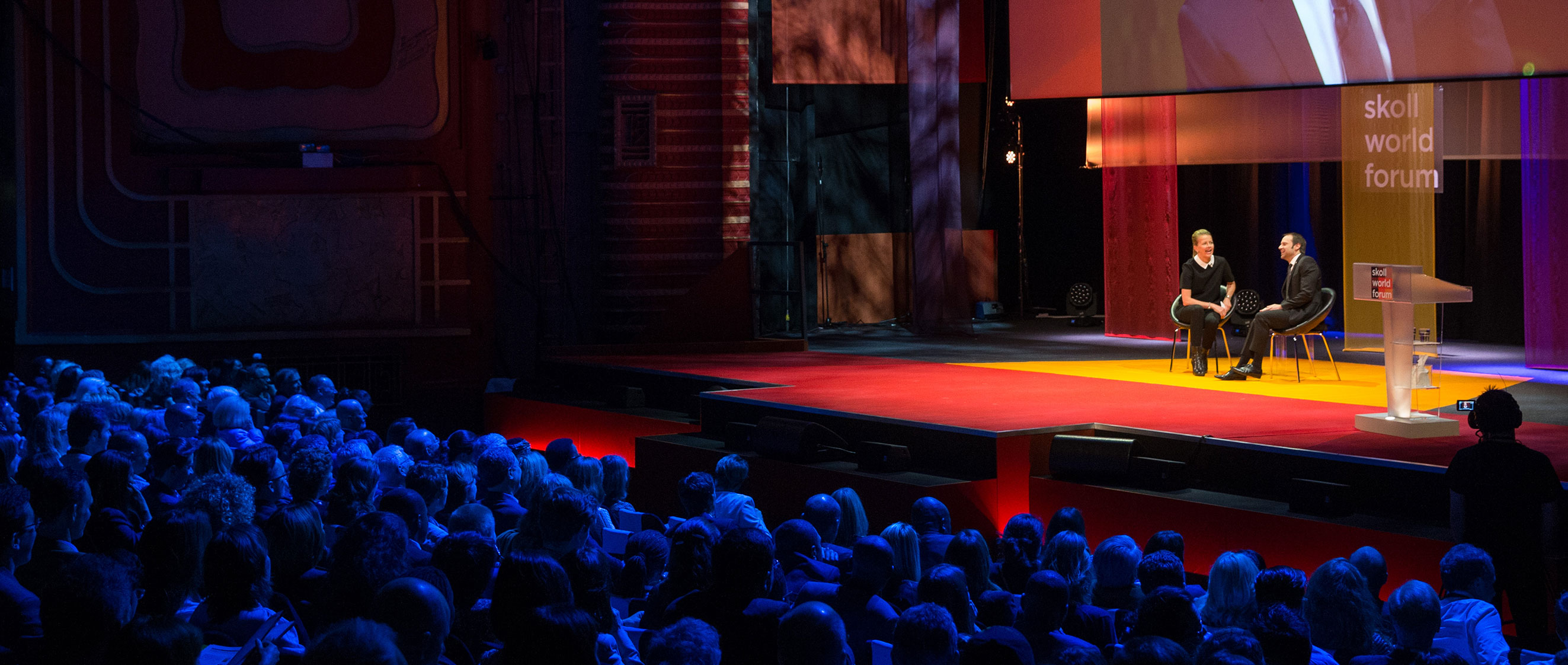
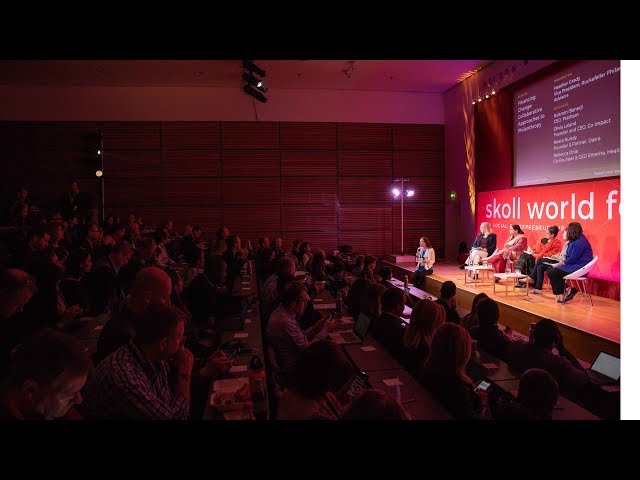
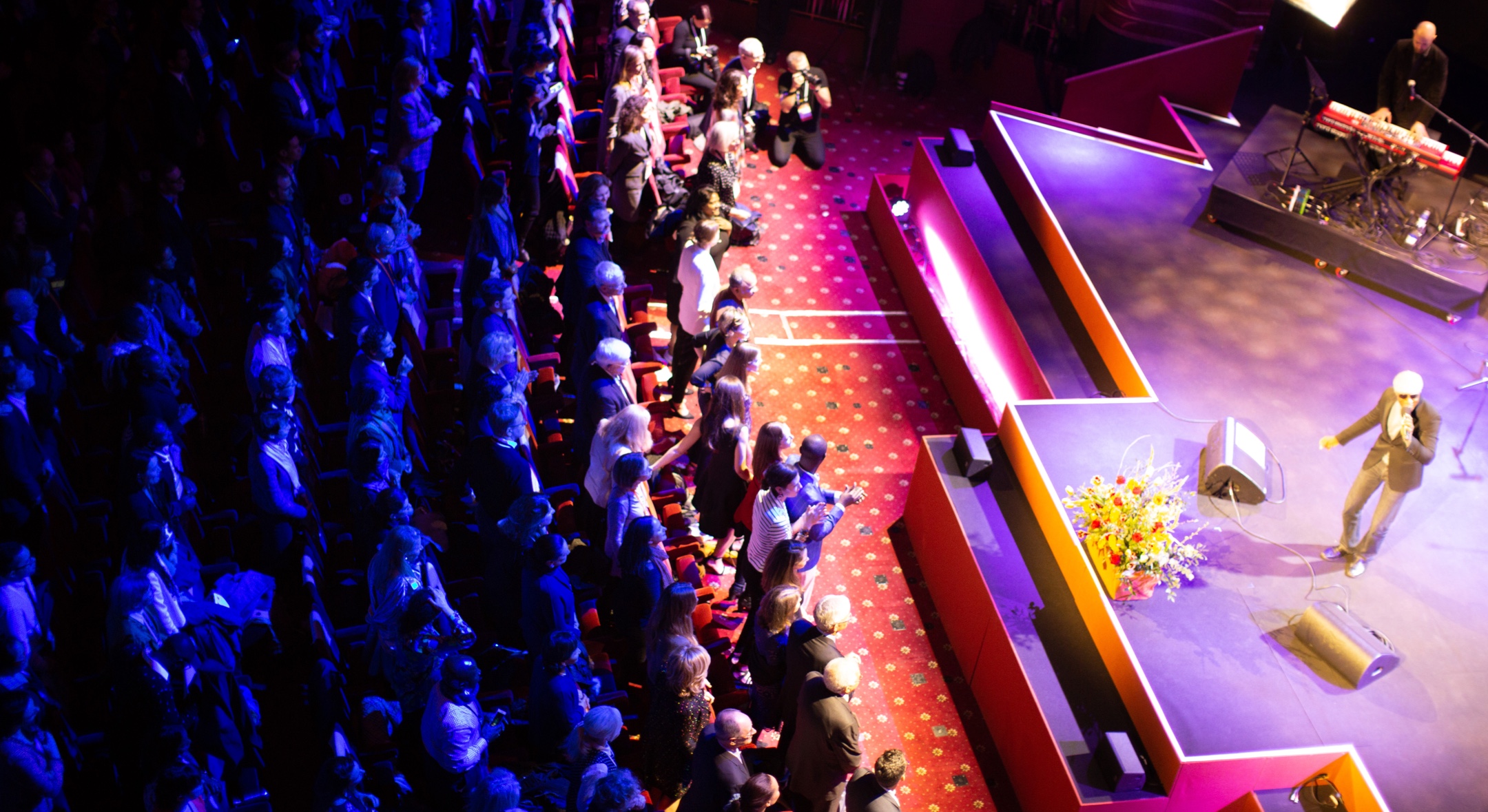
Lord Sainsbury delivers a speech on science, philanthropy and the quest for change at the 2011 Skoll World Forum closing plenary.
Such a pleasure to have a chance to talk to you and for all of us to hear what you have to say Lord Sainsbury, or if I may call you David. Yeah, sure. Must be a bit weird you're called a human ecosystem.
Yeah, I was wondering exactly how I fitted that description, yes.
Well, you form a grocer, businessmen. Sainsbury's is one of Britain's largest supermarkets. Former government minister for several years of science and technology with the labor government and scientist because you have a degree in not just history but also psychology and philanthropist. And I wanted to start by asking you about your decision to found the Gatsby Charitable foundation when you were only 27.
That it is pretty exceptional in itself, to do that thing, isn't it?
I wouldn't like to claim any great credit for this. I mean, what happened was At the age of 27 I received through my father through a family trust, what was about 40% of the day shares in Sainsbury. And I was meeting send off to the family solicitor to discuss what I'm going to do with this and she said of course, "you'll be setting up a charitable trust." As solicitors do on these occasions she said that "You also got to set up a trust for your children."
At that stage I wasn't even married, so I thought this was kind of looking far ahead. My parents have always had a childhood trust, so, I was brought up to think this was something that was good to do, so I set it up. Of course, at that stage it wasn't very significant, because it was still a family business.
We paid very little dividends, and there was very little money in it. And it was only about four five years later that it began to have a sizable income and be really of interest in terms of doing things.
It's called
The Gatsby Charitable Trust, named after Jay Gatsby and The Great Gatsby.
Yes, it was called after
the Great Gatsby, apologize again, my friend insists to say, what do you want to call it? And I had not given it any thought, so I said what do people call it. She said, they often call it after a favorite flower, or a book, or something like that, well my favorite flower was a Daffodil. And I thought, I can't call it the Daffodil Trust, but my favorite book at that point was The Great Gatsby, and it kind of works, because to me that is a book about someone who follows his dreams, and that's the great end of the book.
It's really about when he says, "Tomorrow we will run faster, stretch out our arms further and one fine morning." That's really what the book is about, it's about following your dream, and I thought for a charitable trust, that was a good name.
I guess that's what philanthropy is about, for those who can do it following your dreams.
It's over 40 years ago, since you began; the world has changed, as we've been hearing, enormously since than. How much of the challenges of being a philanthropist changed? I don't think, I don't think that much really, to me the point about philanthropy is that you see problems, or you see opportunities to do things. And if you are a social entrepreneur, which in some sense, I think I am. You don't want kind of say, "well there is a problem," you want to do something about it.
I think when we saw motivation then was the same as I have today, which is to do something about it. The thing that's changed, of course, is those early days, I hadn't got very clear views what I wanted to do. And I did a lot of small things, and then gradually found, which of the really big things, that I care to do, and built up the expertise.
I have also a team of other social entrepreneurs who put the projects together for me.
So you really targeted certain areas. Now you are know for work in neuroscience also plant science work in Africa. So the idea is that you want to, narrow your focus to be able to do more.
Yeah, it
always, well I, I always wanted to be proactive, I don't want to do it where you just sit there and say to people bring projects and than I will decide, well I think thats a good project. And I don't think thats a very effective way, and it's not the way I see philanthropy.
If you are going to be proactive, of course you've got make certain you've got the people who and put together the projects for you who know the subjects really well. And that means you have to limit it to a limited number of subjects so that you can to be really informed about those subjects.
One of the things, that you've been very passionate about, and I am sure this must be to some extent formed by your experience in government, as a government minister, is that the role of the private sector can be to take risks where governments can't go because they have to think about the next election. And all sorts of other considerations?
It seems to me that the kind of philanthropy I'm interested in, you can't substitute for the welfare state. And in any case I think in most cases, it's not at all clear to me that charitable trusts do the welfare state probably better than government because it's naturally rather fragmented and arbitrary.
What charitable trust can do is to do the innovation of the kind of R and D for government, and take risks the government can't do. I think I always knew that but when I was in government, I realized even more the government is absolutely hopeless when it comes to innovation and even worse is experimentation. And the reason for that is, in the first year in government, you can admit that there are problem because you blame them on the previous law.
And after that, it's very difficult to admit that you do have any problems. And if you do admit you have a problem, you have to be able to say, "But I know the answer and indeed I'm already doing it." If you say we have a problem and I don't really know what to do about it. Of course you lose out immediately as a politician.
As someone running a charitable trust what motivates you is seeing problems or opportunities and driving forward to that and being prepared to take risks.
You mention fragmentary one of
the debate has been here the the last few days it's hard to be less fragmented and individual, and join up more, more partnerships to have bigger impact.
Isn't there a problem if you have partnerships, though, that you can then be held back. Say a partnership with government be held back by their cautiousness.
I think you can. It depends of course slightly on the area.
In Africa, for example.
In Africa I think it's very simple. You have to cooperate. These are huge countries. You can do little projects, and in the early days we did so little projects, but there are real questions of sustainability and a real case of what difference does it make? We did some very good projects in early days.
We did a project which was to develop a kind of cassava, cassava being one of the big food sources. And we developed a by traditional breeding, I add, we developed a version of cassava which was resistant to mosaic virus, cassava, which is one of their big desease problems. And we implemented this and it was very successful in one small area. But we never went further, we never got other people to pick it up. So, we now very much think in terms of working with government, particularly encouraging therm where they've got agricultural extension services, so if you can make a success of it then it will be rolled out to the rest of the country.
So you have got to do that through government in under question of partnerships with other philanthropist of the social entrepreneurs?
I think partnerships with others and we have a very strong policy of having partnerships with other charitable trusts, again because you have limited resources and by joining forces, you can just make it more effective.
So, For example, with the Wood Trust. We have a big project on Tian Tanzania. And, of course the neuroscience project where we're setting a new center of a neuroscience we are doing with the welcome trust so we do have enough for our part to do that really well.
You mentioned cassava I suppose
that's one neuro where two passions of yours conjoin.
One is genetic research, plant science but also aware this can help people combat the problem of food scarcity, although you've been doing this since 1985, so I guess right at the beginning, it wasn't quite clear where this would lead.
Well I thought, we
started doing the plant research in 1985, we picked a particular area which was disease resistance in plants, which is a very interesting area.
I think one of the things it was clear. It was not my idea. I have a great friend who was a friend of mine at Cambridge, who was a molecular biologist, has done a lot of advice for me on areas of science. And he came along in the middle eighties and said there has been this enormous breakthrough because we've been using these genetic techniques with viruses and bacteria and we've now discovered a way you can genetically engineer plants. And this is the case where if you change, you have a big change in technology its suddenly opens a field and you can do all sorts of experiments you just simply can't do before. And we felt and I think rightly that, this was both exciting science but it would also have huge benefits.
In terms of benefits for the environment and the third world. And particularly in this area of disease resistance in plant because, a lot of food crops a lost because of disease in the third world and this third world. would be a way of producing plants that would be disease-resistant to the fungi or bacteria which was a problem.
Because it had the other wonderfully attractive thing, which is you could use very high technology to produce a seed. And of course a seed is the most wonderfully efficient way of transferring technology to a country. Because this is nothing very difficult about planting a seed, but you can use very sophisticated science to produce better seeds which would have these great benefits.
We made a mistake. We thought, because you can do it within 10 years, there would be a huge amount of product coming out of this. It took... its taken 25 years, but I think now you can see the real benefits will be coming through.
It has become very controversial particularly in this country, hasn't it, the idea of Frankenstein foods.
Yeah. Donna, I mean it's always kind of one of the ironies in my life that I started out on this project thinking it was great science, but it would also have huge benefits for the environment and the third world. Twenty five years later, I find myself as a minister being lambasted by the press as this monstrous man who is stuffing frankenstized foods down children's throats, but actually I was right.
This will have huge benefits and actually we're now... this whole thing is becoming kind of ridiculous. You know we've effectively had the biggest clinical trial the world has ever seen of a particular technology and no one has died which is quite unusual for new technology. And if you go to America today, I think Soya is 85% GM, maize is 75% GM, so, you will be eaten GM food.
And as I know, there is no case in America no legal case which says the GM is posed any harm now for America, that is fantastic. I mean you have to now say it's OK.
But it's an interesting case, isn't it of unintended consequences, because here are you a philanthropist, who is pouring money into this in order to try and make something better, and actually there was this enormous backlash. So it turns out it's not enough just to development the technology. You, also, have to think about the communication and the perception of risk, which has also been a big theme this forum this week.
Yeah, I think the GM thing, you can learn a lot of lessons from that. A lot of scientists believe the public doesn't understand about risk. I don't believe that. I think people understand this very well. What the scientist don't understand is how people think about risk. And there are a couple of things that are very clear about people's attitude to risk.
One is, they really hate anything which is not voluntary. If you do it voluntarily, people will climb mountains, ride bicycles, all sorts of things which may end up perfectly well, risky. But it is their choice.
But you can't choose whether your soy beans are going to have GM in it or not.
That is why people were unhappy about it, so one of the great mistakes is we cant distinguish between the soil which has been genetically modified and ones that have not. And actually in Sainsbury's in the early days we sold GM products, but we labeled them as such.
And we had always a choice, and actually when I left Sainsbury's become minister the GM product was out selling the other one. But as soon as you got into this question and you wouldn't be able to say which was which, then people got very very unhappy about it. Oh, the second thing is people need to have some reward as opposed to off set the risk.
And five percent off GM tomato paste was not considered a good enough reason for taking taking any risks. If you can now produce a product which really has benefits, then I don't think there's a problem.
You mean if you sold the tomato paste at half price then maybe that was OK?
Well, Bob May, who was Chief Scientific Advisor when I was minister. He always used to say, when we had these rather fraught discussions about GM, "David, just as soon as we can produce a GM powder, and you take a table spoon full of it every morning and you'll be witty and slim all day; this problem will go away.
So I think this is risk-able reward.
Let's talk a little bit about your passion for neuroscience, because this is an area which you're now doing a lot of work in your charities, doing a lot of work in. When did you start? I mean you were interested in neuroscience from your days at University.
I was interested in, I read psychology for two years. I was really interested in so brain research. But it was quite
a limited subject because there was limited technology to do things.
Then I went in the family business. I thought of doing research at one stage, and I thought, I'm not going to be good enough. And there were some kind of financial reasons for going into the family business. And I sort of kept a bit of an interest for the next 25 years or so. and then I realized, and this great friend of mine realized, that again there was a case where the technology came through, which really was transforming the subject. So again, you could do lots of new and exciting things.
For instance, you could use molecular biology to engineer neurons in the brain so you can turn on and off with using yellow or you like to change them. And this transforms the subject and it's why I believe it's going to be the most exciting subject next 25, 30 years.
Do you think it's an area where you can not just provide funds for groundbreaking research, but which can be applied also to the idea of helping people in the world who are poor, who are disadvantaged.
Well, I've taken on the on the neuroscience, it seems to me it will huge benefits in due course. This is very basic research. It's, how does actually neurocircuits work in the brain and produce behavior. I must say, up until recently, I have taken the view that it is going to be twenty years before it. I think this is wrong actually. I think it's going to affect all sorts of things in all sorts of complicated ways rather quickly.
Motorneuron disease is already people are beginning to think, how does our knowledge of neuroscience change this? So I think it may come much quicker. And of course a lot of things, whether it's psychiatric illnesses or Alzheimer's, I think will probably, there will be a big boost to our understanding of these things.
Because just as we begin to understand more about neurons and neural circuits, out of that will come a lot of knowledge which is very useful.
Looking back over all these decades, what are you most proud of as a philanthropist and social entrepreneur?
I'm pretty proud of the plant research. I mean, we are the people that did, not only world class science, but they've actually really developed the subject, probably as much as anyone in the world. And this is going to have huge benefits. And then there's one small project, which I kind of absolutely laugh, which I suppose I can talk about, because it was actually done by my trustees, I hope with my presiding spirit, when I was in government.
Because in government, I wasn't to do anything charitable for rather obscure reasons. They did this wonderful project. We've done a lot on science and maths education. There was an extraordinary thing happening in England, which is the people doing further mathematics at A level, the number was falling rather rapidly, and it had gone down from 5000 to 4500 and this is very important in a lot of scientific subjects.
When asked, everyone said, oh well it's young people; they're not like us, they don't like difficult problems, they don't work hard. We did a project looking at this, and we found that quite to contrary, lots of the reason people weren't doing it, because it wasn't on offer in lots of schools, because they didn't have the teachers who were skilled to do it.
So we did a project in which we got an online system, they could learn further maths with some mentoring. Now the numbers have gone right up to seven, eight thousand. And there's one other story, if you really tackle a problem, and you do it with imagination, you can turn around these things which look rather hopeless.
A great example, thank you very much.
Thank you.
David, for sharing with us your experience.
Yeah, I was wondering exactly how I fitted that description, yes.
Well, you form a grocer, businessmen. Sainsbury's is one of Britain's largest supermarkets. Former government minister for several years of science and technology with the labor government and scientist because you have a degree in not just history but also psychology and philanthropist. And I wanted to start by asking you about your decision to found the Gatsby Charitable foundation when you were only 27.
That it is pretty exceptional in itself, to do that thing, isn't it?
I wouldn't like to claim any great credit for this. I mean, what happened was At the age of 27 I received through my father through a family trust, what was about 40% of the day shares in Sainsbury. And I was meeting send off to the family solicitor to discuss what I'm going to do with this and she said of course, "you'll be setting up a charitable trust." As solicitors do on these occasions she said that "You also got to set up a trust for your children."
At that stage I wasn't even married, so I thought this was kind of looking far ahead. My parents have always had a childhood trust, so, I was brought up to think this was something that was good to do, so I set it up. Of course, at that stage it wasn't very significant, because it was still a family business.
We paid very little dividends, and there was very little money in it. And it was only about four five years later that it began to have a sizable income and be really of interest in terms of doing things.
It's called
The Gatsby Charitable Trust, named after Jay Gatsby and The Great Gatsby.
Yes, it was called after
the Great Gatsby, apologize again, my friend insists to say, what do you want to call it? And I had not given it any thought, so I said what do people call it. She said, they often call it after a favorite flower, or a book, or something like that, well my favorite flower was a Daffodil. And I thought, I can't call it the Daffodil Trust, but my favorite book at that point was The Great Gatsby, and it kind of works, because to me that is a book about someone who follows his dreams, and that's the great end of the book.
It's really about when he says, "Tomorrow we will run faster, stretch out our arms further and one fine morning." That's really what the book is about, it's about following your dream, and I thought for a charitable trust, that was a good name.
I guess that's what philanthropy is about, for those who can do it following your dreams.
It's over 40 years ago, since you began; the world has changed, as we've been hearing, enormously since than. How much of the challenges of being a philanthropist changed? I don't think, I don't think that much really, to me the point about philanthropy is that you see problems, or you see opportunities to do things. And if you are a social entrepreneur, which in some sense, I think I am. You don't want kind of say, "well there is a problem," you want to do something about it.
I think when we saw motivation then was the same as I have today, which is to do something about it. The thing that's changed, of course, is those early days, I hadn't got very clear views what I wanted to do. And I did a lot of small things, and then gradually found, which of the really big things, that I care to do, and built up the expertise.
I have also a team of other social entrepreneurs who put the projects together for me.
So you really targeted certain areas. Now you are know for work in neuroscience also plant science work in Africa. So the idea is that you want to, narrow your focus to be able to do more.
Yeah, it
always, well I, I always wanted to be proactive, I don't want to do it where you just sit there and say to people bring projects and than I will decide, well I think thats a good project. And I don't think thats a very effective way, and it's not the way I see philanthropy.
If you are going to be proactive, of course you've got make certain you've got the people who and put together the projects for you who know the subjects really well. And that means you have to limit it to a limited number of subjects so that you can to be really informed about those subjects.
One of the things, that you've been very passionate about, and I am sure this must be to some extent formed by your experience in government, as a government minister, is that the role of the private sector can be to take risks where governments can't go because they have to think about the next election. And all sorts of other considerations?
It seems to me that the kind of philanthropy I'm interested in, you can't substitute for the welfare state. And in any case I think in most cases, it's not at all clear to me that charitable trusts do the welfare state probably better than government because it's naturally rather fragmented and arbitrary.
What charitable trust can do is to do the innovation of the kind of R and D for government, and take risks the government can't do. I think I always knew that but when I was in government, I realized even more the government is absolutely hopeless when it comes to innovation and even worse is experimentation. And the reason for that is, in the first year in government, you can admit that there are problem because you blame them on the previous law.
And after that, it's very difficult to admit that you do have any problems. And if you do admit you have a problem, you have to be able to say, "But I know the answer and indeed I'm already doing it." If you say we have a problem and I don't really know what to do about it. Of course you lose out immediately as a politician.
As someone running a charitable trust what motivates you is seeing problems or opportunities and driving forward to that and being prepared to take risks.
You mention fragmentary one of
the debate has been here the the last few days it's hard to be less fragmented and individual, and join up more, more partnerships to have bigger impact.
Isn't there a problem if you have partnerships, though, that you can then be held back. Say a partnership with government be held back by their cautiousness.
I think you can. It depends of course slightly on the area.
In Africa, for example.
In Africa I think it's very simple. You have to cooperate. These are huge countries. You can do little projects, and in the early days we did so little projects, but there are real questions of sustainability and a real case of what difference does it make? We did some very good projects in early days.
We did a project which was to develop a kind of cassava, cassava being one of the big food sources. And we developed a by traditional breeding, I add, we developed a version of cassava which was resistant to mosaic virus, cassava, which is one of their big desease problems. And we implemented this and it was very successful in one small area. But we never went further, we never got other people to pick it up. So, we now very much think in terms of working with government, particularly encouraging therm where they've got agricultural extension services, so if you can make a success of it then it will be rolled out to the rest of the country.
So you have got to do that through government in under question of partnerships with other philanthropist of the social entrepreneurs?
I think partnerships with others and we have a very strong policy of having partnerships with other charitable trusts, again because you have limited resources and by joining forces, you can just make it more effective.
So, For example, with the Wood Trust. We have a big project on Tian Tanzania. And, of course the neuroscience project where we're setting a new center of a neuroscience we are doing with the welcome trust so we do have enough for our part to do that really well.
You mentioned cassava I suppose
that's one neuro where two passions of yours conjoin.
One is genetic research, plant science but also aware this can help people combat the problem of food scarcity, although you've been doing this since 1985, so I guess right at the beginning, it wasn't quite clear where this would lead.
Well I thought, we
started doing the plant research in 1985, we picked a particular area which was disease resistance in plants, which is a very interesting area.
I think one of the things it was clear. It was not my idea. I have a great friend who was a friend of mine at Cambridge, who was a molecular biologist, has done a lot of advice for me on areas of science. And he came along in the middle eighties and said there has been this enormous breakthrough because we've been using these genetic techniques with viruses and bacteria and we've now discovered a way you can genetically engineer plants. And this is the case where if you change, you have a big change in technology its suddenly opens a field and you can do all sorts of experiments you just simply can't do before. And we felt and I think rightly that, this was both exciting science but it would also have huge benefits.
In terms of benefits for the environment and the third world. And particularly in this area of disease resistance in plant because, a lot of food crops a lost because of disease in the third world and this third world. would be a way of producing plants that would be disease-resistant to the fungi or bacteria which was a problem.
Because it had the other wonderfully attractive thing, which is you could use very high technology to produce a seed. And of course a seed is the most wonderfully efficient way of transferring technology to a country. Because this is nothing very difficult about planting a seed, but you can use very sophisticated science to produce better seeds which would have these great benefits.
We made a mistake. We thought, because you can do it within 10 years, there would be a huge amount of product coming out of this. It took... its taken 25 years, but I think now you can see the real benefits will be coming through.
It has become very controversial particularly in this country, hasn't it, the idea of Frankenstein foods.
Yeah. Donna, I mean it's always kind of one of the ironies in my life that I started out on this project thinking it was great science, but it would also have huge benefits for the environment and the third world. Twenty five years later, I find myself as a minister being lambasted by the press as this monstrous man who is stuffing frankenstized foods down children's throats, but actually I was right.
This will have huge benefits and actually we're now... this whole thing is becoming kind of ridiculous. You know we've effectively had the biggest clinical trial the world has ever seen of a particular technology and no one has died which is quite unusual for new technology. And if you go to America today, I think Soya is 85% GM, maize is 75% GM, so, you will be eaten GM food.
And as I know, there is no case in America no legal case which says the GM is posed any harm now for America, that is fantastic. I mean you have to now say it's OK.
But it's an interesting case, isn't it of unintended consequences, because here are you a philanthropist, who is pouring money into this in order to try and make something better, and actually there was this enormous backlash. So it turns out it's not enough just to development the technology. You, also, have to think about the communication and the perception of risk, which has also been a big theme this forum this week.
Yeah, I think the GM thing, you can learn a lot of lessons from that. A lot of scientists believe the public doesn't understand about risk. I don't believe that. I think people understand this very well. What the scientist don't understand is how people think about risk. And there are a couple of things that are very clear about people's attitude to risk.
One is, they really hate anything which is not voluntary. If you do it voluntarily, people will climb mountains, ride bicycles, all sorts of things which may end up perfectly well, risky. But it is their choice.
But you can't choose whether your soy beans are going to have GM in it or not.
That is why people were unhappy about it, so one of the great mistakes is we cant distinguish between the soil which has been genetically modified and ones that have not. And actually in Sainsbury's in the early days we sold GM products, but we labeled them as such.
And we had always a choice, and actually when I left Sainsbury's become minister the GM product was out selling the other one. But as soon as you got into this question and you wouldn't be able to say which was which, then people got very very unhappy about it. Oh, the second thing is people need to have some reward as opposed to off set the risk.
And five percent off GM tomato paste was not considered a good enough reason for taking taking any risks. If you can now produce a product which really has benefits, then I don't think there's a problem.
You mean if you sold the tomato paste at half price then maybe that was OK?
Well, Bob May, who was Chief Scientific Advisor when I was minister. He always used to say, when we had these rather fraught discussions about GM, "David, just as soon as we can produce a GM powder, and you take a table spoon full of it every morning and you'll be witty and slim all day; this problem will go away.
So I think this is risk-able reward.
Let's talk a little bit about your passion for neuroscience, because this is an area which you're now doing a lot of work in your charities, doing a lot of work in. When did you start? I mean you were interested in neuroscience from your days at University.
I was interested in, I read psychology for two years. I was really interested in so brain research. But it was quite
a limited subject because there was limited technology to do things.
Then I went in the family business. I thought of doing research at one stage, and I thought, I'm not going to be good enough. And there were some kind of financial reasons for going into the family business. And I sort of kept a bit of an interest for the next 25 years or so. and then I realized, and this great friend of mine realized, that again there was a case where the technology came through, which really was transforming the subject. So again, you could do lots of new and exciting things.
For instance, you could use molecular biology to engineer neurons in the brain so you can turn on and off with using yellow or you like to change them. And this transforms the subject and it's why I believe it's going to be the most exciting subject next 25, 30 years.
Do you think it's an area where you can not just provide funds for groundbreaking research, but which can be applied also to the idea of helping people in the world who are poor, who are disadvantaged.
Well, I've taken on the on the neuroscience, it seems to me it will huge benefits in due course. This is very basic research. It's, how does actually neurocircuits work in the brain and produce behavior. I must say, up until recently, I have taken the view that it is going to be twenty years before it. I think this is wrong actually. I think it's going to affect all sorts of things in all sorts of complicated ways rather quickly.
Motorneuron disease is already people are beginning to think, how does our knowledge of neuroscience change this? So I think it may come much quicker. And of course a lot of things, whether it's psychiatric illnesses or Alzheimer's, I think will probably, there will be a big boost to our understanding of these things.
Because just as we begin to understand more about neurons and neural circuits, out of that will come a lot of knowledge which is very useful.
Looking back over all these decades, what are you most proud of as a philanthropist and social entrepreneur?
I'm pretty proud of the plant research. I mean, we are the people that did, not only world class science, but they've actually really developed the subject, probably as much as anyone in the world. And this is going to have huge benefits. And then there's one small project, which I kind of absolutely laugh, which I suppose I can talk about, because it was actually done by my trustees, I hope with my presiding spirit, when I was in government.
Because in government, I wasn't to do anything charitable for rather obscure reasons. They did this wonderful project. We've done a lot on science and maths education. There was an extraordinary thing happening in England, which is the people doing further mathematics at A level, the number was falling rather rapidly, and it had gone down from 5000 to 4500 and this is very important in a lot of scientific subjects.
When asked, everyone said, oh well it's young people; they're not like us, they don't like difficult problems, they don't work hard. We did a project looking at this, and we found that quite to contrary, lots of the reason people weren't doing it, because it wasn't on offer in lots of schools, because they didn't have the teachers who were skilled to do it.
So we did a project in which we got an online system, they could learn further maths with some mentoring. Now the numbers have gone right up to seven, eight thousand. And there's one other story, if you really tackle a problem, and you do it with imagination, you can turn around these things which look rather hopeless.
A great example, thank you very much.
Thank you.
David, for sharing with us your experience.