Collective Power: A Call For Urgency
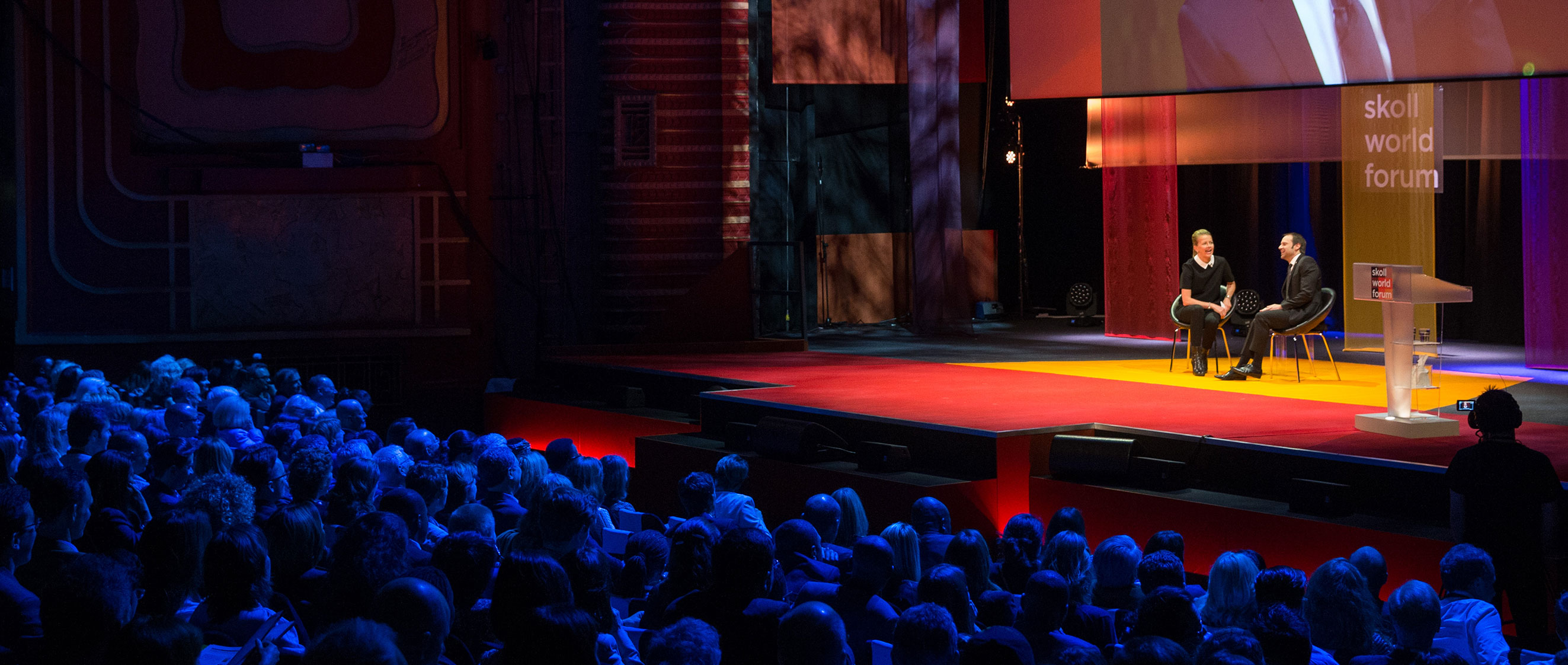
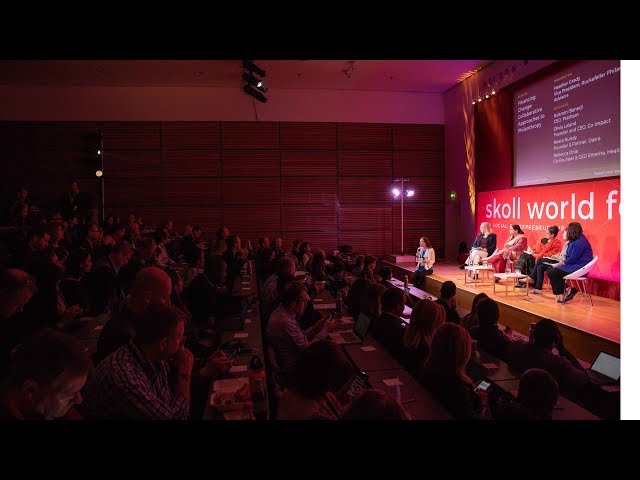
Jeff Skoll talks at the closing plenary of the Skoll World Forum 2009. His talk, called “Collective Power: A Call for Urgency,” is about urgency and hope. “Urgency is on an upward path. We’ve made some progress on the big challenges in the world, but each passing day raises the stakes.”
With: Jeff Skoll
Thank you very much, Pamela, and storytelling on the first night of Ken Brecker to Katie Cunstall last night. The wonderful celebration of our. Over the last few days, we've been informed Within inspired and within challenged. In some cases within freightened and brightly saw. So what can I add in these last few minutes of the forum I can talk about the trip that Sally Osburke and I made to the rain forest late last year and show video of us slogging through the jungle set to a bosonova beat but I don't know that are recorded.
But that should did re-inforced two issues that are very relevant today urgency and hope. Urgency is on an upward path. We've made some progress on the big challenges in the world, but each passing day raises the mistakes and the economic crisis makes that just as much harder. The hope is on an upward path too.
After a long dwell we finally have the potential for significant U S engagement on the critical social and environmental issues that affect us a lot and we approaching There should be an inflection point. There are forces coming together, evolutionary and revolutionary. Charles Darwin, there's been a lot written about Darwin and his impact on Science, Religion, and Society, but there's a perspective about Darwin explanation of exactly how physical variations were passed from generation to generation didn't exist.
It took a revolutionary discovery. in genetics in 1953, DNA double helix, to provide hard scientific evidence to support Darwin's theory. It took this revolutionary, exogenous factor to fully validate what Darwin had conjectured. At similar process is at play in s ocial entrepreneurship. Social entrepreneurship has been around for many years.
Florence Nightengale and Maria Montessori were historical social entrepreneurs and the term was first used in academic literature in the sixties and seventies, and then popularized by folks like Bill Drayton and Charlie Leadbeater in the eighties. The Grameen Bank, the Manchester Craftsmen's Guild, YouthBuild and Gramvikas have all been around for 30 years or more.
The field of social entrepreneurship has evolved, expanded and strengthened over those three decades. Now there's a revolutionary, exogenous Shocked the may will prepare social launch partnership in the main stream like the discovery of DNA did theoric The economic crisis is forcing a rethink of the role of corporations, government and social sector organisations .
His business is usual still the right core of business and it seems clear to me that the answer to that last question is no and we can't go about business is usual. and while we do not know exactly how the economic meltdown is going to play out, it does seem clear that social entrepreneurs are positioned to merge from [xx] crisis not only as survivors but also as leaders, and I'll come back to that in a minute.
The world today is a scary place. There are a number of real threats that could render all of our work obsolete in as little as a few years or a few decades. One of these threats, as we all know, is climate change and we were privileged to have the perspective of Dr. Patchuary last night. There are many social entrepreneurs working on climate.
Mindy Lubber and Ceres are working with the biggest names in corporate America and the financial sector to fight climate change. Mark Plotkin and Liliana Madrigal of the Amazon Conservation team, and Martin von Hildebrand of Gaia Amazonas are making huge strides to protect the rainforest. Michael Eckhart of ACORE God will not guarantee a happy ending.
So, I think we need to consider some additional ways to make a difference via direct action, education Through policy, the foundation is been supporting few for climate protection in America to make climate change a priority The issue and we also announced this week a major partnership with Veena to protect the amazon rain forest but the challenge is vast.
are working on water concerns. But we continue to fall behind globally. Rapid industrialization and urbanization Copies, Friends of the middle east, friends of the earth middle east and survivors in jazz all the rub is widely important but still we need to do more. change at the global DNA level.
The crisis has made it clear that exponential consumption is no longer viable. Social entrepreneurs are found by their creativity, including their ability to produce results with limited resources. You are keystone pieces in the social change architecture. You have a disproportionate effect on the world relative to your numbers and your role and your importance will only be strengthen by the economic crisis and this isn't just speculation.
Some entrepreneurs are already seeing new resources flowering their way. Looking at your assets. times social entrepreneurs can come alive from working with each other for example for farmer a farmer's health has been talking with finery in the grips of financial despair and melting social unease, the challenges loom large before us and yet it is always we leave Oxford.
After all as one economist and I shuttered to end on a courtable economist but the economist Paul Romer famously stated A Crisis is a terrible thing to waste. So thank you all very much.
But that should did re-inforced two issues that are very relevant today urgency and hope. Urgency is on an upward path. We've made some progress on the big challenges in the world, but each passing day raises the mistakes and the economic crisis makes that just as much harder. The hope is on an upward path too.
After a long dwell we finally have the potential for significant U S engagement on the critical social and environmental issues that affect us a lot and we approaching There should be an inflection point. There are forces coming together, evolutionary and revolutionary. Charles Darwin, there's been a lot written about Darwin and his impact on Science, Religion, and Society, but there's a perspective about Darwin explanation of exactly how physical variations were passed from generation to generation didn't exist.
It took a revolutionary discovery. in genetics in 1953, DNA double helix, to provide hard scientific evidence to support Darwin's theory. It took this revolutionary, exogenous factor to fully validate what Darwin had conjectured. At similar process is at play in s ocial entrepreneurship. Social entrepreneurship has been around for many years.
Florence Nightengale and Maria Montessori were historical social entrepreneurs and the term was first used in academic literature in the sixties and seventies, and then popularized by folks like Bill Drayton and Charlie Leadbeater in the eighties. The Grameen Bank, the Manchester Craftsmen's Guild, YouthBuild and Gramvikas have all been around for 30 years or more.
The field of social entrepreneurship has evolved, expanded and strengthened over those three decades. Now there's a revolutionary, exogenous Shocked the may will prepare social launch partnership in the main stream like the discovery of DNA did theoric The economic crisis is forcing a rethink of the role of corporations, government and social sector organisations .
His business is usual still the right core of business and it seems clear to me that the answer to that last question is no and we can't go about business is usual. and while we do not know exactly how the economic meltdown is going to play out, it does seem clear that social entrepreneurs are positioned to merge from [xx] crisis not only as survivors but also as leaders, and I'll come back to that in a minute.
The world today is a scary place. There are a number of real threats that could render all of our work obsolete in as little as a few years or a few decades. One of these threats, as we all know, is climate change and we were privileged to have the perspective of Dr. Patchuary last night. There are many social entrepreneurs working on climate.
Mindy Lubber and Ceres are working with the biggest names in corporate America and the financial sector to fight climate change. Mark Plotkin and Liliana Madrigal of the Amazon Conservation team, and Martin von Hildebrand of Gaia Amazonas are making huge strides to protect the rainforest. Michael Eckhart of ACORE God will not guarantee a happy ending.
So, I think we need to consider some additional ways to make a difference via direct action, education Through policy, the foundation is been supporting few for climate protection in America to make climate change a priority The issue and we also announced this week a major partnership with Veena to protect the amazon rain forest but the challenge is vast.
are working on water concerns. But we continue to fall behind globally. Rapid industrialization and urbanization Copies, Friends of the middle east, friends of the earth middle east and survivors in jazz all the rub is widely important but still we need to do more. change at the global DNA level.
The crisis has made it clear that exponential consumption is no longer viable. Social entrepreneurs are found by their creativity, including their ability to produce results with limited resources. You are keystone pieces in the social change architecture. You have a disproportionate effect on the world relative to your numbers and your role and your importance will only be strengthen by the economic crisis and this isn't just speculation.
Some entrepreneurs are already seeing new resources flowering their way. Looking at your assets. times social entrepreneurs can come alive from working with each other for example for farmer a farmer's health has been talking with finery in the grips of financial despair and melting social unease, the challenges loom large before us and yet it is always we leave Oxford.
After all as one economist and I shuttered to end on a courtable economist but the economist Paul Romer famously stated A Crisis is a terrible thing to waste. So thank you all very much.