Anatomy of a Movement
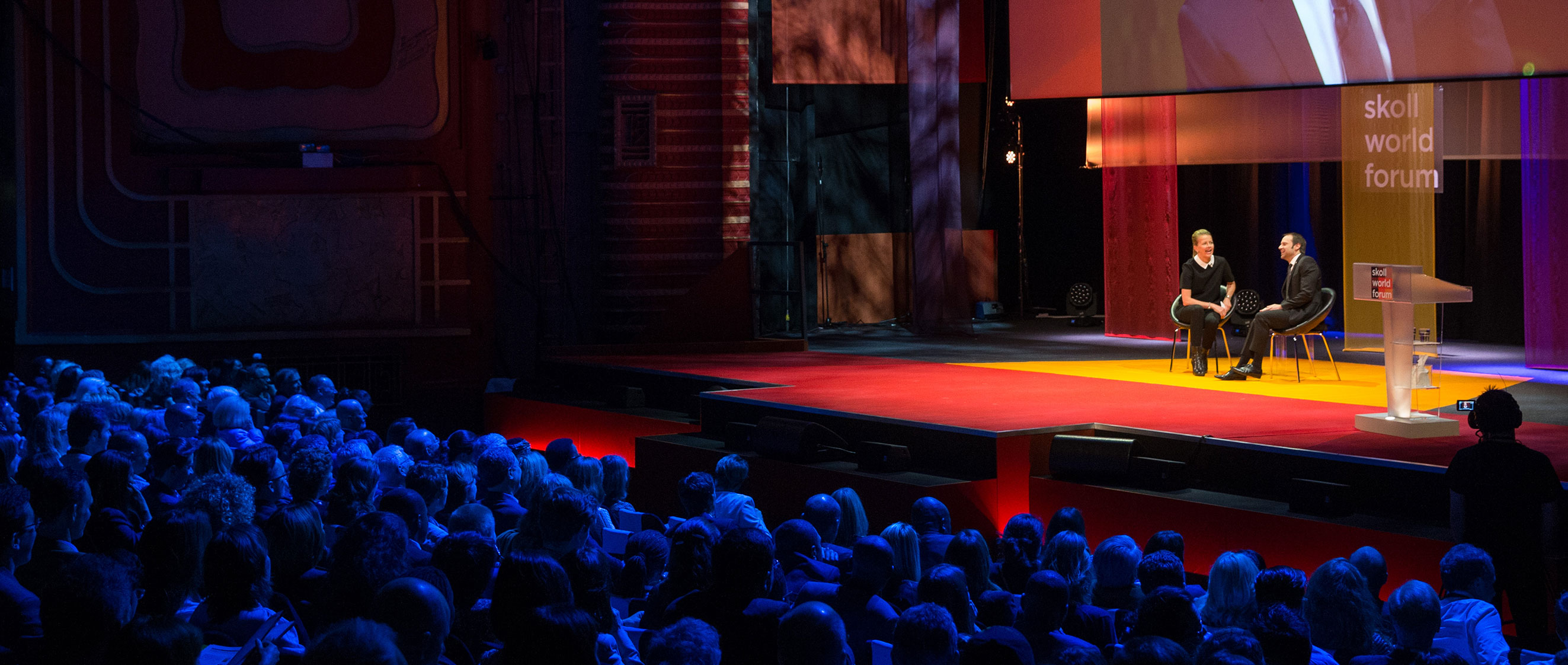
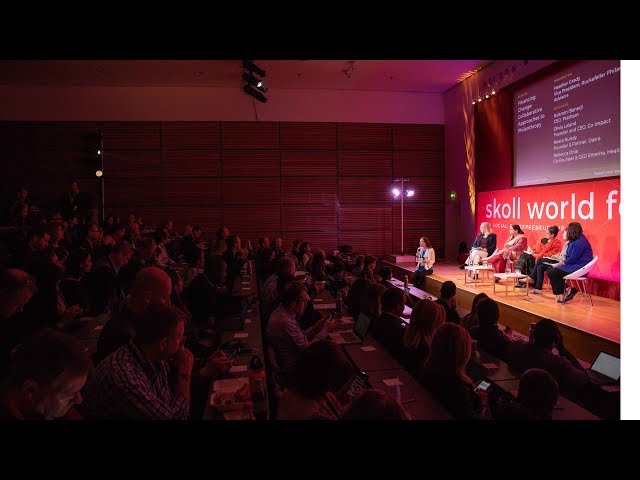
Aruna Roy, Nikhil Dey and Shankar Singh speak at the closing plenary on “The Anatomy of a People’s Movement” at the Skoll World Forum 2010. Roy talks about how important it is to know what is going on in India, because if you don’t, “You can’t get your schooling, you can’t get your medicines, you can’t get your rations, you can’t get anything.” Their organizations can be found at www.mkssindia.org and www.righttoinformation.info.
With: Aruna Roy, Nikhil Dey, Shankar Singh
Friends, I have been listening to you for the last two and a half days. We come from a slightly different world as you can see, that's our home. In the village where we live, the long way from the shelldonian, very long way indeed. The journey that Shanker Nikhil and I many others in rural India taken has been an arduous one, but one with faith and confidence.
Just as people with physical handicaps are looked at, it's different. The poor are persistently looked at as untouchables as different. They're not allowed to participate, they can't enter places, they can't express their opinion, and even in countries which call themselves a democracy, they have no say.
In fact in India we say there are two Indias. One India, which enjoys citizenship, laws, access to everything; and the other is horrid. We are still part of a feudal system, where you don't have any access to anything. And that's why Shankar, Nikhil and I felt compelled to go and stay in this village home, which is actually Shankar's brother's home, where we went and started living there in 1987.
Trying to see how we could realize the sovereignty of my people. Because the constitution of India tells us, that we are the sovereigns. When we go to a government office, or when we go anywhere, we are really treated very badly indeed. So where is that sovereignty? It was in the journey, trying to talk about social justice, about equality, fighting poverty, fighting corruption, which every day gives everyone a raw deal, everyone goes hungry to bed that we stumbled on an extraordinary idea.
Usually we expect policies to be framed in parliament only, by people who are literate and have been to Cambridge, Oxford, Harvard. they like me speak English. But the right to information has been framed by extremely ordinary people we don't have a leader. We all sit together and we decide what should be done for the country.
And in this process influence on all of us. When we listen to people, when you listen to their ideas, you listen to their priorities, their humor, their issues, something comes which is more powerful than ourselves. And we believe that the collective is always much more powerful than individuals. And it is in this collective that we've been able get many of our things going.
People do not want doles in India. They want to live with dignity. I know you must be hearing all over the place, that the poor are beggars. They are not beggars. They are people with enormous diginty. They are people like me. I know so many women in the village who I know are much better than I am.
And who have greater compassion than I because they will share their last bit of bread, which I may not. So these are the people we call poor, horrible, figures, targets, beneficiaries, even clients , but not equals. They are, like me, citizens. In this constant concern to wage a war, the right to live that we gave work to two rights.
One was write to information which was affected the whole of India and has actually made governments ethical and possible. The second is the right to work which is another very important decision. I will tell you two short stories and I'll fish and then we'll see us more film. I must tell you about Suseela.
Suseela is passed just of fourth class. The capital of India, to ask for the right to information law. The press surrounded her and asked her, what she had to do with information After all she was semi- literal women, what did she know about write to information, why did she avoid was she keen on write to information law.
She said to them--she wasn't prepared for this question--but she said to them, "When I send my son with 10 rupees to the marketplace, when he comes back, I ask for accounts. The government spends billions of rupees in my name, in my name!" she said. "Shouldn't I ask for my accounts?" She said it is our money, therefore it is our accounts, and this slogan has gone round the whole of India in all the Indian languages--we have 17 Indian languages-- in every language, and she defined the law, she defined the need for the law, she was a democrat, she was a constitution authority, she was a citizen of India when she framed that.
And people in India like that, normally we say, "Oh, they are poor people, what do they know? You must tell them what they should do." But in the end case, we felt that we should listen them and I feel humbled when I am with Sushila and with many others, by the importance of it. There was an other important person defined the right information in those days, and that was a gentleman called Prabhash Joshi, who is the editor of a very important Hindi daily.
Hindi newspapers, we have lots of Indian language newspapers. So he came to one of our big sit-ins in 1996, and he was amazed at the kind of response this issue had from across civil society. In India, the poor are poor and their civil society. People will be allowed to enter into something like the Sheldonian in India will be civil society.
The poor would never be let in, they will be asking what business do they have inside. I talk about civil society and the people as two separate categories for us. But [xx] belongs to civil society, he saw what was happening, and he went back and wrote an editorial in the Hindi newspaper which also went right across India in which he defined entire campaign as the right to know, the right to live.
Because in India, you don't know what's happening. You can't get your schooling, you can't get your medicines, you can't get your rations, you can't get anything. So while there are rights, to realize those rights, you need the right to know. Now, we'll see a short film. We'll introduce the film and you'll see the film, then I'll come back again.
Before the film, I'm going to speak briefly about some of the issues that actually got these two pieces of legislation to the place that they did. What you see on the screen just now is one of the very early days. We went through, we went like a traditional people's movement group in [xx]stan, starting very small with when you don't get whatever you are demanding and asking for and entitled to under the law, you sit on sit-ins, you do agitations, you do rallies, and finally the final weapon that people had was to do a hunger strike.
But what you do when you don't have a sympathetic government and doesn't care whether you sit hungry for days and days? It was then that people themselves began this whole process of saying, we have to get out information that's in the records, and we have to place it in the public domain. And place it in the public domain, that was the first public hearing that people did in a village.
It's a village public hearing under actually a parachute. And people starting using the mode of public hearings where records were placed in the public domain--records at that time that were almost stolen because we didn't have the right to those records--and then as soon as they were placed there, it became dramatically obvious that those records of people who were supposed to have worked had dead people's names.
Buildings that did not exist, were only existing on paper. Roads that did not exist, existed on paper. And they were revealed in meetings such as that, and that changed the whole dynamics of everything. We moved then, and immediately the whole system and structure from the law, bureaucracy right upwards, clamped down to say, no information and no such public audits, the way that they're taking place.
So we realized we couldn't be caught in our own area of what a few or a particular state, and we started traveling around in caravans. We realized that we would have to demand legislation. So we had our first sit-in of 40 days, where hundreds of poor people who did not have money. If they didn't earn that day, their family couldn't eat, but they spent 40 days and 40 nights in those sit-ins.
They contributed wheat; they contributed food; they contributed money to demand the people's right to information. Which is what shocked people right across the country, because they had said this is something that's an academic issue, a freedom of expression issue. The affluent people would want this or newspaper people would want this, but what are poor illiterate people asking for this?
That was '96. The same set of people, then there was an agitation the next year of fifty-three days at the State Capitol, and carrying on with that, the movement spread right through the country so that first in 2000, we had a state law, then 11 states had state laws and the right to information, and then there was a national law in which was a terrible law and finally there was a fantastic national law in 2005.
The, what you see here is the Building of this entire law and what needed to go into the law actually took place in meetings like this. Legislation was not made in Parliament, the right to information law was actually made in the streets. It was made in discussions, endless discussions with people and there were certain concepts that were very powerful in this.
The concept of accounts which where placed in the public domain to accountability, who is it, who is actually, because those records reveal who had filled The false names in the master all. So people who had been respectable so far became common thieves because the accountability came out in those records.
Similarly as Aruna said The first slogan was "our money, our accounts". But the next slogan and people speak in slogans and that's why you have banners which are they which show various slogans which part of the campaign people speak and slogans the next slogan Yeh paisa hamara [xx]. This money is yours and mine, nobody's private property.
And that carried on to: this government is yours and mine, nobody's private property; and this world is yours and mine, nobody's private property. So the concept of democracy that every individual had an equal say in a democratic structure, was the beginning of that battle for citizenship. Similarly, from fighting corruption to actually fighting the arbitrary exercise of power.
It's not just a question of money, but it's how government is run; and from the demand of birth right, which is how we asked for the right to information, to the realization that you need a legal framework to be able to access it fully. This is the whole process when when we went to this, because ordinary people in their own area began to get far.
But for ordinary people to get far right across the country, you need legislation. So you had numerous such situations and agitations where you had to go get things into party manifestos. There was a particular time when the 2005 legislation came that the law first went into a party manifesto through our lobbying for it.
Then it went into the ruling party that won the congress party, then created common minimum program, where it was put in that manifesto. And then, by then such a high profile had been achieved by the people's movements, that some one like Aruna and others like her were put into the national advisory council of the last government, which actually framed the legislation to put it into Parliament.
This legislation, and the right to work legislation. So you move into poor people moving into the dialogue with laws, with parliament, with parliamentary committees and you have simultaneously, a dialogue with people across the country through caravans, through people moving in the backs of trucks, through public debates, through public pressure, through aliases.
We have actually 2 [xx] laws in the country. The i Tune information changed the relationship between In the ruled and the rulers for ever, because the right to information law says that if i do not get my information, the person not providing The information will be penalized from their own salary.
So person was kicked out of a government office, acquired the power to ask a question and demand an answer.The entitlements under the right to Information law India that you can get all information with small exception list, you have independent appeal mechanism independent of Everybody giving you the information you have penalties non complaints and information given in time which neither US nor the acted and you have a situation where, you can access information from the lowest office to the highest office.
The national rural Climate Guarantee Act, which is as transformentary and important. In 1 line is that, any Indian rural citizen can ask for work And must be provided work at minimum wages within 15 days of asking for it and if they are not provided work, they will giving unemployment allowance. Now you can think in country like India with our populations, I will just give you two sets of figures.
Last year the budget of that demand-driven employment guarantee law was 10 billion dollars in India. In our state where we mobilize people to demand that work and people have got it and managed to access it, in the state of Rajasthan last year, two billion dollars was spent on the employment guarantee act, seven million people--households--went to work, more than half of the households of the state went to work and the economic downturn was not felt in our state and in many rural markets because there was this kind of law and the ability to access these kind of resources.
So finally, what we have ahead are the challenges and potentials that people have to protect. Today, both these laws are being undermined. The right to information Just last week and the last month, the Supreme Court of India is found itself on the other side, saying we don't want to reveal our assets.
We don't want to declare our assets and people are accessing information of the Supreme Court. The Prime Minister offers and its exchange with the leader of the Ruling party those letters are come out whether Prime Minister showing that I don't to actually I have to write to information in the way it is and every high body actually is expanding itself having to be accountable.
So was small bottle is gone up to the level that it has and gone up ex pares it has what the NREGA has done, employment guarantee act has done, across the country, it has given hope to people to fight. It hasn't made them rich, it's only given them access to 100 days work in a year, but given them hope to able to fight for something worth while to fight for work not take for demand at entitlement and two come together I would lie I'll show you Shankar, because he didn't come here and he would have taken all of you by storm.
We are actually a collective, so its not just Shankar, you'll see a whole bunch of people in this song, of ordinary people and their power of communication and their power of thought, in this film that you'll see, and then I don't know we'll finish.
This is the threat and the amendments and stopping the amendments in Delhi. And this is the film. Shankar, my friend, my companion, my Guru, the person who keeps me on the Road Happy, lively, committed and Optimistic unfortunately he is not here with us he lost grand daughter of 8 years old, who had cancer of the brain.
She had recovered and we hadn't thought that she would pass away, but the night before we left, she died. So he hasn't come. Shankar is extraordinary. But there are many Shankars, and what are they doing? They are bringing and explaining ethics, in very simple terms. Ethical discourses whether in religion or in academic institutions or even within political paradigms, means nothing unless it translates into food, into shelter, into schooling, into livelihoods, into basic things for people.
What moved us to live in that house also was that unless you feel that on your skin, unless you have to fetch your water every day, that we have to do, unless you have to light the fuel wood saw everyday, that we have to do, you can't do it. So Shankar in this other thing that you see on screen we did a chariot of scams.
The marvelous planning thinks of a political person as though is culturally endowed. The BJP leader of BJP, L.K.Advani, took a chariot through India talking about a Hindu God. What did it make any difference to us? We didn't want this poor people to worship this God and kill somebody who believed in another God.
What we wanted was food. What we wanted was to be saved from corruption. So when we went to him he made fun of us. So Shankar came back furious, and he said I am going to set up my own chariot, and he set up the chariot with friends and called it the chariot of scams. It is one of the most popular things in Northern India with Hindis in our history.
You take this chariot anywhere and people get together and you can communicate. And he behaves like a corrupt politician and people sometimes believe that he is. So they really scream at him and they yell at him. And he answers, and it's extraordinary. So this the kind of thing when you want to fight people's campaign, a democratic campaign in India you have to have a democratic mode, a peoples mode, you can't communicate just to television.
You can't communicate just to radio. You have to speak in their idiom and that's what learned to do. In this Shankar is showing a puppet and there are many other things that we do. This is a lawyer, an architect, who sings songs and she's composed songs for right to information and right to employment.
They have gone round the whole of India. They are powerful songs. And as we saw in the first session of this three-day meeting, music brings home to you something that words don't. Music breaks barriers. Familiar tunes take you into another political ideology. They take you in another paradigm so easily.
If you use just words, you are stuck. I think that is what this campaign has really used extensively. We've also learn to use every single every kind of skill that we have in India. Lawyers, legislators, political parties, workers' unions, women. We all got together to understand that to get better India we have to struggle for participation in democracy, we can't stay outside.
We have to vote and we have to make that vote work. So India is the largest democracy in the world. We go to the polls every five years, but that is isn't enough; that vote we cast must deliver. How do you make that vote speak? And that's what right to information is about, because you can ask questions and they have to give you answers today.
They have to give you answers to the extent of which now, in India, every single day in the newspapers you find about 40-50 cases reported of right to information denied, right to information accepted, right to information given and the consequences some of which Deacon told you about. What does the right information give in India and democracy?
An extremely simple tool that every citizen can ask any one in power legitimate questions. And must be answered. And I think even in the well-developed democracies it isn't a reality today. So, for instance, we have been able to stop controversial things like genetically-modified vegetables because of existing information.
In forcing accountability on an extremely corrupt system, you make people accountable, then there is a chance, that one day you'll have a cleansing of politics, which is important; we need political parties, because we want a democracy, and there will be elections. But how do you cleanse them? What has the rule of employment guarantee act done?
It's guaranteed extremely poor people who are all skin and bone. Who can't, can't think of the next day, but to need employment that day, a guaranteed hundred days of work. For us, it's nothing. But manual work guaranteed for those 100 days has made a tremendous change in their lives. It stopped them from starving to death it hasn't given them to a wonderful future.
But it prevented starvation deaths it's given and forced them to demand responsibility from an irresponsible state. And that is not because state is irresponsible, because the system is irresponsible, the individuals are irresponsible and that is the anatomy of a movement. It is also given them the dignity to survive.
I remember asking a poor woman, "What has this employment guarantee act given you?" India has many kinds of people. We have a caste system. There are some people who beg to survive. And she said to us, "For the first time in the history of our community, we have not had to beg for a living. We live in dignity now, because we work for it." For me, it was an extremely emotional day, just as when I listened to Karoline; it's extremely emotional.
The same way, she moved me to tears, because it facilitated a right and a dignity to an individual who was always looked down upon. But there is another side: India's growth rate, you will hear of. India's growing so fast, you see Indians coming out by the thousands, computer literate, doing this, that and the other but there is another India.
In the other India is a fallout of this eight and a half percent. You have sub-Saharan African figures for social development in India. Our figures are awful. You look at any indicator, we are worse than sub-Saharan Africa. People were being brutally displaced from all kind of places, from forest, from land.
We are being told that is for a larger development scenario, for a larger development paradigm on the pretext insurgency. Whether it's the Maoists today, or whether it's the terrorists that was yesterday or tomorrow, we are being forced to give up democratic citizen's rights. So we hope that the right to information will somehow be a transformatory right and enable us to grab back some of this very vital fundamental democratic rights that we all have under the constitution friends argue who got converted because of listening to so much fact.
Before that, it was just Aruna; you know she is an activist. She's always talking negative. But when they heard facts, they said, "You know, it is true. If I as a rich person can own a huge piece of land in Mumbai, then why can't a poor tribal claim equal right to the small tract of the land which he or she wants to protect." We need a genuine democracy and that is what in India I think these two acts will facilitate.
I am not saying that they are going to bring in heaven tomorrow. I have Indian friends in front of me who will say that it cannot be done in India. Of course it can be done, but it gives us legitimacy to fight for it in a non-violent way. What has been the most important is, that at a time when we felt that there could be no basic change in all these essential social rights and inequality without violence, these two campaigns have given us a real hope that it is possible to fight like Gandhi did with nonviolence, with logic and with reason, to bring about change.
And it has also brought in a level of compassion, because after all, we have found friends on the other side. Whether it's a civil servant or a politician, they found friends on the other side, because no one is a category. Like, I'm not a category and you're all not categories. We are all human beings.
And so in every category you find kindness, compassion, reason, rationality, goodness and ethics. And so it brought together a new group of people who would agree with Gandhi that there is enough for everyone's need but not for everyone's greed. So I invite Nikhil. They are going to try and attempt to sing in one and half minutes, a song that Chunka would have sung to end this.
I don't know how successful we will be. I also invite my sister, who has sung with me many times, who also worked with Defoe Colek many years ago, and my niece to sing with me because we need a chorus.
The song basically says corruption has reached its limits. It's time you speak out. So the refrain, and its a chorus which if you don't help us we are actually substituting for Shankar, so you have to substitute for the poor. The refrain is 'bolo'; bolo means speak out, so that's all we want to do bolo.
And there's two lines are, there's been so much thieving. Not thieving in individual homes. National theft: loot the quality of our rights of our properties, of so many things. Somebody must speak out. The second lines says, "There's been so much oppression that somebody must speak out." And this is one of the most popular songs of our campaign.
And also disliked by people in power.
"Chorivadu gano hogain rein koy tho munde bolo" Now I'll say, to fight injustice you have to say 'bolo'. So I will start and then we'll
School [xx] and you say "Bolo", which means everyone in school must speak out. School [xx]
Bolo.
To fight injustice.
Bolo To fight corruption.
Bolo.
To save our earth.
Bolo.
To be more humane.
Bolo.
Let's hear the men.
Bolo Only men. Let's hear the men.
Bolo.
And women now.
Bolo.
Much louder.
Just as people with physical handicaps are looked at, it's different. The poor are persistently looked at as untouchables as different. They're not allowed to participate, they can't enter places, they can't express their opinion, and even in countries which call themselves a democracy, they have no say.
In fact in India we say there are two Indias. One India, which enjoys citizenship, laws, access to everything; and the other is horrid. We are still part of a feudal system, where you don't have any access to anything. And that's why Shankar, Nikhil and I felt compelled to go and stay in this village home, which is actually Shankar's brother's home, where we went and started living there in 1987.
Trying to see how we could realize the sovereignty of my people. Because the constitution of India tells us, that we are the sovereigns. When we go to a government office, or when we go anywhere, we are really treated very badly indeed. So where is that sovereignty? It was in the journey, trying to talk about social justice, about equality, fighting poverty, fighting corruption, which every day gives everyone a raw deal, everyone goes hungry to bed that we stumbled on an extraordinary idea.
Usually we expect policies to be framed in parliament only, by people who are literate and have been to Cambridge, Oxford, Harvard. they like me speak English. But the right to information has been framed by extremely ordinary people we don't have a leader. We all sit together and we decide what should be done for the country.
And in this process influence on all of us. When we listen to people, when you listen to their ideas, you listen to their priorities, their humor, their issues, something comes which is more powerful than ourselves. And we believe that the collective is always much more powerful than individuals. And it is in this collective that we've been able get many of our things going.
People do not want doles in India. They want to live with dignity. I know you must be hearing all over the place, that the poor are beggars. They are not beggars. They are people with enormous diginty. They are people like me. I know so many women in the village who I know are much better than I am.
And who have greater compassion than I because they will share their last bit of bread, which I may not. So these are the people we call poor, horrible, figures, targets, beneficiaries, even clients , but not equals. They are, like me, citizens. In this constant concern to wage a war, the right to live that we gave work to two rights.
One was write to information which was affected the whole of India and has actually made governments ethical and possible. The second is the right to work which is another very important decision. I will tell you two short stories and I'll fish and then we'll see us more film. I must tell you about Suseela.
Suseela is passed just of fourth class. The capital of India, to ask for the right to information law. The press surrounded her and asked her, what she had to do with information After all she was semi- literal women, what did she know about write to information, why did she avoid was she keen on write to information law.
She said to them--she wasn't prepared for this question--but she said to them, "When I send my son with 10 rupees to the marketplace, when he comes back, I ask for accounts. The government spends billions of rupees in my name, in my name!" she said. "Shouldn't I ask for my accounts?" She said it is our money, therefore it is our accounts, and this slogan has gone round the whole of India in all the Indian languages--we have 17 Indian languages-- in every language, and she defined the law, she defined the need for the law, she was a democrat, she was a constitution authority, she was a citizen of India when she framed that.
And people in India like that, normally we say, "Oh, they are poor people, what do they know? You must tell them what they should do." But in the end case, we felt that we should listen them and I feel humbled when I am with Sushila and with many others, by the importance of it. There was an other important person defined the right information in those days, and that was a gentleman called Prabhash Joshi, who is the editor of a very important Hindi daily.
Hindi newspapers, we have lots of Indian language newspapers. So he came to one of our big sit-ins in 1996, and he was amazed at the kind of response this issue had from across civil society. In India, the poor are poor and their civil society. People will be allowed to enter into something like the Sheldonian in India will be civil society.
The poor would never be let in, they will be asking what business do they have inside. I talk about civil society and the people as two separate categories for us. But [xx] belongs to civil society, he saw what was happening, and he went back and wrote an editorial in the Hindi newspaper which also went right across India in which he defined entire campaign as the right to know, the right to live.
Because in India, you don't know what's happening. You can't get your schooling, you can't get your medicines, you can't get your rations, you can't get anything. So while there are rights, to realize those rights, you need the right to know. Now, we'll see a short film. We'll introduce the film and you'll see the film, then I'll come back again.
Before the film, I'm going to speak briefly about some of the issues that actually got these two pieces of legislation to the place that they did. What you see on the screen just now is one of the very early days. We went through, we went like a traditional people's movement group in [xx]stan, starting very small with when you don't get whatever you are demanding and asking for and entitled to under the law, you sit on sit-ins, you do agitations, you do rallies, and finally the final weapon that people had was to do a hunger strike.
But what you do when you don't have a sympathetic government and doesn't care whether you sit hungry for days and days? It was then that people themselves began this whole process of saying, we have to get out information that's in the records, and we have to place it in the public domain. And place it in the public domain, that was the first public hearing that people did in a village.
It's a village public hearing under actually a parachute. And people starting using the mode of public hearings where records were placed in the public domain--records at that time that were almost stolen because we didn't have the right to those records--and then as soon as they were placed there, it became dramatically obvious that those records of people who were supposed to have worked had dead people's names.
Buildings that did not exist, were only existing on paper. Roads that did not exist, existed on paper. And they were revealed in meetings such as that, and that changed the whole dynamics of everything. We moved then, and immediately the whole system and structure from the law, bureaucracy right upwards, clamped down to say, no information and no such public audits, the way that they're taking place.
So we realized we couldn't be caught in our own area of what a few or a particular state, and we started traveling around in caravans. We realized that we would have to demand legislation. So we had our first sit-in of 40 days, where hundreds of poor people who did not have money. If they didn't earn that day, their family couldn't eat, but they spent 40 days and 40 nights in those sit-ins.
They contributed wheat; they contributed food; they contributed money to demand the people's right to information. Which is what shocked people right across the country, because they had said this is something that's an academic issue, a freedom of expression issue. The affluent people would want this or newspaper people would want this, but what are poor illiterate people asking for this?
That was '96. The same set of people, then there was an agitation the next year of fifty-three days at the State Capitol, and carrying on with that, the movement spread right through the country so that first in 2000, we had a state law, then 11 states had state laws and the right to information, and then there was a national law in which was a terrible law and finally there was a fantastic national law in 2005.
The, what you see here is the Building of this entire law and what needed to go into the law actually took place in meetings like this. Legislation was not made in Parliament, the right to information law was actually made in the streets. It was made in discussions, endless discussions with people and there were certain concepts that were very powerful in this.
The concept of accounts which where placed in the public domain to accountability, who is it, who is actually, because those records reveal who had filled The false names in the master all. So people who had been respectable so far became common thieves because the accountability came out in those records.
Similarly as Aruna said The first slogan was "our money, our accounts". But the next slogan and people speak in slogans and that's why you have banners which are they which show various slogans which part of the campaign people speak and slogans the next slogan Yeh paisa hamara [xx]. This money is yours and mine, nobody's private property.
And that carried on to: this government is yours and mine, nobody's private property; and this world is yours and mine, nobody's private property. So the concept of democracy that every individual had an equal say in a democratic structure, was the beginning of that battle for citizenship. Similarly, from fighting corruption to actually fighting the arbitrary exercise of power.
It's not just a question of money, but it's how government is run; and from the demand of birth right, which is how we asked for the right to information, to the realization that you need a legal framework to be able to access it fully. This is the whole process when when we went to this, because ordinary people in their own area began to get far.
But for ordinary people to get far right across the country, you need legislation. So you had numerous such situations and agitations where you had to go get things into party manifestos. There was a particular time when the 2005 legislation came that the law first went into a party manifesto through our lobbying for it.
Then it went into the ruling party that won the congress party, then created common minimum program, where it was put in that manifesto. And then, by then such a high profile had been achieved by the people's movements, that some one like Aruna and others like her were put into the national advisory council of the last government, which actually framed the legislation to put it into Parliament.
This legislation, and the right to work legislation. So you move into poor people moving into the dialogue with laws, with parliament, with parliamentary committees and you have simultaneously, a dialogue with people across the country through caravans, through people moving in the backs of trucks, through public debates, through public pressure, through aliases.
We have actually 2 [xx] laws in the country. The i Tune information changed the relationship between In the ruled and the rulers for ever, because the right to information law says that if i do not get my information, the person not providing The information will be penalized from their own salary.
So person was kicked out of a government office, acquired the power to ask a question and demand an answer.The entitlements under the right to Information law India that you can get all information with small exception list, you have independent appeal mechanism independent of Everybody giving you the information you have penalties non complaints and information given in time which neither US nor the acted and you have a situation where, you can access information from the lowest office to the highest office.
The national rural Climate Guarantee Act, which is as transformentary and important. In 1 line is that, any Indian rural citizen can ask for work And must be provided work at minimum wages within 15 days of asking for it and if they are not provided work, they will giving unemployment allowance. Now you can think in country like India with our populations, I will just give you two sets of figures.
Last year the budget of that demand-driven employment guarantee law was 10 billion dollars in India. In our state where we mobilize people to demand that work and people have got it and managed to access it, in the state of Rajasthan last year, two billion dollars was spent on the employment guarantee act, seven million people--households--went to work, more than half of the households of the state went to work and the economic downturn was not felt in our state and in many rural markets because there was this kind of law and the ability to access these kind of resources.
So finally, what we have ahead are the challenges and potentials that people have to protect. Today, both these laws are being undermined. The right to information Just last week and the last month, the Supreme Court of India is found itself on the other side, saying we don't want to reveal our assets.
We don't want to declare our assets and people are accessing information of the Supreme Court. The Prime Minister offers and its exchange with the leader of the Ruling party those letters are come out whether Prime Minister showing that I don't to actually I have to write to information in the way it is and every high body actually is expanding itself having to be accountable.
So was small bottle is gone up to the level that it has and gone up ex pares it has what the NREGA has done, employment guarantee act has done, across the country, it has given hope to people to fight. It hasn't made them rich, it's only given them access to 100 days work in a year, but given them hope to able to fight for something worth while to fight for work not take for demand at entitlement and two come together I would lie I'll show you Shankar, because he didn't come here and he would have taken all of you by storm.
We are actually a collective, so its not just Shankar, you'll see a whole bunch of people in this song, of ordinary people and their power of communication and their power of thought, in this film that you'll see, and then I don't know we'll finish.
This is the threat and the amendments and stopping the amendments in Delhi. And this is the film. Shankar, my friend, my companion, my Guru, the person who keeps me on the Road Happy, lively, committed and Optimistic unfortunately he is not here with us he lost grand daughter of 8 years old, who had cancer of the brain.
She had recovered and we hadn't thought that she would pass away, but the night before we left, she died. So he hasn't come. Shankar is extraordinary. But there are many Shankars, and what are they doing? They are bringing and explaining ethics, in very simple terms. Ethical discourses whether in religion or in academic institutions or even within political paradigms, means nothing unless it translates into food, into shelter, into schooling, into livelihoods, into basic things for people.
What moved us to live in that house also was that unless you feel that on your skin, unless you have to fetch your water every day, that we have to do, unless you have to light the fuel wood saw everyday, that we have to do, you can't do it. So Shankar in this other thing that you see on screen we did a chariot of scams.
The marvelous planning thinks of a political person as though is culturally endowed. The BJP leader of BJP, L.K.Advani, took a chariot through India talking about a Hindu God. What did it make any difference to us? We didn't want this poor people to worship this God and kill somebody who believed in another God.
What we wanted was food. What we wanted was to be saved from corruption. So when we went to him he made fun of us. So Shankar came back furious, and he said I am going to set up my own chariot, and he set up the chariot with friends and called it the chariot of scams. It is one of the most popular things in Northern India with Hindis in our history.
You take this chariot anywhere and people get together and you can communicate. And he behaves like a corrupt politician and people sometimes believe that he is. So they really scream at him and they yell at him. And he answers, and it's extraordinary. So this the kind of thing when you want to fight people's campaign, a democratic campaign in India you have to have a democratic mode, a peoples mode, you can't communicate just to television.
You can't communicate just to radio. You have to speak in their idiom and that's what learned to do. In this Shankar is showing a puppet and there are many other things that we do. This is a lawyer, an architect, who sings songs and she's composed songs for right to information and right to employment.
They have gone round the whole of India. They are powerful songs. And as we saw in the first session of this three-day meeting, music brings home to you something that words don't. Music breaks barriers. Familiar tunes take you into another political ideology. They take you in another paradigm so easily.
If you use just words, you are stuck. I think that is what this campaign has really used extensively. We've also learn to use every single every kind of skill that we have in India. Lawyers, legislators, political parties, workers' unions, women. We all got together to understand that to get better India we have to struggle for participation in democracy, we can't stay outside.
We have to vote and we have to make that vote work. So India is the largest democracy in the world. We go to the polls every five years, but that is isn't enough; that vote we cast must deliver. How do you make that vote speak? And that's what right to information is about, because you can ask questions and they have to give you answers today.
They have to give you answers to the extent of which now, in India, every single day in the newspapers you find about 40-50 cases reported of right to information denied, right to information accepted, right to information given and the consequences some of which Deacon told you about. What does the right information give in India and democracy?
An extremely simple tool that every citizen can ask any one in power legitimate questions. And must be answered. And I think even in the well-developed democracies it isn't a reality today. So, for instance, we have been able to stop controversial things like genetically-modified vegetables because of existing information.
In forcing accountability on an extremely corrupt system, you make people accountable, then there is a chance, that one day you'll have a cleansing of politics, which is important; we need political parties, because we want a democracy, and there will be elections. But how do you cleanse them? What has the rule of employment guarantee act done?
It's guaranteed extremely poor people who are all skin and bone. Who can't, can't think of the next day, but to need employment that day, a guaranteed hundred days of work. For us, it's nothing. But manual work guaranteed for those 100 days has made a tremendous change in their lives. It stopped them from starving to death it hasn't given them to a wonderful future.
But it prevented starvation deaths it's given and forced them to demand responsibility from an irresponsible state. And that is not because state is irresponsible, because the system is irresponsible, the individuals are irresponsible and that is the anatomy of a movement. It is also given them the dignity to survive.
I remember asking a poor woman, "What has this employment guarantee act given you?" India has many kinds of people. We have a caste system. There are some people who beg to survive. And she said to us, "For the first time in the history of our community, we have not had to beg for a living. We live in dignity now, because we work for it." For me, it was an extremely emotional day, just as when I listened to Karoline; it's extremely emotional.
The same way, she moved me to tears, because it facilitated a right and a dignity to an individual who was always looked down upon. But there is another side: India's growth rate, you will hear of. India's growing so fast, you see Indians coming out by the thousands, computer literate, doing this, that and the other but there is another India.
In the other India is a fallout of this eight and a half percent. You have sub-Saharan African figures for social development in India. Our figures are awful. You look at any indicator, we are worse than sub-Saharan Africa. People were being brutally displaced from all kind of places, from forest, from land.
We are being told that is for a larger development scenario, for a larger development paradigm on the pretext insurgency. Whether it's the Maoists today, or whether it's the terrorists that was yesterday or tomorrow, we are being forced to give up democratic citizen's rights. So we hope that the right to information will somehow be a transformatory right and enable us to grab back some of this very vital fundamental democratic rights that we all have under the constitution friends argue who got converted because of listening to so much fact.
Before that, it was just Aruna; you know she is an activist. She's always talking negative. But when they heard facts, they said, "You know, it is true. If I as a rich person can own a huge piece of land in Mumbai, then why can't a poor tribal claim equal right to the small tract of the land which he or she wants to protect." We need a genuine democracy and that is what in India I think these two acts will facilitate.
I am not saying that they are going to bring in heaven tomorrow. I have Indian friends in front of me who will say that it cannot be done in India. Of course it can be done, but it gives us legitimacy to fight for it in a non-violent way. What has been the most important is, that at a time when we felt that there could be no basic change in all these essential social rights and inequality without violence, these two campaigns have given us a real hope that it is possible to fight like Gandhi did with nonviolence, with logic and with reason, to bring about change.
And it has also brought in a level of compassion, because after all, we have found friends on the other side. Whether it's a civil servant or a politician, they found friends on the other side, because no one is a category. Like, I'm not a category and you're all not categories. We are all human beings.
And so in every category you find kindness, compassion, reason, rationality, goodness and ethics. And so it brought together a new group of people who would agree with Gandhi that there is enough for everyone's need but not for everyone's greed. So I invite Nikhil. They are going to try and attempt to sing in one and half minutes, a song that Chunka would have sung to end this.
I don't know how successful we will be. I also invite my sister, who has sung with me many times, who also worked with Defoe Colek many years ago, and my niece to sing with me because we need a chorus.
The song basically says corruption has reached its limits. It's time you speak out. So the refrain, and its a chorus which if you don't help us we are actually substituting for Shankar, so you have to substitute for the poor. The refrain is 'bolo'; bolo means speak out, so that's all we want to do bolo.
And there's two lines are, there's been so much thieving. Not thieving in individual homes. National theft: loot the quality of our rights of our properties, of so many things. Somebody must speak out. The second lines says, "There's been so much oppression that somebody must speak out." And this is one of the most popular songs of our campaign.
And also disliked by people in power.
"Chorivadu gano hogain rein koy tho munde bolo" Now I'll say, to fight injustice you have to say 'bolo'. So I will start and then we'll
School [xx] and you say "Bolo", which means everyone in school must speak out. School [xx]
Bolo.
To fight injustice.
Bolo To fight corruption.
Bolo.
To save our earth.
Bolo.
To be more humane.
Bolo.
Let's hear the men.
Bolo Only men. Let's hear the men.
Bolo.
And women now.
Bolo.
Much louder.