Aid Agencies And Social Entrepreneurs: Natural Allies, New Bridges

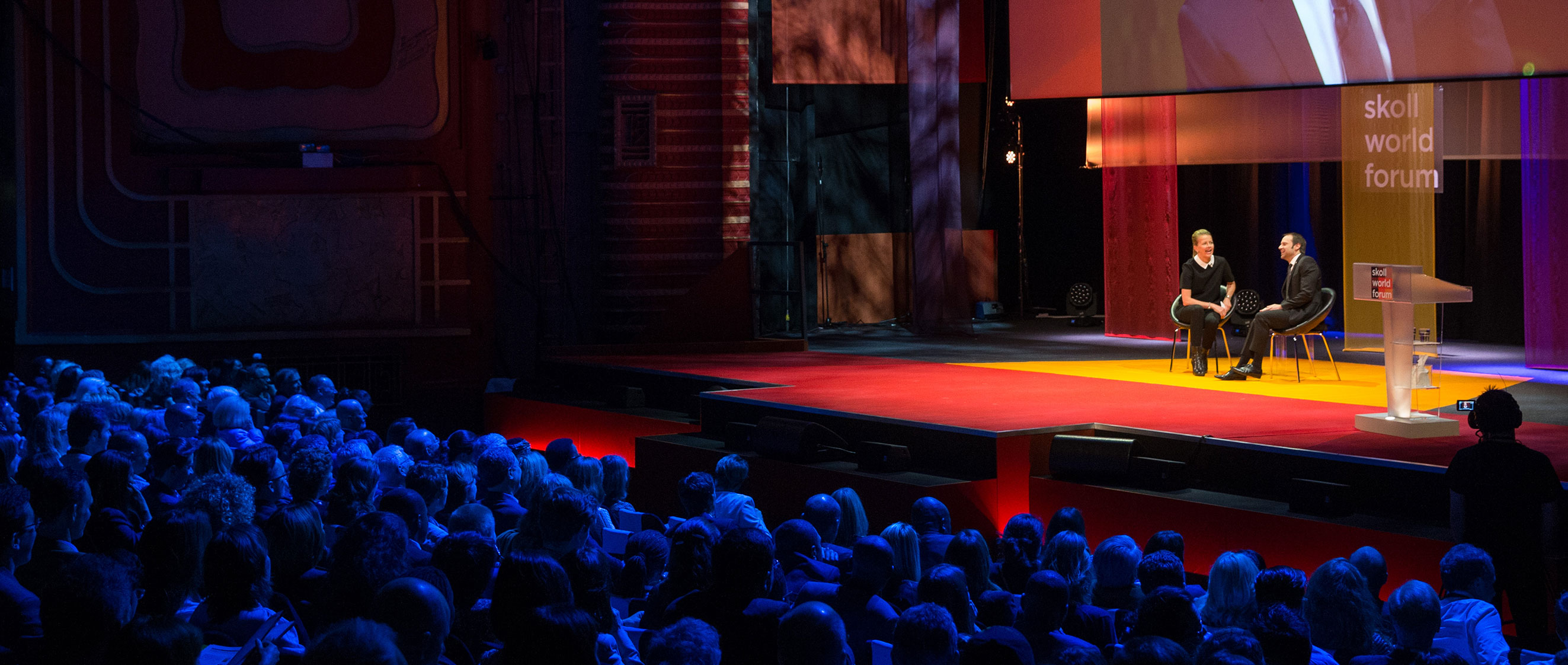
This session brings together senior staff working in development agencies that have engaged, or attempted to engage, directly with social entrepreneurs working in emerging markets. To what degree have these respective agencies facilitated the work of innovative social change agents working directly with the poor? What can be done to enhance the impact of these potentially powerful partnerships? The session will draw upon entrepreneurs in the audience who have engaged with international aid agencies.

So as we have now aid agencies and devolve in financing situations want deeply to stimulate and support social change agenced working with the poor.And as we heard just go say yesterday and a compersing deep social change well indeed require how range actives collabrating with one and other [xx] agencies do have the resources that social entrepreneurs need, or do they?

This is some of the questions that we'll be raising here. This session, so therefore, will give both the social enterpreneurs in the room, the NGOs, the businesses, as well as the development and finances [xx] and aided disease a chance to understand the strategy and approaches challenges and questions that we are addressing [xx] to give feedback and really go deeper into what solutions might be possible.

I think we are all familiar with discussions about the diversity around entrepreneurs being very very diverse. but I think we don't often talk about just how diverse the development finance institutions and aid agencies really are, and understanding that diversity is going to be key to unlocking the resources they have so after introducing our esteemed panel and then framing the conversation each panels have asked to spend three to five minutes, no more, describing what concretely their agency is doing to support social entrepreneurship, and why?

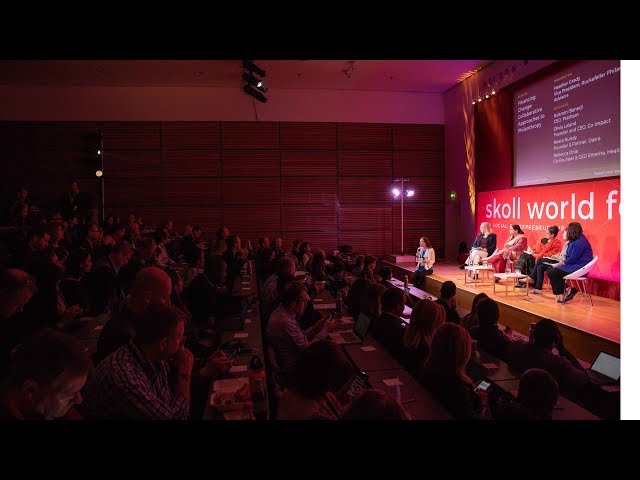
And then I Hope to spend the bulk of this session, after that fifteen minutes or so opening. Really, in a dialog back and forth with you that hopefully will lead us to some concrete answers and suggestions. So with that i would like to introduce my panel OK since last minute changes on how the introductions will go.

So indifference to his minority status on this panel, I would like to start by Woman: Introducing Cartman. He is the executive director of GT and as such he manages GT center for corporation with the priavte sector that she's been able to forge thousands and more partnerships specifically between the private and public sectors.

And one thing you don't know about York not in his CV is that he spends a disproportionate amount of his modest German public sector salary raising bonsai trees. Next we have ambassador all this with who has spent twelve years in the US state department working under presidents continue now president Obama her positions included that of the US ambassador to Portugal.She is a lawyer and right now she is the special representative for global partnerships in the office.

Of the secretary of the United States. And Elizabeth one thing you don't know about her is that she was a cheerleader in high school. Nemat Shafik, better know as Minouche, is the permanent secretary of DFID, which I think, for those of us that work in the development world, probably most of us unanimously agree, that it's one of the best performing development agencies that there is.

They spend roughly 9 billion dollars a year in development aid throughout the world. Before that Minouche was the vice the president for the private sector and private sector department of the world bank and probably the most important, I think, was the chairperson of CGap, a little known micro finance organization, also housed at the World Bank, which I know very well.

Two things. I guess one thing you don't know about Minouche is that she was made a vice president of the World Bank at age 36, which by many accounts was roughly half the average age of the world bank vice presidents at the time. One other thing you don't know about her is that she can actually stand on her head for 20 minutes un interrupted.

Rachel Kites, next to me, is the IFC's vice president for business advisory services. She's actually been leading IFC's work on developing, development impact measures. So finally, that double bottom line at the IFC will actually be able to be measured which, I think, is a a very powerful and necessary step in the development of this field.

Rachel, before that, was one of the leaders in the IFC in terms of developing sustainable performance standards and was known for her work in the environmental sector as well. One thing you don't know about Rachel is that she was the deejay the night that Madonna stripped buck naked in 1984. So, just in case you thought all we development bureaucrats, we're really boring, now you know we're not I am currently the CEO of CEF which is a principle resource center and standard setter for the field of micro finance, houses the world bank.

I should also say, this is my, I think this is my last official event as the CEO of CYEP[sp?] because i have been nominated to run OPIC[sp?] the overseas private investment operations for the US government,obligates agency that invests sustainable development in the emergent market that supporting US busnisses investing abroad.

So i'm in this weird, I either have no job or 2 jobs today, I'm not exactly sure which one it was. I'll have to check my blackberry and maybe i'll find out. So, that is the introduction to the panel. Just a few things i would like to say as we tee up the panel. As we mentioned earlier, you know eight agencies, developement finance institutions and social entrepreneurs are all looking to create scalable models.

We've heard it all week. and systemic change. And all of them are ready to focus, as we know, on those things that this will require. That's healthy appetite for risk, a keen focus on innovation, real discipline in terms of performance and measurements of performance, private capital of course, and partnerships, sincere and genuine and generous partnership across public and private sectors.

But what we haven't talked so much about is the fact that the organizational challenges really make the fit between what aid agencies can offer and what social entrepreneurs need, is sometimes more challenging than meets the eye. Some of these things include things like size, you know, aid agencies, because of the nature of their organization, have a real bias towards large size.

Big checks, big tickets, it's very difficult for them to work with small sizes. Instruments, many agencies, you know their instrument is debt and debt isn't necessarily the most appropriate instrument for, you know, start-up capital. So sometimes their instruments don't fit well. The business models, or modalities are often difficult as well.

Some agencies, like the regional development banks for example, they have to work through the government. That's just what the way they are, that's their mandate, and therefore, it's difficult for them, sometimes, to operate directly with entrepreneurs. And finally mandates, you know, at the end of the day most aid agencies and development financial institutions are political animals and they have political masters.

And that's just the reality of the way they function. It makes them very slow, which I'm sure is a comment that will come in the Q;A. So, those are the kind of some of the realities that I think these agencies are dealing with and that we'll be hearing about more in the few minute comments that each of our panelists is now going to give us on what is their agency doing in this sector, what are the constraints and why are you working in this area.

And I think we'll reverse the order and end with Jorg and start with Rachel.

Well, thank you. It's good to be here, thanks Elizabeth. I think that as a multi focused on the private sector, with a focus which has become much more prominent. the last decade on development impact while maintaining our financial sustainability. So we don't have a capital call, sort of every year we don't get replenished.

We have to make, we have to, we have to be financially sustainable, we have to make a profit and those profits get plowed back into our technical assistance. Those profits get plowed back into some of our ability to take greater risk in order to prove that markets exist and that market transformation can take place.

I think that we find ourselves balancing the constraints that Elizabeth talked about and our appetite for reveling where market transformation can produce development. and that is actually quite a difficult balancing act. We are under enormous political pressure, which we welcome, to show big results, post big results.

Infrastructure development so that local farmers can get access to market, infrastructure development so that small business get access to power, infrastructure development so education and health services are available to more. We're under enormous pressure to do that, while reducing GHG emissions.

So GHG abatement in middle income countries. Avoidance in low income countries so they can grow cleaner and greener. We're under enormous pressure, in addition, to find the solution to the food crisis. So that's the that's the kind of welcome political pressure that comes from our boards, brought to the share-holders, in particular who are representing the views of their parliaments.

put in there, put in place by you as voters as well as you as opinion leaders. And so the question then is how do we build up ecology in our portfolio which both embraces everything from the micro, micro, micro, sort of the investment in Harold [xx]ism in the grass roots business fund, through to how do we experiment with new business models in key areas, so Ianco and things like this; through to how do we do wholesaling because we are slow and big and bureaucratic?

So, one of the wholesaling impact platforms that allow entrepreneurs to get access to local currency finance on good terms. And I think there's still a big role for debt, by the way, and I think that there are fashions and fads in financing and everybody's very keen on equity at the moment. And we do a lot of equity and microequity, but debt is always very important to businesses as they try to establish themselves.

So, how do we do that and then how do we do some of the big ticket stuff?

So, if you took microfinance and microinsurance, you know, we would do fund to funds for microinsurance, we'll do direct investing in small microinsurance to experiment to see what's possible. And then we'll do whole studying with Standard Chartered, because they can deliver to scale more efficiently and work with a higher productivity than anybody else.

micro finance and local currencies to small micro entrepreneurs in the backwoods of Pakistan. And I think that trying to be able to tell that story of the mix of risk in the portfolio and the approaches is a big challenge that we have. We can agree to disagree on whether we have enough risk appetite, I think that would be an interesting discussion.

And how do we establish a financial supply chain which matches the financing needs of everything from grass root businesses through the stages of development to quite innovative small, medium-sized companies with the actual types of financing you'll need as you grow your business. And I think that mismatch is very difficult and the question I think, to all of us is how do we work together so you can establish platforms of financing so you can get in and perhaps get all the different kinds of financing blended together that you need to grow your business.

I don't think that the aid world is particularly good at that, we're not particularly good at that ourselves at the moment. And so I think that there's a lot that can be done, but as far as the good news and the bad news is, if we think it will achieve development impact, we will work with the social entrepreneur.

We would work with Coca Cola. We would work with Standard Charted. We would work with some new start-up in a very risk it. We would do all and any of the above, if we are clear to ourselves about what impact we think we're trying to have, and I think that's really going to be the driver, much more in the future, than it was in the past.

What is the impact we think we can achieve. We will work with who ever the partner, not withstanding of all of our standards of due diligence, in order to achieve that impact. So, there should be a bigger space for this community with the IFC, but we've got to be very disciplined about productivity and efficiency in order to really make that space grow.

Thank you Rachel. Okay thank you. First it's just a real pleasure to be here and a real pleasure to be here with Elizabeth, who, one of the smartest business decisions I ever made was to. Elizabeth from the UK to Washington when I was at the World Bank to lead Seagap, so it's particularly ironic and pleasurable to be on this podium with her in the UK, when she's about to become a real Washingtonian by joining the administration.

I would just say a few words about kind of the major characteristics of DFID. What our priorities are and one of the special issues that we face in supporting social entrepreneurship and I should just say on the priorities, as most of you know, there's a general election on in the UK. We are currently what is sweetly termed Perta, which means that the officials can only do what is, can only reflect the policies of the current administration, but with the caveat that there is an election on.

I think you understand. OK. Let me start with kind of big characteristics of DFID. The Department of International Development leads the youth case fight against world poverty. And that includes running a major aid program, but it also includes providing policy leadership on issues like trade, anti-corruption, climate finance, the whole array of issues that affect developing countries.

We have about 2,500 staff. We spend about 9 billion pounds a year; that's about 15 billion Dollars. We have offices in fifty countries, most of which are in Africa and South Asia because of our strong focus on the poorest. We have three major business lines. A lateral aid business line, a multilateral business line, and a global public goods business line.

Bilateral aid program in about a hundred countries, the multilateral one is that we control all the funding to the EU, the UN, the international financial institutions, and that fits under a multipart . And, then the global public goods is a growing part of our business which includes the work on climate finance and global health, our increasingly growing research budget those are the three business lines that we run what are our priorities i that that there are several things that characterize pretty much everything that the FID does.

First we are very focused on low income countries. We are committed to putting 90% of our bi-lateral aid in low income countries. That only leaves 10% for all the middle-income countries in the world, because our view is they don't need money. They may need other things, but they have their own resources to fight poverty at home.

Our money is best used in the poorest countries. We're not particularly secretory focused. At various times we have tried to reduced the number of sectors we're involved in. I think we have found that difficult, partly because we're very committed to a country led approach and so we think countries need to decide what their sectoral priorities are and then tell us what they want us to focus on and if you're going to respond to their demand, you have to be available to work in health in some countries and education in others and infrastructure in others so were not focused in any particular sectors but we Particularly strong on governments and the social sectors.

We're also very committed to aid effectiveness and effectiveness principles that are embodied in the [xx]. on the Paris agreements. We strongly support bench marking on aid effectiveness, partly because we do pretty well out of it, but we think it's very important to have external bodies, bench marking.

How effective aid is, the work that one does, for example, in bench marking the [xx] on their [xx] commitments smart aid to see if you were a good donor in the micro fincnce base. We also think that one of the. comparative advantages that we have in the international system is that we see the whole system.

We're one of the few agencies in the world that has every thing under one roof. So we control about 90 percent of the ODA, the Official Development Assistance that the UK gives. So we can join the dots between what's happening in Mozambique or Tanzania or Nicaragua, with what's happening in the G-20 or what's happening at the UN, or what's happening in the IFC and the World Bank, or what's happening in the climate finance debate and those negotiations.

And so we think we have a particular comparative advantage in seeing the entire international architecture and having leaders in all of those venues and spaces.


In terms of other big priorities, I think a bit echoing what Rachel was saying, we are very focused on results. Just to give you an example of the kind of things we're very focused on, in this last year we got five million kids into school. We delivered seven million bed nets. We train a hundred thousand teachers and sixty thousand health workers.

We bought half a billion condoms. One in every four condoms in Africa is paid for by us. You know that wonderful Victorian expression, lie back and think of England? I don't use that very often but anyway. Tweak that. We We got fifty billion dollars of financing for low income countries at the London Summit of the G20 so this is the kind of scale of deliverable that we're being help to account for, and the kinds of things that we care about.

But in the current fiscal environment, we are increasingly shifting our focus from results to returns. So we've got those five million kids into school at an average cost of sixty pounds per head and that matters to us. That's two percent of the cost of getting a kid through primary school in the UK and that's.

It's a really important piece of evidence that I can use when I'm negotiating with my treasury about our budget. So, the cost effectiveness of interventions; it's not just about results, but thinking about The returns is really increasingly an important issue for us and you can imagine why. Where does social entrepreneurship fit into this wider business, that.

I've described. It actually cuts across all the three business lines that I've just described: the bilateral aid program, the multilateral work we do, and the global Public goods. And i'll give just a couple of examples and i'm sure more will come up in the questions, but, you know, just as one example, our [xx] program in Vietnam.

Working with the Asian development bank in Vietnam to support a challenge fund for SME's and social entrepreneurs particularly around the agricultural center. Speaker 1: In Vietnam to try and develop so new business models. In India we are working with the Clinton Foundation and some of the generic drug producers in India to get them interested.

selling generics at low cost in Africa, and trying to get them to think about African markets in a more aggressive way. We supported something called the business [xx] action where we worked with the big corporates to try and get them to do more of bottom of the pyramid stuff, so as an example, Tsumi toma [sp?] chemical expanding its production of bed nets across from, they're now operating in East Africa; we're helping them move into West Africa, and particularly in Nigeria.

Map International is establishing a mobile banking platform which is serving 105,000 people in Uganda, providing them access to financial services which they wouldn't have had otherwise. We also though recognize that because of the scale issue we often need to use innovation funds and challenge funds to reach smaller scale things, so we've just launched three-year business innovation facility, which is going to support at least 30 company-led initiatives on inclusive business models in five countries: Zambia, Millard, Nigeria, India and Bangladesh.

We've also been very big supporters of fair and ethical trade. We've long supported the fair trade labeling program to expand fair-trade labeling across the U.K. and then it gets interesting to note that fair trade has held up much better than people are still buying and fair trade markets are still growing, even though people's pocketbooks are much tighter.

So I think there's some resilience in that market, which is quite interesting. We've also supported a challenge fund for the garments industry called Rags, which is inviting bids from NGO's to try and improve working conditions in the global garments industry. So those are just some of the examples of things that we're doing in our various lines of business.


What are the big issues for us in the social entrepreneurship space? First is scale. I think Elizabeth alluded to that. Our administration budget as a share of the total aid we have to deliver is probably the lowest in the industry. We're at two percent, so our administration costs are two percent of our program, and our treasury is very generous with us in terms of the aid budget, but our administration budget is being cut 5 percent every year, so it's very difficult for us to work with very small organizations, and so we're in a much better place if we've got intermediaries to work with.

and there's the perennial problem that everyone has with working with the large corporates and subsidizing the private sector, and we have to be very careful about what we can legitimately fund and support, and what really should be on their balance sheets. And, in general, both in supporting things like microfinance and such issues and the corporates having very clear lines about what is commercial and what is not commercial and making it clear that we're funding non-commercial bits for wider purposes, is a very important issue for us and something that comes up in this area quite often.

And then finally, just to come back to the issue about returns, I think everyone in the development business is very focused on results, now that actually increasingly in this fiscal environment, it's increasingly going to be about returns. So we need to show that we're delivering these results in an incredibly cost effective and efficient way.

Thank you, thank you Elizabeth. After hearing those two, I have to I have a disclaimer and that is, I'm not a development person at all. I'm here representing the State Department in a new office called... My title is special representative to the Secretary of State for Global Partnership Initiatives.

So SGPI is my acronym for office and basically what I wanted to do was go through the 8 priority areas that we're looking at, which or course includes USA ID and partnerships, forging partnerships with a number of private sectors and I advise everything from diaspora communities, to foundations, to NGOs, to the world bank, to DFID hopefully, to OPEC hopefully.

Just a number of things but I'll go through the secretarial priorities and the priorities of the administration and then I want to focus a little bit on the upcoming entrepreneurship summit all of you would be interested in because it really addresses what we're talking about today. The eight priority areas of this administration and in particular, the Department of State, are the following: global economic recovery and growth, food and water security, and I can describe the various public-private partnerships we're looking at in any of these, but we'll probably do that in the Q;A, engaging diaspora communities of very unusual and really I think innovative approach to working on engagement of communities that, for example, the Haitian community.

We're doing a lot of work with them. And we will be doing a number of outreach efforts to a number of diaspora communities in the United States. Outreach to muslim communities is very important, a major priority, and that's where the summit is reaching out to increasing energy security, climate change, democracy and human rights, which also includes women's issues as well as trafficking and other issues that affect labor and human rights.

Nuclear non-proliferation... we just had as you know the nuclear security summit and we're going to be working with NGOs like Plow Sares and others to bring them together with corporations and others that are interested in promoting the Start Treaty and moving towards that hopefully in the senate.

Finally global health, we're working with [xx] of course, Center for Disease Control, other agencies. There's a global business coalition, a global health coalition. We just brought them together to talk about ways in which we can move the needle on HIV/AIDS, and in particular, on maternal mortality.

and that's something that keying in on, and finally those are the eight and now i just want to focus just a little bit on the summit The summit is a result of the speech that president Obama gave in June in Cairo which laid out about 16 different initiatives. Of course he lays them out and then the State Department, USAD and others, NSC to a smaller extent has to implement them.

So we've been looking at programs and implementation for it since last June. One of the major, one of the initiatives that he announced that was particularly exciting to most people resonated among especially the Muslim youth is the entrepreneurship summit. It's restricted to Muslim Entrepreneurs.

We went out and had what they call an all aldat cable, for those of you who know, to all of our embassies, asking them, who have Muslim communities. 180 embassies and asked them to give us 2 or 3 or 4 muslim entrepreneurs who would be interested who have actually done something who have started businesses in need to maybe scale up or learn more about how they can improve.

And then we had an online competition so we actually have now 250 entrepreneurs coming in from 5 continents working with our business leaders, our CEOs, and and lower, but top quality CEOs and top officials. The president will open it, the secretary of state will make a presentation. The secretary of commerce will be there, so it's US government as well as US business leaders.

And the whole concept is to not only to have a networking for these young, mostly young, entrepreneurs to come in for 2 days, April 26th and 27th and to meet each other to network, also to learn certain skills from the business leaders to talk about best practices, talking about technology and innovation access to capital, catalyzing youth entrepreneurship which is a very big agenda item for the president programs, unleashing the power of women entrepreneurs, promoting entrepreneurship in general, social entrepreneurship, so it very excited about it.

It's something that we've never done before and something that I think people are very interested in. That's all part of our Muslim outreach. We're also putting together a committee, it's called the Partnership for a New Beginning because his speech was called the New Beginning. So we'll have a partnership with several companies.

We have To unveil this yet, but we will be doing at the summit. So, and we will be able to announce several different partnerships that we were, that will take place at that point in time. We're working on water issues. One of the other things we did, I know we have some friends here from TED ( technology, entertainment, and what was the third one... design).

We did a TED conference at the state department which was quite phenomenal if anyone knows the state department, it's a rather staid place. They don't do a lot of things that are very outside the box so to speak. It was my first day, so I can't much credit for it, but one of our people was really dedicated to doing this and the secretary allowed it, and we opened at a conference that was, we talked about the sustainability and climate change and poverty reduction.

Those were the three panelists and they were phenomenal of course. We had people... and we invited people from all over all the other departments. I think we could hold 600 people and we had 850 and they were wrapped around theblock of the State Departments. That was quite amazing. But were looking at doing a lot of things that are forward looking, outside the box Secretary is really dedicated, as you sure, many of you know, to development.

She's worked in it all of her life, since she met Mohammad Eunice. when she was first lady of Arkansas. She has always been involved in micro finance especially when it relates to women. So we have a great opportunity to To really make a difference and to really move the needle. What we're trying to do is engage everyone, from within the department to our.

overseas to training programs for public-private partnerships, to doing training for diaspora engagement, so we are in the middle of Just a whole new world, and led by the President and the Secretary who really see partnerships as the only way to, to improve the. The world that we know, that, as, as all of you know, none of us can do it alone.

Government can't do it alone anymore, NGOs never ever do it alone. Certainly corporations are looking at it in a different way. We have to be strategic and we have to work together and, and it's coming from both the President and the Secretary, and everyone and certainly, OPIC will, I'm sure, it's part of what they do anyway.

But it's really something the state department has never thought of. Really in that way, but it's really a holistic approach and a whole of government approach, working with USA ID and Tandem, working with all of our agencies, and within our departments, so I'm really looking forward to our discussion and to questions and I can give you more information.

Thank you. Thank you. You are lovely.

Thank you. I work for GGZ. GGZ is a developmental company owned by the German Government. public sector body. We are not the ministry, we are not in the political driver seat, but work on behalf of the ministry for development cooperation. Their commissions account for about eighty percent of our portfolio.

We are present in more than sixty countries, aboutt ten thousand employees, eight thousand of them are coming from the developing countries, local personnel, about one thousand people based in Germany. Our business is capacity development, technical assistance on behalf of the German government and the basis model is that of bilateral corporation, that means our programs are based on agreements between the German government and the partner governments, and these agreements are increasingly done within a broader donor community.

Last night there was the call for more alignment amongst the donors. There's a huge process going on and donors are coordinating themselves increasingly. However, the basis is usually a contract between the recipient government and the German government and they agree on sectors and on budgets and our part is to then do capacity development on the sectors we identified with the partner companies, countries as a partner.

Companies, because I'm a small minority within, not only on this panel, but also within my own company. This work is traditionally state to state work, but ten years ago the German government had decided to increasingly include private sector interest in that type of work, setting up one of the larger public-private partnership programs in development cooporation.

It was at the same time when DFID at first challenge funds and when USAID founded the global developmental alliance. These programs which are directed to the private sector have been around for about ten years and there is considerable experience also within these programs. We've done more than 1,000 projects, meanwhile, the average size of the partnership projects we do with the private sector is about 600,000 euros and the range is from very small things, to bigger projects ranging three to five million euros.

Generally, the share of the cost of this project is one third coming from our budget and sixty percent coming from private sector, so we're not the main funders, but try to mobilize private sector capital for activities in developing countries. Our program is called the PPP program, Public Private Partnership.

Now this is a bit misleading because PPP usually means huge private sector participation in dams and railroads and huge infrastructure projects, and that's not what we do. We're trying to link private sector engagement and we're trying to link private sector engagement with bilateral corporation in all sorts of sectors, health to agriculture, to education, you name it.

The experience we have is, well, is a mixed one to be honest. And I see myself as being a small program in the entire portfolio of bilateral Technical assistance. My budget is about fifteen million euros a year. the company turn over is about 1 billion a year. So that is not a big part, it's going to probably will increase because we had the elections you're still facing, and the inclusion of the private sector will become more important in German development politics.

Yet there are some, now let's first say some of the advantages of the partnership program. We have seen a lot of quality work, especially in the sectors of education or health. When, as public agencies you tend to invest, for example, in education, not very market oriented or health. More from a political point of view and whenever you have a private partner on board you can actually be sure that there's' a bit more market orientation for example education, or vocational training programs you do.

We had huge successes. As mentioned, the HIV / AIDS sector in Africa we started to partner with companies in Africa developing HIV workplace policies that has been a huge success, and meanwhile the models which were developed in partnerships have been taken up by many companies in Africa so that, that really went to scale, and it started a partnership between development and the public sector in the late 90s.

There have been huge successes in the agricultural value chain work. If you talk about coffee, cocoa, or cotton, you're talking about markets and development challenges which are no longer which can no longer be solved on a national basis. Coffee is the second largest commodity on this planet. And there is no way in helping Ethiopia, to improve their coffee sector activities.

Because you have to have Vietnam, Peru and a whole lot of other countries of the coffee belt in that program, so you need actually an approach which triggers the whole market, the value chain, the coffee chain, and doesn't have this bilateral Into state view because that's of no use in that sector.

So in these areas, I don't, I think that development corporation cannot work with If you use that way you have to have the next Lays, Kraft foods, Starbucks, and you name them and the coffee business on this world and you have to have the big ones. The big ones on the demand side at the table if you want to agree on standards, measures, whatever you want to do and the success do come from partnership programs.

However there have been other difficulties. I mean, Rachel I've mentioned that if we work with small companies on a project level. I always get blamed in my organization as the one who stands for private sector project Titus, small nice stories, all over the place and the times that I listen to some of presentations or if I some social entrepreneurial publications, I see a lot of nice tiny stories, all over the place, but that's not really The systematic change we want too.

Patience it to make and development policy has change from process project level through. on the mizo (sp?) and micro level. So internally although I'm always advocating Shewy (sp?) because that's my program I'm always partnerships with businesses and development corporation. Internally, my colleges ask me very serious questions, and they say, "Shouldn't we xx Go to the shouldn't we need a help public Governments to be able to form a firm in private sector in that country shouldn't we try to create the enabling environment by sending expressing ministries and development countries.

And shouldn't we tried to do interventions on the political major and macro level, than to partner with the small businesses and are the two thread do change. So, is our position actually to directly engage with small businesses, with social entrepreneurs and main stream business or aren't we the once who are actually in the position to bring about change and the policy, more macro level, and is that not something which really benefits the social entrepreneurs more than if we try to give them grants or help to finance them and then cut.

So that is one of the internal discussions we have. My answer is usually that if want to do a really, want to bring about systematic change, we've got to do all the three things, the micro thing and the major thing and macro thing. Proving of the nano thing but we've Got to bring that together and if I listen to the discussions at this conference here, I sometimes wonder if people use the term systemic change.

They really think of these three levels, we've got to, we've got to take into account. Yeah, okay. Okay, thanks.

Thank you Joerg. Thank you for all sticking to your times and for giving us that overview of some of the challenges you are facing, the priority trade offs, and some of the models that have been tested to address those trade-offs and challenges. I think now it's time for us to really get back and do some back and forth here.

I'd like to take some questions, a number of questions from all of you. But as your hands start to go up, I'd like to pose two questions to you, and to all of you at the same time to be bearing in mind perhaps do some responses. And actually they do sort of echo in what York is just saying which is you know, there's lots of great models, there's lots of good intentions, there's some really good experience as York said there's some great stories.

But yet we're not yet seeing the massive change brought about by social entrepreneurship. So what's needed on your side? What's on your side to really make that happen. So that's a question for all of us. And the second one actually loops back on what both Urge said but also the other panelist That is, is it better to be spending the scarce subsidy money, okay it didn't sound that scarce for some of the numbers you were talking about but, scarce resources shall we say rather money.

Focusing on, building the, enabling the environment, the ecosystem as York said, at the meso and macro level, or should we be focusing on creating more species, if you will, within the ecosystem by creating and building more institutions, organizations. So should it be enabling the environment or should the micro level Where are the priorities?

Question for you, and question for you. Now I see lots of hands going up, so what I'd like to do is take some rapid-fire ones and then circle back to the panel and come back to you again. And I'd, I'm happy not to have these big questions, they can be comment as long as they're short, so thank you.

Let's,let's, Sorry to make you run up the stairs but can you start at the back and then come back down. Gentleman on the left and on the right, sorry.

What? Hi, Jason Saul from Mission measurement. One of the questions I had picks up on Minutia's point and also yours which is, If we are really trying to measure public/private partnerships and we're trying to move from I agree results to actual returns. What, what exact examples or evidence have you seen of measuring the value of public/private partnerships, meaning but for the partnership, these development outcomes wouldn't have happened or because of the partnership, you had disproportionate impact that was much more efficient or much more impactful than through a pure development program.

so am interested on measuring the value of partnerships and what lessons you've learned or matrix you've developed.

Ok. its gonna be, it's challenging enough to measure turn on investment get, i think demonstrating [xx] or attribution is gonna be even more challenging, but i'm sure rachel has an answer to that one.

There was a gentleman on the other side of the [xx] i nick [xx] can teach a man to fish. I heard a lot of talk about supporting private initiatives and NGO's got little mention in the some where along the line is well, i just wanted to what extant in a social enterprise, social entrepreneurs really.

[xl y your minds has some kind of distinct category to certainly you know in UK look the way you defeat divides up some which opportunities, you know It is one side of the crumple, the other. And the assumption is that somewhere along the lines, there's room for social entrepreneurs,yeah welcome question.


Right I gonna come over here next round,okay? So, yeah Hi, Sean Holt with Om Ventures. I'm wondering if you can comment on a couple things: one is, the nature of transformation inside of your organization; and in my experience, working with the state department and with governments of different levels. What has been difficult for us as social entrepreneurs enaging and working with timeline expectations its seems like there is alarm of specific entrepreneurship and internal entrepreneurship with in this organisations and so the we can interface more officially and secondly is the there is a in October.

IFC announced a master cooperation agreement with the EGFMO and PreparCo and I'm wondering if you can comment about some of the work, some of the breakthroughs you had in collaboration across your organizations and how that might unmask some of the potential that we need to see. Two more here then we can go back to you guys.

I'm Marcus Varkennogle with Global Footprint Network. We are at the crossroad of two clashing paradigms. I think one developing paradigm that builds on the belief in GDP, and growth, as the answer to getting people out of poverty. And I would say the other one I would summarize as saying how can we create wealth and assets.

Depending on which paradigm you are in, you make totally different decisions, like in Africa people say, we need to have 6 to 8 percent growth to get people out of poverty, but I don't think it's physically possible to make. population 6 to 8% more productive every year. So you see growth of 8%, but most of it is liquidation, so actually wealth goes down, income.


Doesn't go to purse so our priority level our priority shift radically whether we maximize measure for GDP type.

development or for wealth creation, which includes human wealth as well as natural capital. So my question is, where are you on the spectrum of these para.
Times, and how are you adjusting your measures according to these paradigms?John Marks from Search for Common Ground, I have a question We should weak.

I am really very happy recipe in xx funny around the world and will be in told and decade has been.
In the last five years, I'd say the most flexible, the most supportive of social entrepreneurship among N G O's and any of the funders. I wish the Americans, of which I'm a native, were as good in this.

But, what's been happening in the last year or so, and we've been told by DFID, around the world, that more and more money going to multinationals, multilaterals, world Bank, QNB Pay, which frankly, are not nearly as flexible or as rapid responding, take a couple of years to make up their mind, and the like, and I understand the reason for this is what you called, you know, your continuing shrinking, lack of personnel in administration.

But it seems to me that you're losing an important sector of what had been a very effective aid program, because the NGOs are getting frozen out of this. So I would like you to comment on that please.


OK, and then one last one over here and then we'll go to that side.


Alberto Voma fromthe project Alcatraz. Nice I just wondering Alcatraz has been a research of criminals. I was just wondering if the aid agency is shut down together too, work on commanded general that one person on second question as soon as the panel is all Anglo-Saxon. I don't see the French agency, or the Spanish aid agencies.

I just know they do exist. Natural, enjoyment is more necessary Ruth. And now you are going to complaint about the following of female too right? Great, thank you will I was shift other side to, sure would you like all responsibilities I may jump as well. You want to start? Or just jump around?

No, I stalled with the Anglo-Saxon bit. But one should also add that there are good programs from the Dutch and the Swiss. Should...Sorry? Oh. Anglo-Saxon. Yeah, well.

The Swiss? Anglo-Saxon? Wow.

Spain? Spain's been considering to join the type of cooperation for quite some time. I wonder if they've made up their minds? But there have been concepts and talks to the Spanish. Belgium and the Nordics are also involved in those scholarship programs. Well, that's the unity and you're right. There are multilateral partnership and engagement programs.

The UNDP needs to be mentioned, with what they call the Global Growing Inclusive. There have been activities on the side of UNEP to serve their for most of those initiatives the big agencies and donors. There have been, more or less, similar approaches. Yes, from time to time we sit together and exchange ideas.

If you're lucky, we come up with common concepts. I think there are a couple of countries where the coordination of donors works very well in bilateral cooperation. Last week we actually met at Rachael's place, a couple of programs who are working with business, in business partnerships, so there is an exchange.

It's not formalized as it is in other areas, but there is an exchange. One of the other questions, and then I leave the rest to the other people on the panel. If there's a distinct category for social entrepreneurs, something between NGOs and business and I'm afraid that's not, at least not in my mind, to be quite frank.

But I'm interested in partnering with all sorts of businesses, broad range from people are interested to really enter markets in developing countries, from people who source in developing countries, from health business to the automotive and chemical sector, which is obviously important if you're from Germany.

So there is a broad range and to make it very clear, the interesting point for us is actually the profit-making, the business part of the social business, because that's what we should know about ourselves; that we are not businessmen. I'm not saying, I spent the first part of my professional life in business, so I'm not that much a public servant as I look.

like but the interesting thing is in in terms of complementary strengths we bring we can bring to the table. Indeed the profit, the market-oriented part of it, not the social part of it. I would say we are rather social, we bring all those politically-correct, social-issue-mindedness. That's what we can bring ourselves, that what lacks to make our approach as successful is the business-mindedness.

This is indeed one of the things we are looking for. If a company says, our CEO is a financial person, [xx] of school in terms of [xx] Well, that's nice, let him do that, but get out of my, you know...but do that...and we can bring you in touch with some NGOs. You can your money to it if you want to do something like that, but that's not what we're aiming at.

The other thing is, the NGO community is included. I think the m [xx] a successful approaches are probably the complex approaches, which include civil society and from that or [xx] [xx ] between proper sector and private sector for this society i mean [xx] [xx] [xx] your owner but they provide [xx] (xx) i mean, Rachel, you've been working with the standards sector.

So if you want to set standards, ecological or social standards, you've got to choose that, that [xx] approach. I'll leave you with that and, the others may take the [xx] good ones.

Yeah, i was just gonna ask Rachel to address that also. But, also, comment on the fact that, i think, coordinating between whole agency and another whole agency may be a step too far, and where there's been more success is actually coordinating or collaborating sector by sector. You know, for example, in the microfinance sector.

Where my organization has been playing that role, but I think the other sectors are more likely to be able to do that, rather than expecting all of the IFC to work with all of KFW, but Rachel do you want to take that away?

Yes. I mean, just to be very, very brief and I'm happy to take the details offline. One, is that I think that social, I mean, I'm sort of an advocate within the institution about experimentation within this space. And nomenclature gets in the way, so I don't use the nomenclature inside IFC. What I talk about is what kind of risk do we want to bear in order to reveal new business models that have the potential for scale and have the potential for breakthrough.

What kind of partnerships would we be prepared to facilitate and invest in that have the potential for scale breakthrough. What kind of fancy uses of conceptual finance would we be prepared to experiment with? So that gets me to risk-sharing which allowed partnerships to start to reveal that a market exists; range of efficiency, for example.

It helps us take an NGO and get them to the point where they are comfortable beginning commercial operations and then hopefully work with them through the growth of a business. It helps us use performance-based measures, so using concessional money on the back of a quasi commercial venture in order to extend the service to places it wouldn't reach without.

So, and I think that Norman, I mean, I don't want to get into the, you know, what do we call all the space, you know, but I can't sort of talk about social entrepreneurship to the board and then talk about impact investment to the board the next month. We have to frame this in terms that are understood.

We're very interested in all of this, but we sort of, we do a bit of arbitrage on language. So, it's not a distinct category, but we've got some experience and we're learning from it and we are looking for the potential for scale. So we are looking to not pick winners in terms of companies or initiatives, but sort of to pick winners of business models that might look like they would succeed.

And then measuring the count of factual, measuring the value of a partnership or the value of a new business, I would point you to some of the work on social impact indicators using performance-based grants for access to finance. I would be happy to give you information offline and Laurie Spangler and other people who are involved in this kind of stuff are here.

I would also say that, for us, we are very interested in being able to aggregate the impact of, you know, corporate initiatives, social entrepreneurs and government aid initiatives and foreign direct investment, in terms of telling telling the story of the millennium development goals, because frankly, when Brazil stands up in 2015 in New York and talks about whether Brazil has met the millennium development goals, it isn't going to be the story of even the Brazilian oil fund or aid transfers to Brazil.

It's also going to include what Jose Lindo has been able to do with the work of the greatest goods distributor in Brazil, and what Nestle have been able to do in the Savalas with women distributors of services etc., and finding a benchmark of measurement that is able to aggregate all of that, so that you can actually see who supported what in terms of that's very important to us.

And then our own attribution, if we take 10% of equity in a microfinance institution and we put somebody on the board of that micro-finance institution to help them transform to becoming a non-bank financial institution, recognizing the banking law in the country, is that transform even systemic. Do we count every single that financial institutions did as value add, because we took a place on board.

We helped them with their governance, we took equity at a critical time, or do we just count 10 percent of what they did. And you can extrapolate that out, and then the counter-factual is that we want to actually attribute to ourselves the GHGs from our portfolio. And so you have an issue: if you take 10 percent of what the institution did one the upside, just say, or take 100 percent of the institution did on the upside, did we create 100 percent of the GHG's from the activities?

So this question of attribution is actually fascinating and it's why to take too much time i'm very happy even if we go great ideas the 5 to 10% [xx] [xx] not revised down numbers of impact in terms of [xx] [xx]. Well, we did x, y, z. The final thing i would say is that the ecosystem of the discussion inside the institution is constantly evolving and i think it's evolving in the right direction.

But we're only as ever as good as share holders and we're only as ever as good as our stake holders. And if you've got the stomach for it, continuing to push-ups, which some of you in the room do very well, Christine. And continuing to push us, i think is important because we do need to learn, and we only learn by doing.

Would you share Elizabeth, any words before we go to the next set of questions?

Yes.

Quick thing unanswered. just i want to have a go at answering Elizabeth's two questions very quickly, just an initial go at them. First on what's needed for scale. I think it's this issue the english is about casts the [xx] [xx] scalable its not scalable because it cost too much i think its really good the [xx] [xx] [xx] for finance institutions that i know that have grown fast and gone to scale, were ruthless about costs, ruthless about costs!

So I think the answer lies in costs. second question on, do we invest in the ecosystem versus more species?

What we do different is we in both. We make a big investment in investment climate work in lots of the countries we work in. We also invest in species, new innovations, new entrepreneurs. We have our own CDC, etc. etc. I think the problem is is not which do you invest in, but the problem is we need to be much more rigorous about letting some of these failing species die, and letting the really Successful species grow, so be a bit more Darwinian in our ecology.

That would be my suggestion, and then on the specific cost on the admin cost issues that different faces. I think there, we have, I often say the Department for International Development has lots of money for poor people and very little money for DIFID So, you know, we, in the current fiscal environment where most government departments are facing serious budget cuts over the next few years, I think there is No option for xx do or part to say where we can I wanted to much latitude to change that pressure.

We have maintaining funding NGO's in civil society throughout this period. In fact, it's grown year on year, every year, as much as the DIFID budget has grown, essentially. But I think what is means for us, is we have to find smarter ways to manage those funds. And that's why I made the point about intermediaries.

If we can find intermediaries to carry some of the management costs for us, it's a much better way for us work in the current environment.

That's great, thank you.

Thank you very much.

OK, what's coming on this side? Let's start at the top. Yes.


Hi, my name is Audrey Celia from Rianta Capital which is an investment advisory to a family trust. We run social investment portfolios in India and I'm formerly from the UN and some work at USAid. Just a very quick observation. The proof of concept that investment in grassroots enterprises actually works, still eludes us to a certain extent.

And the demonstrable lack of exit at this point, at least from the financial perspective for those who are incorporating a financial element, it's still a very kind of obvious blaring issue. The question I have is, really, given the difficulties that aid agencies have, just in coordinating with each other in a specific country context and there are some where programs start and end.

There are lots of untied loose ends after two years or three years of some work. The coordination, it's high in transaction costs for every agency. The bigger you are the harder it is. What can your respective agencies do to interface with for example the eighty to a hundred investors that currently congregate around Indian deal flow.

Is there a way for us to Successfully communicate about transaction, and aggregate the different types of capital we bring to the table. At the moment we see very little evidence and opportunity to do that. And then the second small question is, what is the acceptable small thresh-hold in percentage for the cost of operations of your field office on average, relative to the total amount of capital being dispersed?

Thank you.

OK, thanks. Just a quick question related to that. If you're changing from results to returns, then presumably you need to take on more of an investment mindset than a donor mindset, which means moving from restricted giving to unrestricted investment, because you are backing management teams and strategies.

If that's the case, don't you need a higher proportion of cost to manage the investment? I would say so, but lets keep going with some more comments or questions please. My name is Heidi Kune, I'm the founder and CEO of an Organization, a non-profit called Roots of Peace, and I'm very humbled to be a Skulls Social Entrepreneurship recipient.

Someone had excuse me, asked about how grassroots actually works, and I would like to honor the gentleman next to me, who in September of 1997 led Princess Diana through Bosnia three weeks prior to her death, and I think that is a fitting thing to mention here in the UK. It sparked the interest in my home to lift my glass, that the world may go from mines to vines, replacing the scourge of landmines with the nectar of grapes.

We began our first efforts in gratitude to the United States of America, through the office of Public Private Partnerships Weapons Removal and Abatement, PMWRA. They gave me a very small grant, to turn an idea into reality, of three hundred and fifty thousand dollars. It was the first grant they had ever given in public private partnership, in January of two thousand.

And last month we received thirty million from USAID, expanding that concept of unfermented grapes to Afghanistan and now working in twenty six thirty-four provinces. Removing over a hundred thousand landmines in the Shamali plains and employing over, impacting over a hundred thousand Afghan farmers in 26 of the 34 provinces.

My question to all of you is that now that we have grown from a toast to now with GTZ and Asian Development Bank, World Bank and ADB. How do we leverage this in our room? This is a spring planting season in Afghanistan like none other, and as the estimated 100,000 land mines are removed how do we engage, collaborate beyond what one tiny NGO can do to bring forth peace from the bottom up in Afghanistan in tandem with our U.S. military, NATO forces and declaring peace from the bottom up by planting the roots of peace on Earth.

Thank you.

Thank you.
On a different note, if I may, my name is Nick Southern from Care International. Just in the context of the dean's opening remark, in the Skoll World Forum about the degree of uncertainty that the world has and it's futures. Looking at the panel--and thank you for this forum, bringing together such a distinguished representation, Anglo-Saxon or otherwise--but some of the more thoughtful development practitioners, if I may say so, from a government point of view.

My question relates in a concern, not just as a British tax payer, but as a more general global citizen, relates to how you will be informed in the uncertain futures. Now these are not for us to, some of us were in the scenario versus strategy meeting at nine o'clock this morning, ought to have that kind of twenty year distant perspective.

It's the amount of money's as you talk around your organizational pressures and not just your organograms, but the amount of moneys available to do what you do, and the actual transaction cost and the focus on that. How will you be informed from an R;D point of view? How will you, from a research and development point of view?

How will you be informed by models? How will you develop or maintain, if you have it now, your learning cultures? We talk of this in the not for profit and the for profit world. We spend a lot of our waking time on much of this. With all due respect to the organizations you represent, that's not one of your characteristics, right.

How are you going to do this? How are you going to do it in our uncertain world? All to the way to the top. I'm sorry to make you run up the stairs. My name is Endidi Monali, and I am a social entrepreneur based in Nigeria. I have a question for the panel which is basically, from the work I've done as a consultant for some of you, and as a social entrepreneur, one thing that worries me is that when I see humongous projects-- let's say five-year projects in Nigeria that's been very successful, highly publicized--when you go back five years later and the ComMoNic's and the Nathan Associates and everyone has left, there is very little trace that that project ever existed.

And that makes me sad, because I realize how money has gone into it. And so question for you is, what can we do to ensure more sustainable development succession, and how can we build more indigenous capacity on the ground So that this money that you spend in many of our countries is used effectively, and that we can see lasting institutions that have been strengthened bill after the donor funding has ended.

Thank you. Amen.

In this room can agree that find efficient ways of unleashing the potential of what we call Impact Entrepreneurs in the developing world to create social environmental Economic value for themselves and the planet. That would be a really good thing. There is a number of people here at this conference who a great group of us, in fact, who are trying to figure out ways of collaborating around this very issue of supporting small business entrepreneurs, and I guess my question is, when you look at the development of micro-finance, and you look at the development of the venture capital industry, both of these industries required significant subsidy, a lot of trial and error and many years before they reached the scale they are now, where they can where folks can access commercial capital on both sides.

And we don't quite have this for the small and growing business sector. It's still sub scale, and yet the vast majority of entrepreneurs are in fact in this space, where they're operating in the formal economy, they need anywhere between fifty thousand dollars to a million or two million dollars, and unfortunately it's just a very difficult space to deal in because of these scale issues and transaction cost issues, and my question is, do you have a strategy or, you know, how are you as funders We are looking for large scale change.

How are you thinking about this issue? And how can we, and groups like the Aspen Network of Development entrepreneurs. Effectively engage with you so that we can really help this missing middle sector.

Thank you for that, that's that is very important and we'll come back to you. One more round with just any last pieces of advice for these agencies up here. But lets hear some quick responses to this, don't feel obliged to say anything if others had said something already. Then we'll get any last words of advice and then we'll come to a wrap up.

So, any good reactions to that, any of those questions? Yea, my reaction to the woman from Nigeria who is asking about the sustain ability. I think that is really the big problem we have, the biggest challenge we have, and why I think our office was formed, and that is to work with embassies on the ground.

You have to have indigenous NGOs and businesses in order to be able to sustain whatever projects you are doing. Corporations, very important, we have a dealing with Coca Cola, for example, we have a program called A Wash, it's an ambassadors, water, sanitation, hygiene program, this being started in Kenya.

We obviously can't do it alone, he is working with local schools, he's working with local businesses and Coca-Cola also, who's a major sponsor in the millennium water initiative. So, it has to be country led and also, because it has to, in order to be sustainable, the country has to be invested and the people have to be invested.

So that's what we're trying to do. It's not easy, but I think it's the bottom line. You can't have a sustainable, you know, end result. You can't keep it going unless the people are invested. Yeah, I agree.

Just the point that the investment advisor--sorry I didn't catch your name-- I think that is actually fundamental, just in sort of straight, commercial business. The relationship between banker and investor; and board and management; is one of the most fundamental success elements to growth, wealth creation and jobs.

In this sector my observation is that there's lots of, sometimes politically correct, niche demand on the investment side. So, so-and-so just wants to do equity, microequity; so-and-so is interested geographically only in eight countries; other people are prepared to do lending, but not, god forbid, anything more than 3 percent return.

I mean, so there's all kinds of, you know, there's a ecosystem, or financial supply chain, which is extremely convoluted.

and then frankly, social entrepreneurship covers everything, depending on who you're talking to.

And so the question is, what's the intermediation that matches debt, equity, concessional finance, quasi-, of all of that with entrepreneurs at different stages of their development with their different visions and their different attitudes around growth of their business models. And I think we can do it by issue, and I think we have to do it geographically as well.

And I think that we're very keen in order to be able to grow our own ability to wholesale finance into the sector and to work in specific sectors like sustainable energy or water, whatever. I think we're going to have to come up with platforms that do that kind of intermediation. This may be the last time you ever see a panel like this.

The financial crisis has done two things, One, it's forced the kind of acronym partnership that somebody down here asked about before. We all have to work together because we're all capital-constrained and we have to mobilize new sources of capital into development in a way that we've never had to before.

Because the scale of demand has just gone off the deep end and the amount of capital available is under extreme a pressure as well as scrutiny. So our ability to leverage other forms of capital for middle-income countries from unusual sources into emerging markets is going to one of proofs of of the model, really, going forward.

So how do we intermediate the Azerbaijani oil fund into social entrepreneurship. That's one of the big challenges for us now. Because traditional sources constrained and if we make master of learning the way the we have global knowledge but the local language forms the global art this is coming from you know, our investment in Freenote, adding a million customers through biometric partnership, on a month.

30 million today. By the time I get out there in October, they are going to have 18 million customers. Thats a big learning. So our learning comes from our entrepreneurs and our entrepreneurs are, the innovations is coming from China, it is coming from Brazil, it is coming from Africa, it is coming from India, it is coming from places like that.

So I think that we may be dinosaurs, but our institutions have to find a way to intermediate the knowledge. The final thing I did say is that the exit strategy for IFC, a robust well governed, local capital markets in all emerging markets that allow small entrepreneurs to be able to stand a fighting chance of succeeding let alone growing.

Which requires a business lively environment which is noncorrupt, which supports ethical governments, which supports good environment social standards and allows people to have good work. That is our exit strategy. If the IFC still exists in 50 years, it is because that still doesn't exist. We are back in business in countries and in sectors that we haven't lent into for six or seven years because the market has collapsed and they haven't come back.

So we're now doing things, like cement plant, necessary to build the houses that low-income housing is going to support. We're now doing things that we haven't had to do for five, six, seven years in places we didn't have to do them. And I think the interesting issue is where is the partnership that provides the fabric and the infrastructure that allows the micro-entrepreneur and the social entrepreneur to even exist, let alone grow.

and I think that unfortunately people like us are going to be needed for a little bit longer, but in the process we have to reinvent the development industry Do you want to answer these questions, or do you want to move to closing comments.

As you like. I can feed my response to some of the questions.

OK, why don't we do that? I think It will be useful may be we can incorporate some of the responses to the sms questions into final one major take always 30 seconds that i think new science comment soundbite only soundbite?

No. You have the balance of my time as well.

OK, fine.

someone call your take your.

No, my soundbite is small is beautiful, but big is necessary.

I like it. Elizabeth?

Let's see, I just wrote four things, maybe five, for public/private partnerships. Common purpose, common goals. Each partner needs to bring value to the relationship. Must be local, local investment in order to be, then sustainable and results must be measurable.

Right, thank you.

Well, there's still couple of questions not answered. Maybe we do that afterwards. Coming from, it's a one - one thing, I think we should - we need is especially in the social-entrepreneurship space is the variety looking what everyone can actually. Being aware of the good work in the context where virtually nothing works.

And this is one of our challenges. i find it at times to be almost difficult if i go round and see that all that machine going on i mean we are as you are in context spirit nothing works and that needs to one of the common grounds. And then, I think the partnership agenda is something we should further develop.

There's a variety of instruments around and learning and being well-informed is probably one of the crucial things we all have to care for in the future. I think if they would, if I could decide I would invest more development money if it was available in the knowledge management of the people who make the decisions.

That's probably true. Rachel you have that last one.

Well I just want to doff my hat to when she said "Darwinian concept of development" which I think was brilliant and I think that there is not a lot of rocket science that they still needed. And so I think that collectively its about evolving it's evolution of design, and evolution of the industry, if we're all in one industry of wanting to transform the markets to work for poor, so it's an evolution in design for a revolution in impact.

That's good.

OK. With that, I'd like to maybe make a few comments to wrap up what I heard people saying, which both feedback from all of you as well as from the panel. I heard a lot about pressures and balancing trade-offs, and being tugged in two different directions. Showing more and more impact, and yet doing so within strict greenhouse gas caps, for example, Rachel mentioned.

Taking much more risk, on the one hand, but actually taking less risk because in the end of the day you have to be sustainable and make money as an institution, otherwise you won't be there very long. Doing much more, doing much more, but doing so with microscopic amounts of staff, compared to the amount of money you're trying to spend.

Two percent Minuge mentioned, I think you had mentioned 15 million in budget. Then there is the trade-off between the country lead approach, which we all agree is critically important versus the complexities of dealing with multiple partners and versus dealing with the private sector and SMEs, which are fundamentally not the country government, and how do you trade those off?

Then I heard from the question answered here, there's one part of us that's all about creating wealth and there is a whole other part of the development world which is really more about alleviating poverty. And do they go hand-in-hand and do they suggest the same kind of interventions. Then there's the critical issue of, take more risk, be additional, go on the edge, be experimental, but then demonstrating that you're having a positive return on investment, which means often times going with proven efficient methodologies and principals and partners.

Then of course there's the whole focusing on the micro end versus the mezzo and macro end the eco-system versus the species. So these are the kind of trade-off that I hear our panelists and others like them struggling with. We heard some models that have been used as ways to address them. Convening, like the summit that Elizabeth mentioned, bringing partners together in a multi-state forum, wholesaling with banks, doing funds, doing innovation funds as DFID is doing, focusing on Fair Trade, focusing on risk sharing between the public and private sector such that the private sector can extend services to areas where it would not ordinarily go, with that subsidy.

So, for me, the key take-aways were actually four, although I like the Darwin one. I might have been tempted to add five. One that I think is for all of us, and that is one has to be ruthless about costs, because at the end of the day it's not just about results, but it's about returns. To me that's one of the most powerful thing, I think that we all, both funders and entrepreneurs and businesses alike need to remember.

And then I heard three specific take-aways for the aid agencies. The first one was really focusing on comparative advantage. Aggregating I think was said over here, the types of capital, working together so that equity accompanies debt, so that grants and TA money accompanies equity, so that all kinds of resources and instruments are aggregated for the benefit of the recipient; the client, the partner.

Second, I heard the collaboration and partnerships and learning, which all agencies need to be doing is going to require funds that frankly are often more scarce resources than funds to third party grants. And then the third I heard which was echoed so beautifully by this woman from Nigeria, is insuring that no matter what happens that the partnerships, whether they be public or private, domestic or international that are engaged and the approaches engaged and the models engaged really do ensure that lasting change is within sight.

And it's sustainability is what we're focusing on, that something is left behind that is meaningful and powerful. There is a lasting improvement in crops, there is a lasting improvement, as you said, in [xx] in Afganisthan, there's a lasting improvement in girls' education rate, there's a lasting improvement in abating of climate change, an improvement of forest, and that there are lasting partnerships on the ground that can long outlive those of us who set them up.

So, that's what I took away from it. Thank you all for your contribution. Thank you for coming.