Rupert Howes received the Skoll Award for Social Entrepreneurship in 2007 for establishing MSC as the world’s leading fishery certification and eco-labelling programme. MSC changed the way the seafood industry operates and contributes to the health of oceans by recognising and rewarding sustainable practices, influencing purchasing choices, and working with partners to transform the seafood market.
2012 SESSIONS
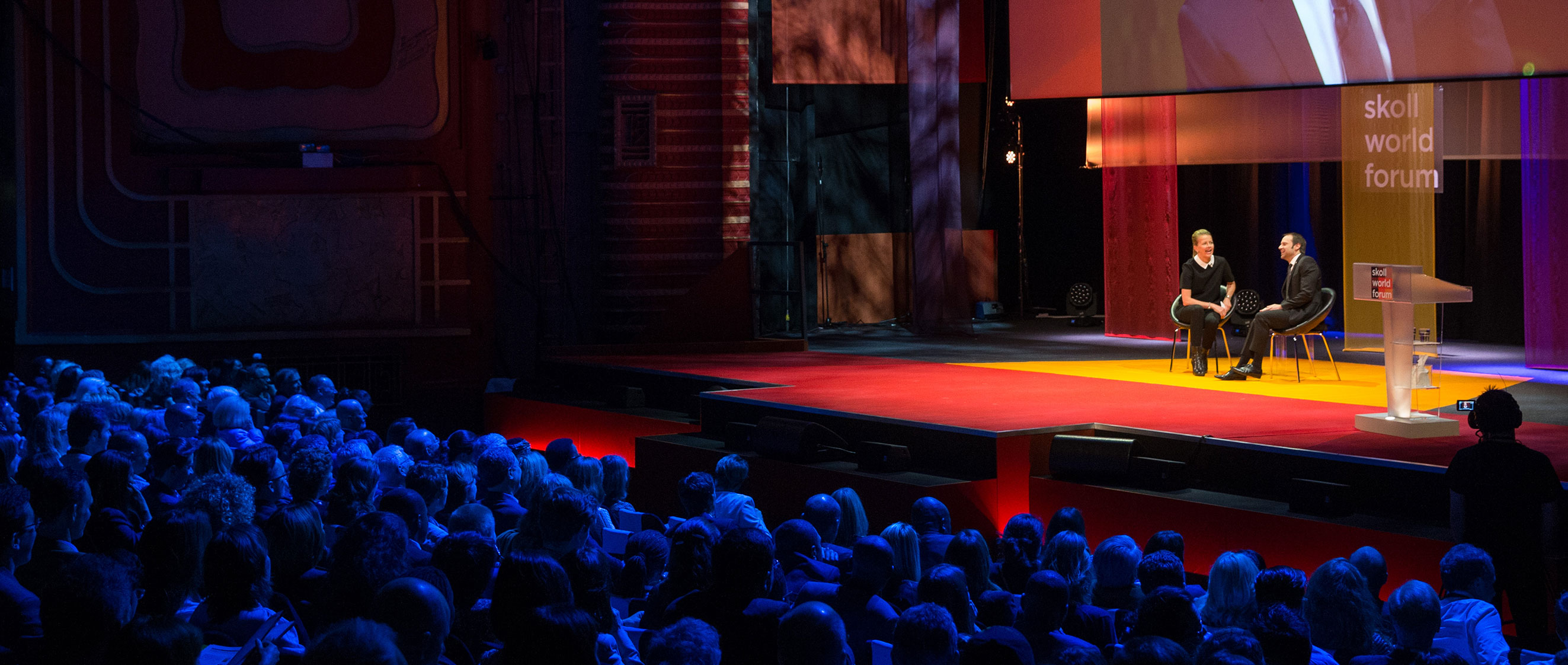
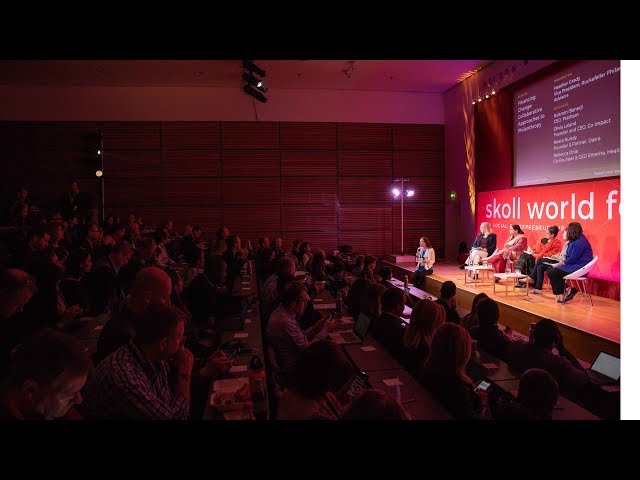
David and Goliath Revisited: Partnerships Between Social Entrepreneurs and Big Business
Location: Lecture Theatre 4
How do successful partnerships between social entrepreneurs and big business get going? What are the essential building blocks involved? What are the tensions that might arise moving forward? This session is one of two sessions that will examine four different partnerships from the perspective of each partner. Be prepared to learn, laugh and be inspired to stick with or kick-start a new collaboration.
Speakers: Luis Montoya, Keith Kenny, Rupert Howes, Albina Ruiz Rios, Pamela Hartigan
2011 SESSIONS
Markets: Reform or Rebuild
Social entrepreneurs working to transform markets offer tremendous promise for large scale change. Strategies vary, with some working within the existing system by creating new standards and certification mechanisms. Others, however, deliberately choose to create entirely new markets. Join four of the world’s leading innovators for a candid conversation about strategy, inherent risks, core competencies and most importantly, the impact achieved in working with markets.
Speakers: Rodney Schwartz, Paul Rice, Connie Duckworth, Rupert Howes, Premal Shah
Markets: Reform or Rebuild
Let me give you some examples. From the UK, which is the country I've lived in for the last twenty four years despite my accent, we have the NHS, the National Health Service. Some people think it's fine, but many think it should be reformed, whereas others that think it should be rebuilt. And it's key to get this question right in terms of thinking about how we make progress in health outcomes.
In the political arena, and this is a picture of the House of Lords, this is a key question. Some people think this is just an anachronism of a class split society, but others think it's capable of being reformed. So the question again is: Do we reform, or do we rebuild? And let me remind you that in Britain we actually have quite a lot of experience with, let's say, some quirky governance structures.
Again, do we reform? or do we rebuild. In addition to the Queen, Britain has another famous woman, Anita Roddick, who is a social entrepreneur. She built The Body Shop into a very successful business that, at the same time, changed the way we think about consumption. In the United States there was Ben and Jerry's.
We changed the way we though about ice cream consumption and built a sustainable business. But these two entrepreneurs - social entrepreneurs were very much reformers. Working within the system. But across in Asia, micro finance was a completely new system designed to get access to credit to the poor and help them to stay away from folks like this.
In this case they rebuild, in the other case they reformed. And while we are on the subject of bad guys, we may have a preconceived notion about the possibility for reform. But nobody can dispute the importance of the question, reform or rebuild? But just across the border in Egypt, a country with a long and proud history, and a society, there's a similar question that's slightly more nuanced.
Do we change the constitution? And this is what they're debating in Tahrir Square, do we change the constitution? Do we work with the army? How do we engage? Do we reform, or do we rebuild? And it's not just, and it is very arrogant of us sometimes in the North to think it's always just those developing countries that need to sort themselves out.
We too have our questions of reform or rebuild. Our banking system, and we can see the cracks. Is it capable of being reformed, or do we have to rebuild and start again? The Euro, in which many of us who live in Europe are so dependent and have invested so much much money. It is teetering. Can it be reformed, or can it be rebuilt?
Or should it be rebuilt? We're very fortunate today to have four excellent panelist who are going to take us through this question. And i have three jobs that I've been given by Victor Dalon from social edge who has told me what i have to do, and I need to do it with your help and the help of these four panelists.
I have to keep the session on time, I have to keep these speakers on topic, exactly and my fourth, my third objective is actually to try get us, I have got now my fourth, third objective, so, exactly. Keep you on time, on topic, and to make this interactive! And to make it interactive, I need your help.
So let me talk about what we're gonna do; I'm gonna finish my introduction, and then. We're going to do some bragging sessions. And what I mean by that is, you know, how people like us always try to work in our companies and talk about them, within the context of answering the questions. We're just.
we are going to have four minutes each of bragging, where we say what is so great about our company and why it is the best thing since sliced bread. Then we are going to have two mini address the question. Two people here represent the reform camp and two people here represent the re-build camp. And you and the audience are then going to vote on who made the better case, not whose organization is better, but who made the better case?
And then we're going to turn the tables on you, so those. Some of you are in the audience who are going to say i could have done that so much much. You are going to be invited to come down here and we are going to have two of you come down here and take four minutes. to make the case for reform or rebuild.
So please think about this now. I have not seated the audience; I promise you. So I am begging two of you but to come down afterwards, one of you make the reform case, one make the rebuild case. And then we will debate what you said, and then we will vote. Clear? So no we are going to start with our bragging session and for our first bragger I am going turn over to Rupert House and he is going to introduce himself and brag about himself, but first i should say that the women sitting to Rupert's right, raise your hand please, is an incredibly brave woman Victoria Hale, she stepped in at the very last minute for Connie Duckworth, who broke her leg, so please I've allowed Victoria to go last and i may give her a little bit of extra time so we'll put it over to you.
Thank you. My name an organization called the Marine Stewardship Council. I'm completely intimidated by this format. Traditionally I approach these sorts of things with no preparation and I here as we say in the UK. When I heard about this wacky 4 minutes to brag and then you stop and then there's five minutes to answer the question I thought I'll do some preparation.
So I'm even more nervous now because I've prepared, which is out of character. But anyway, the Marine Stewardship Council, we run a certification and labeling program sustainable wild capture fisheries. And that probably conjures up thoughts of certification, accreditation, standards and probably some A little bit dull and boring, but it isn't.
I passionately believe council is a part in an increasing effective part of the solution to tackling the global problem of over fishing and it's associated environmental and social consequences.
And to put that into context, because a lot of people and finishing in the sleep, this a mans play is the last global industry harvesting a wild resource for food. Two hundred million livelihoods around the globe directly depend on this industry and from a global food security perspective billion people on the planet depend on seafood for their only or their main source of animal protein.
Consequences of overfishing included environmental degradation, damage to the seabed by catch of unwanted species, impacts on endangered and threatened and protected species. We are fishing the oceans harder and harder. Production is now at about a hundred million metric tons a year, and that's an eightfold increase just since the 1950's.
We have too many boats chasing too few fish, and we have a world that is going to go to 9 billion people and is going to put even more pressure on that very precious renewable resource. So you can see why over fishing is described by many as the biggest challenge we face after climate change. My organization was established in the 1990's in response to the collapse of the Grand Banks cod fishery.
A famous fishery that has been landing hundreds of thousands of tonnes of cod for centuries. It is actually quite simple, we have a certification program will be attract fisheries on a voluntary basis into be assessed against the rigorous science based standards for sustainability but then critically we try and link the entire supply chain from the harvest sector, all the way through processing and distribution, to ultimately all of you in this room as individual consumers by using an eco-label in the marketplace to empower consumers to make the best environmental choice.
Now normally I'd spend about half and hour trying to describe this, so I have no idea because I don't even have a watch, how I'm doing on Four and a half minutes. Four and a half minutes, oh my God, okay. Well the standard looks at stock held environmentally impacts and the quality of the management regime.
to go. I'm going over to my slides now. You hold about twenty slides. Yeah, ok one thing I really want to get across, is there is no silver bullet to the global problem of over fishing. You need public policy reform. You need eradication of pirate fishing. But in the global [xx] [xx] society, a market based programme can work and can make a difference, on the basis of working in partnership, with the industry, leaders in the industry.
with leaders in the conservation community, and the whole supply chain, and that is working. What I wanted to just show you, the pressure growing on fishery resources. The slideshow is aquaculture and wild capture, whole separate story. I need another four minutes to talk through farmed fish, so I won't.
But I wanted to say where the organization has got to in ten years or so operation. We've basically got ten percent of the entire global harvest of fisheries in the program either certified or under assessment. That's the growth curve, and that's why I'm convinced that certification labeling can make a difference.
It took us about seven years to get to the first fifty fish we now have over three hundred. These fisheries range from big, industrial fisheries, big can be as sustainable as small, it's a small community based fisheries in development world to the Pacific Ocean to the Arctic Ocean. And I think I'm out of time, which is a real shame.
So I'll slide through these pictures, I just wanted if I'm allowed 30 seconds on the As I mentioned the strength in the program is partnership, working with stakeholders, and engaging the supply to the harvest end. Equally, while we engage small and large scale fisheries, we work with the very large, Walmart and the Boston Seafood Show, last week committed to 100% MSC certified seafood for their wild capture fishes.
But equally, this guy here who is my nearest MSC certified fishmonger in the south coast town of Hastings, who passionately believes in providing certified, sustainable seafood choices for his customers. The growth in labeled products, you know we're on a growth trajectory. All of you have a part to play in this, you can be part of the solution by demanding sustainable seafood choices when you go shopping.
I'm out of time. Thank you.
Thank you.
That was a big mistake.
Do you want to go next? We were going to do; all right Premon. everyone. So i thought what i do is just show some aspects of the web site, it's easier for you. x visualize a couple of things here some x x website. demonstrating his technological prowess.
So we just redid our site. and essentially what Kiva [sp?] is, is it's a website that allows people with a credit card and internet connection to participate in micro-finance in twenty five dollar increments, and what we do is these entrepreneurs are now going into other markets such as student loans and [xx] these entrepranuers are recieving loans from micro-finace organizations around the world.
Keeva [sp] today works with 140 micro-finance institutions. in 57 countries. And essentially, one thing that's happening is, there's as we heard yesterday that three thousand five hundred micro-finance institutions some estimates say that they are ten thousand of them and it' s growing quite quickly and most of the many, most.
To the capital markets attention, most of the commercial finance is actually going to the top two hundred and fifty. And so there is this long tail of micro-finance organization. and so you invest a micro finance[xx]
some of the guy So, for example, Martin Burt [sp?] is up from [xx] Paraguya. They've been on Kiva [sp?] for 46 months and they've raised 5.7 million dollars from the internet community.
but there is whole list of organisations in many these organisations actually have lost in 10,000 coins because they haven't interested in cut size The night on the radar screens for are the commercial capital markets and so happens is a they cannot grow at a certain rate because there is a limited availability of funds and it's seen as too risky to invest in many of these organizations.
So I'm going to pick one. There's one, for example, in Sierra Leone and that organization is called SMT. And Sierra Leone had a civil war for a decade, ended in 2002. There was aid that came in but there was not a lot of commercial investment that has come in. And this organization SMT essentially was growing quite slowly than ten thousand clients Kiva came in and made the first loan to this organization.
And the reason why we could do this, is because the internet community we feel are different from bakes. When you get this connective experience on Kiva, your willing to take more risk, your willing to be more patient with your capital and your willing To supply it in case 0% interest, and the proof point of that is every six days now we're raising about a million dollars on the website from the internet community.
And so, an organization like SMT essentially that is below the radar screen of kind of the traditional funders of micro finance can build their reputation online and now today they've attracted two other funders, two other debt capital funders because of their performance on Kiva. This is how we actually have organizations scale at the systems level.
And as the organization scales and this institution becomes more stable, can employ more people, can. put the organizations that aren't able to get capital, give them a profile on the internet and then help connect them to other funders I at a later stage. The other thing, and I guess the bragging point here is now in the first five years Kiva, we're the largest funder identifies in post conflict Africa.
Is that it? Great. Well that is all I really wanted to explain so. Ok, Paul Rice from Fair Trade USA Feel the hook?
Paul you have four minutes, do you want to do it from there?
Yes, I'm good here. So like all of you, I have a passion for social justice and sustainable development. So fresh out of college, I chose to act on that. By going off to Nicaragua, I spent eleven years working with farmers in the mountains of Nicaragua and a lot of that time I spent working on one International Aid funded project after another those project were in my experience the aid based approach doesn't usually help far most without around the the city to solve their own problems.
In fact more often then not, I think we just recreate dependency on aid. And we certainly didn't help farmers learn how to think about the market and how to be successful on the global marketplace. So toward the end of my time there, I had a chance to shift gears. I started Nicaragua's first coffee export co op, and and we started exporting our coffee to these crazy buyers here in Europe, who call themselves Fair Traders and who are willing to pay us over a dollar a pound for our coffee at a time when the middle man in the communities in Nicaragua were paying ten cents a pound.
Now our farmers were one acre farm producing a ton of coffee per year. So instead of getting a total cash income for the year; 200 dollars, we are getting 2000 dollars. As you can imagine that allowed us to build a movement. So over the next few years, we organized three thousand farmers all over northern Nicaragua.
We pooled our coffee, we milled it as a group, an added value. We went direct to the global market and got a huge price premium from both the fair trade market and eventually the gourmet [xx] haymarket [sp?] and the organic markets and that income in turn allowed us to transform our communities. we not only help families stay on the land and put food on the table, we helped keep kids in school.
We developed high school scholarship programs. High school is a luxury in so much with the Government word we had health training programs we brought clean drinking water into villages for the first time things that otherwise the villages would have waited for the Government NGOs to come and do for them.
We had savings and loan programs in the villages. We went organic. In short, this incredibly rich and strong processes, sustainable development and none of it funded by aid. Right, all of it a result of direct market link age and [xx] trade. So that experience totally changed my view about the market.
And I went from seeing the market as the problem, to seeing the market is perhaps the most powerful lever for change that we could hope to have. That led me back to the States and to Fair Trade USA. So the organization that I run, Fair Trade USA is kind of a hub and the catalyst for the broader fair trade movement in the US.
Fair trade today is one of the most rigorous standards we have for sustainable agriculture and it is the only standard that guarantees that farmers get more money as a result over that transaction. So we work with over a million point five, one point five million farmers around the developing world, and when the meet the fair trade criteria in terms of farming practices, they get certified.
And they get recertified every year. And that makes them eligible sell any fair trade buyer in Europe or North America. Those buyers in turn, commit to pay above market prices to support sustainable agriculture And sustainable lively hoods. The role of my organization is first and foremost a certified product.
So we actually create a chain of custody audit that tracks product from that farm in Brazil or India all they way to your retail shelf, and it gives you as a consumer the assurance that when you see that fair trade certified label on a package of coffee or a bunch of bananas or a bottle of wine, you know that came from a sustainable farm, you know that the family received a better price.
So it in addition to product certification, our organization does a lot of consumer awareness work. We also work with farmers around the world and capacity building programs. Helping train farmers stronger and more successful and competitive business people. Fair trade is no longer small business.
Thirty seconds. Fair trade is a, hey Its all about our activity right so faithfully is a 4 billion dollar business globally is a main stream phenomenon in Europe its been around for 40 years, in the U.S. it is only a 12 year old phenomonon, so we are following in Europe's foot steps. But our key indicator of sucsess which is above market income...
... [xx] farmers is perhaps the best social return on investment metric that we have. last year alone fair trade globaly delivered over a hundred million dollars. our market pricing is back to [xx] around the world you found the victory No for medicines 360. The pharmaceutical industry is a great industry in some ways has some image problems and issues and it has some provision problems serving more people on the planet is the problem that i was trying to address is my microphone working?
So certain Serving more people on the planet is what I am trying to do. Trying to get the pharmaceutical industry to do as well. Because regardless of what you believe about medicines, pharmaceuticals. When the shit hits the fan, so to speak, and your really in a bad place, or a member of your family is, we all need these.
Medicines, there are essential medicines. We count on them and everyone in the world should have them, regardless of there ability to pay. There's a paradox in industry that. That is to make so much money it is so profitable you'll think that there is all the money there will be needed right to take your more people on planet to provide more medicines to those who cant afford to pay.
But it is the paradox element of it. It is that because the profits are so high people within pharmaceutical companies, I had pharmaceutical executives say this we can't allow our teams to particularly of the best people to be focused on diseases that are not profitable we just loosed much money.
So there needs to be another way. So, rebuilding parts of the pharmaceutical industry is what I have been trying to do over a few years. So first with one world health and neglected tropical diseases funded by philanthropy, a ton of philanthropy, right, to develop drugs, hundreds of millions of dollars.
And now medicines three sixty, working with contraception and reproductive health also beginning with philanthropy, but evolving the model to be one that is self sustaining. To control sales ourselves not by actually doing sales but licensing and licensing with a marketing partner for commercialization and developing drugs unlike in the first company this one visualizes cholera, malaria not a lot of sales there are not a lot of profit opportunities right?
Making a sustainable company possible with contraception so long acting highly effective reversible contraceptives for everyone on the planet supported by commercial sales and theUnited States and then Europe partnered with marketing partners to make sure those commercial sales happened, and then probably, we haven't decided yet, probably holding pretty closed to our chests.
The public sector of sales. So U.S. public sector. There are lots people in the U.S. who are uninsured, there are lots of unintended pregnancies. Half of all US pregnancies are unintended. as well as developing country, a huge need for contracepties that are good contraceptives that are lasting and enduring... walking away totally, how I am doing on time.
You have a minute to go. So walking away totally from the pharmaceutical industry was not possible, is not possible. Possible. The people who know how to develope medicines, know because they've learned it as apprentices in pharmaceutical industry. You don't learn it in school, you don't learn it.
In government, you learn it by doing it. So, we need to figure out how to engage the pharmaceutical professionals, the people who are in the pharmaceutical industry. and have them want to do this type of work. And, I'll tell you, from <xx> world health experience, in particular, with neglected tropical disease, they flock, they, they really want to </xx>figure out how to do something good; spend some years of their life doing it, or jump into a non profit pharmaceutical company.
So, that pull is not needed. There's a, there is really too many professionals. There are not enough such organizations within the pharmaceutical sector. What about a non profit pharmaceutical sector? Is that what we need. Absolutely, but its self sustaining, so let's call it hybrid or social business, and can this be done.
Absolutely it can.
Victoria, I'll give you and extra minute.
Thank you. I may only need twenty seconds. The generics industry came to be in the United States, because the pharmaceutical industry had patents and kept prices high on branded products. And the United States needed too, and around the world needed too make products more affordable. Right, and the.
the pharmaceutical industry has thrived despite the generics industry now that's another story because the blockbusters are all going generic. But we also need a non-profit sector in the pharmaceutical industry, and that's work that I'll do in the future. And that's because some diseases have been totally abandoned, some conditions have been totally abandoned by industry.
They are just viewed as not possible.
Thank you. She's amazing calm isn't she for somebody who just had a few hours to prepare. I want to thank all the panelist for actually putting up with this very strange structure. I'm going to take two minutes to brag about. Clearly so. Clearly. Clearly so, which has one single purpose which is to help social entrepreneurs to succeed.
That's all we do. And the way we set clearly sell up was actually to look at the market, the market I used to know. I used to be living in rooms like this when I was Investment banking world. Everything seemed to work so well, at least we thought so. Typical businesses in order to do what they needed to do had banks and venture capitalists and sorts of people to help them.
And the entrepreneurs in this world had what they needed to cross the chasm and become successful entrepreneurs. The system did work, at least it did. For a while. But, when we looked at the situation for social entrepreneurs, the picture actually looked slightly different. So this is the picture that our social entrepreneurs face.They don't have that infrastructure that they need to be successful so what we do at clearly so is provide it this is where we saw our opportunity to take some of the some of us have had from the other world and actually bring them to this world.
So what do we actually do? We help SBE's, is our world for social businesses. <xx> enterprises. And what we simply do is connect them to the dark side. People say we're a connector to the dark side, and we're actually quite proud of it because the dark side. </xx>People insist on calling it that, has a lot of capital, expertise, and capacity to offer social entrepreneurs.
So, we are, very simply, a connector to the dark side. That's it. And how've we done? We've done very well. We've grown from having just- and actually, we launched our business at the world forum two years ago, and actually now we're <xx> years old, we celebrated our birthday this weekend. So, we've done quite well, we've grown very fast, and now 30 percent of our businesses on the site are from outside of the UK, from about 45 different.
</xx>countries . We've been expanding around the world. What you see in the yellow, is the UK and Canada, where we have a physical presence. And in the green Italy, India, and East Africa, where we expect to open a physical presence this year. Helen Gibbons, are you in the audience? OK, that's Helen Gibbons, she's clearly so East Africa You're interested in East African social entrepreneurship, see her.
And that's my two minutes, thank you. Now remember, I'm counting on you to step forward and be volunteers. We're just about to start the next phase of the discussion, which is the mini panels. Each of the speakers is going to get five minutes to defend why they either choose the reform roots or the rebuild roots and then your going to have ten minutes to ask questions and vote.
But i want some you to be thinking about how you can do it even better. I'm going to start with you, right? You're going to talk about, I think reform.
Ya, maybe. I think this was a difficult question so let's assume, that as I think there is an assumption that the MSC is working to reform the existing global markets. So starting on that basis, and determined to prepare for this, I sort of pontificated as I wandered around Oxford, and came up with four main reasons.
I think the first is the historic nature and the complexity of the global seafood business. And this is, you know I think people have been trading fish pretty much from the beginning. talk of the Roman legions being fed on blue fin tunas as they expanded their empire. The Vikings would never have got from Norway to Iceland, to Greenland, to Canada if it wasn't for fish and seafood trade, which fed them all the way across the Atlantic, which is the range of the Atlantic cod.
So, nations have been born, you know, empires have been won on the back of the seafood trade, those relationships run deep and many of those historical trade patterns are still mirrored today. Some buyers in my own country here in the UK, the waiters is one of up-end, top retailers, a bit like Whole Foods in the States.
Their seafood buyer's been in post I think for twenty, twenty-five years. He's still buying Atlantic cod from the same Icelandic companies that he's done for the last quarter of century. So those relationships are deep and have gone on for many, many, many years. The other facts actually you really must read this fantastic book called the barb fever fish that change the world barkilenskis, surely she recommend that About the Basks fishing cod again off the eastern seaboard again a thousand years ago feeding northern Europe, it was the collapse of that very fishery that let to the formation of my organization.
So history, scale as well, sea food is the most traded primary commodity in the world, its quite remarkable more than coffee Tea and Cocoa combined and half of that fish is coming from the developing world. Its changing as well, China, if I had ten minutes I'd Talked about China a bit as well China is very very important now for those sea food trade and its getting bigger history, scale, the other thing is emergence of leadership.
The seafood industry, that business as usual is no longer an option. And indeed back to the formation of the marine stewardship council our founders. The international conservation group World Wide Fund for nature, WWF, but also Unilever who at the time owned brands like Birdseye, Igloo, the owned In the state, states, and for them when the grand banks cod fishery collapsed in the early nineties, it was a wake up call no cheap plentiful supplies of frozen white fish no Captain Birdseye, you know, Captain Igloo, made profits.
I mean, to me, that's the personification of the business dimension of sustainable development enlightened self-interest. Those resources had to be managed sustainably. They're not unique, there's leaders from harvest sector, process sector, retail sector, food service sector that all recognize that there's actually a moral Ethical, dimension to all of this and a business imperative to make sure that fishery resources are managed on a sustainable basis, so there you know there's pushing on an the basis of forming a cross sectional partnership which is so critical to deliver this transformation.
Fourth reason is I think the model of certification and labeling as a mechanism to engage and transform markets and to deliver real change had already been proven. We've heard from Paul about the fair trade movement that's been going in Europe for over 40 years that's delivering real, practical change.
WWF, before they set up the Marine Stewardship Council, had actually established the Forestry Stewardship Council, and again certification labeling was leading to a changes in the way some forests were being managed around the world. So my first thought in responding to this question was yes, historical reasons, scale, leadership, recognizing the need for change, and a proven concept, but then as I thought a little bit deeper, and the wine settled in at dinner at Exeter College last night, I thought well, are we really reforming markets or are we, and when I say we, I mean the collective sustainable seafood movement, because there is no one organization.
It's a collective movement. Perhaps we are genuinely creating a new market. And I reflected again on the Hastings Fishery. I showed you the the picture of Sonny with his Dover sole and herring and mackerel that he was selling in Hastings, and that's a small community based fishery that was certified to the MSC On the back of that certification, they want new business.
They want new markets and they've got a price premium selling into Holland, a country that is committed a hundred percent to certified sustainable sea food within five years.
Thirty seconds.
Thirty seconds, oh no! So I also think... so I guess I'm going to hand it over to the audience to decide. Are we reforming existing markets, or is the collective movement creating a new market for certified sustainable seafood choices. And I think you could argue it both ways. The one thing I did want to say, and I didn't really get time to talk about my theory of change, and I promise to go to those master classes on storytelling, so I could be more succinct in four minutes.
But, I am passionate about MSE's contribution in this area. We've seen this meteoric growth from a few fisheries and a few products to having ten percent of the global harvest in the program and a market now worth three billion dollars annually andgrowing . Pretty much doubling every two years of certified labeled products in seventy countries around the world.
The reason why that's driving change in the way the oceans have fished is the market increasingly says we only want sustainable choices, less well managed are coming forward, opening themselves to very public scrutiny Performance, and they're using the msu process as a route map to look at what they need to improve to meet that standard to meet that market.
And I had this wonderful idea that wouldn't it be wonderful If it really did become global, because whilst 10 percent sounds good, there's 90 percent we still need to engage with, so for any fundies in the audience, we're not there yet, we still need more resources to grow. But I was thinking, perhaps, if everybody got behind it, OK, one second.
We could also. One. Create a mechanism to fund the improvements in fisheries. Because at the moment we're generating income to fund our own operations, but if people paid more for the label, if consumers said yes, we're going to accept the internalization of those We've got a fund to pay for Fisher improvement.
Thank you.
Thank you for your. Rebuild. I think to frame Kiva within, I guess, defending rebuilding a market. Perhaps the new market that Kiva is part of re building and showing the world as possible, is that there is a space between hyper capitalism with commercial rates return investments and then donations.
And there is middles space here. And keen the calls it connected capital and on the Kiva website today. You'll see ninety thousand people a day come to the website and, you know, what they're looking for isn't, how can I make the most of my money, and I think a lot of people are drawn to the fact that they get their money back.
So, it's a zero percent interest loan that you're making on Kiva. There's a ninety eight percent repayment rate, and And ninety four percent of the money that gets repaid every month stays in the system and just recycles, and so it's, it's this middle space that when we were first starting out people said well, you know what, that's, that's not a donation that won't work, you know.
I wanna get a tax receipt, that's really important or people said it will never scale because there's no rate of return. So it's a horrible I think it was negative two percent, so what's going on here. I think there is this third dimension, so people talk about double bottle line the financial rate of return, the social return.
And I think the third axis is this idea of connection, or the user experience. Why do people pay more for a pair of jeans than another pair because it makes them feel a certain way or brand. And I think Kiva and the user experience that we're trying to pioneer here, is really to feel connected, to have fun.
While you're participating in this we have something called for example, lending teams. This has been enormously popular. We realize just like Facebook created "Groups," by letting lenders actually kind of band together with others. For example, the top two teams are the atheists and their competing against the Christians on the Kiva website.
And crash talking between the two team and they have thousands of members each. What they are doing is, they are making philanthropy or helping people fun. And you know we like to say that we're trying to create a more addictive kind of experience because if sixty million people every month build virtual farms on Facebook on Farmville and only sixty thousand people, for approximately the same price, are actually funding real farms in Uganda on Kiva.
There is something massively wrong there and what we want to do, is try to actually make it as compelling as addictive, as amazing social as building a fake fund on facebook trying to actually fund real farmers all around the world, so that's I think the new market we're trying to build or rebuild.
And then with all of that we can fund the risk and cost frontiers of microfinance. So, "There's a lot of things right now on the edges, we heard last night there's about two hundred million people have been reached by this innovation in the last thirty years" 100 million to go there is clearly a risk in cost front here, I talked a little about Sierra Leone I can give you another example student loans in the developing world It's something that's extremely nascent.
It doesn't really exist and it's a chicken and egg problem. Because banks aren't lending to students, there's no repayment track record. Because there's no payment track record, they just won't get in the game. So, that's perfect for all of us, the Internet community, to actually, to create this patient capital source and channel it towards new products like student loans and then maybe we find that an 18 year old student who wants to get an accounting degree in Peru has a [xx] rate of 97% if asked these three questions versus a nineteen year old student who wants to get a mechanic licence has a 92% and at some threshold, we would be able to demonstrate hopefully for the commercial markets that there is a viable student loan product out there and then the commercial capital can come in and really bring it to scale.
So the demonstration effect of what the internet community could do in terms of proving or disproving the viability of new financial products on the frontiers of risk and cost... this is something that is, you know something we're attempting to address with the market.
Great, thank you. [xx]. So, I want you all to be thinking about how you could do this. So please, a couple of you at least, think about that. Questions Please say who you are and be brief 'coz I'll be as ruthless with you as I am with the audience. Raise your hand. Okay.
My question is actually for the. How do we get? There's a market demand that exists in Europe for right now, but we're in most of upcoming events in China, India, Africa, and places where the middle class is really growing in those countries. But yeah, I lived in for the last seven years. I go to my little I was wondering how do you go into these places.
Go ahead.
It's a great question. You know this It's all about large scale change, and MSC is unashamedly ambitious we want to engage with the global industry and capitalize global transformation and to do that especially in the fishing industry, you've got to engage in China, Asia- Pacific, and the developing world.
In part, it's a question of resources. You need a lot of resources and investment to get into these countries, but it's also about being smart and timely. And I think, it's interesting, it's a very timely question, because MSC just celebrated its 10th anniversary. We're in the process of developing a new strategic plan which will look absolutely into that question of how do we get into China.
But initial thoughts are that, through these partnerships we've built with global retailers. They all have stores in Asia-Pacific. That's the big growth area for them. [xx] is a bigger food retailer than Walmart. They're committed to selling sustainable seafood. Walmart's committed. So I think we want to work with them and through them, to actually engage, but I think we will also have to engage in governments much more effectively in these countries.
Just, my last point is this isn't just a European and North American phenomenon. We opened an office in Japan two years ago and we've been amazed at the interest in sustainable sea food issues. The whole issue of scarcity has woken consumers up to the fact that there are limited resources. Those middle class consumers in China are buying a lot of the fish that use to go into Japan and we now have got japanese fisheries coming into assessment and leaders like EON a japanese retailer doing all they can to raise awareness.This is the MSU programme of sustainable sea food, so yes we need to get there we need resources and planning.
So, hint for funders.
Just a little one.
A question on certification.
No, I actually meant you, I mean because the people at the end have to kind of be verified maybe from that perspective but I wanted to have.
Sure so, I guess one question is, how do you know that the person on the other side that you seen on keep the website is real, that they actually got the money That's stated on the website. That, you know, they indeed bought the sowing machine. That the repayment term is indeed fourteen months. And one thing that we do.
Certification process is we do random sampling, and the way we do that on a very small budget at Kiva is we have the Kiva fellows program. It's a volunteer onto your program that so far there's been over 350 people who have kind of taken three months to a year off their jobs. It like a mini peace corps program.
I will train them in San Francisco offices, there are four classes a year and then we ship you out to one of fifty eight countries and through kind of doing a random sample. That's one way that we can actually verify if the data on the website is accurate or inaccurate.
So you with the orange and blue tie. Now we're going critic club I think. With respect do you mind if we hold off on the question for Pol until after his spoken and could the audience keep your questions if they don't mind to Rupert and for just now as is the once who just spoken. forgive me, that person out there and theni pass this one to you.
"and solar aids so my question is for Pramahl, I mean, I found your presentation and of course I subscribe to key" a really inspiring i guess i've moved over the course of 10 years in energy and finance from reform to rebuild by [xx] experience. So my question is, you know, if we can take what you all doing and what other people are doing in a [xx] it appears we'll be landing in debt and all the rest of it as a kind of template for beginning to disintermediate at least financial institutions of they're causing so much.
How work, you know, wield. What are your thoughts? about how we can do it across the rest of value chain so for example bench capital, bonds, and in the equity markets? First you don't know Jeremey runs a very successfully UK based solar energy company. well i get really excited about this trend of crowd funding take there is a new company a couple years old called kick starter and now kick starter is raising a million dollars every week and they fund basically may be allowed the internet community to find a creative project.
So, a band that starting up, a startup that's trying to get started. Again this is usually the domain what's really interesting about this model is that it's not a donation, you get no money back but i just for example helped kick start a business that it's trying to sell sandals it's a couple of guys that are making a sustainable sandals essentially and in exchange of me backing them 25 dollars I'm going to get a pair of sandals shipped to me.
So it's actually a new form of commerce. Instead of buying something, I'm actually supporting the original producer. a free trial. Where if I support a band they're going to write me into a song. So part of it is rethinking, you know, kind of new ways of value exchange using this crowd funding model.
I think there's so many industries. Where's the P to P insurance company for health insurance when you can disintermediate and allow people to get this connected experience I think you can bring down cost for the receiver and created an amazing experience for the person who's trying to provide.
Great answer. So other questions. Yes you have the mike already.
Yes Louie, I'm from Shanghai. Really fascinating talk from Cuba. My question I mean the argument about some instead of playing Farmville, you donate money to build a real farm, this is really amazing and what is can you elaborate what exactly you have done to create this kind of wonderful usage experience and to make it so addictive.
Do you create games or any other addictive things and to connect people. What do you do?
So, the fundamental thing that's happening as technology proliferates and as the cost of actually recording what's happening through flip cams, digital photography. There are amazing practitioners here who do amazing things every single day really hard work loan officers in microfinance. All we're doing is equipping them with kind of story telling equipment, and then they're telling these stories posting them up onto the internet and then just by seeing kind of people stories, people connected in this incredible play, but one of the ways that we can I think make the site more compelling, put some more game mechanics on it.
Imagine if you can actually get you know badges and rewards, so you here been the major of the certain town on What if what if you their is a four basic food groups batch at key bell won't you lent you a business you meets. one in dairy one in fruits and one in vegetables. You get this little badge and you can publish out to your facebook peeps.
There's just a million ideas like that If we can bring that to philanthropy I think its just going to make it much more engaging for folks.
Thank you for the question, but how do you make what you do fun Rupert. I mean how can you, McKevis naturally suited to this, can you make what you do fun and exciting?
That was a terrible question. I can't believe this is being filmed as well. I can answer that on many levels, but its really hard to nail nor how to even thumb this one. There's a passion and an energy in what we do. I'd argue it is fun. The issue that I'm working on connects all of us. It's it's food.
It's livelihood sits integrity and function of marine ecosystems, you know, whether you work in the industry, enjoy the oceans. This connects it all and connects in a global basis. this and despite, you know, ridiculous hours, pressures and challenges that i wasn't able to cover into 4 minutes as i allocated.
I really enjoyed what I did and my question was really how can you bring in the gaming aspect of some of the points. Like he was even talking about the food group. So there are things like that you can do at Emasy (sp?)?
There are. I have to be honest up to now we've worked business to business. We've engaged with the harvest sector. [xx] with the retailers and increasing the food service sector. That is the next stage of evolution for us, is to move from business to business to business to consumer. And, i have to say.
You know we will be looking at the experts [XX] to help us with that. One think i imagine what happened in the situations is we all have smart [XX] we will be Keeping points amongst our friends about who's doing the most good. So, I just bought something that was fair trade certified, I get a couple points, and I'm on a leader board.
So I had a personal goal to do that and so essentially as people are tweeting everything they are doing or as they kind of check in, there's a way amongst our closed for us to actually kind of encourage the other to do better and spread awareness about it. So I think there's a part of it is all of us kind of figuring out what a core group or competencies are and it's for you guys to do the thing that you do really, really well and for other folks to come along and kind of try to make that fun as possible, I think that's the way it's gonna play out.
Great, so now it's time, I'm sorry, I apologize for all the people that had questions, now it's time to vote, so you're not voting for you're looking or you know, which business you like better. The simple vote right now is around, who you think made the better case for their approach. So We haven't heard from two of them.
Ya. You're going to vote from them too. I promise.
We're all going to vote for two?
You're going to vote for two now and you're going to vote for two next time. Ya, absolutely. Boy, a tough audience! I hope, you're gonna come up, I'm gonna stand up and assert my authority. Okay. Of the two that presented who do you think made a better case? Those who think it was Rupert, raise your hands.
You don't want to vote? I'm so happy. Thank you.
The audience is king. Okay, we would.
Let's vote.
Sorry.
Knock it. Let's vote, the markets votes. I'm sorry. The markets have voted. What we're going to do now is turn to our other two speakers and they will make their case for reform or rebuild. And then you will or won't vote, but one of you will definitely come down here. If I have to drag you down and talk about, why you chose to reform or rebuild?
Is that clear? Ok. Paul, five minutes. So, I think globalization is at a really interesting juncture. I think what drove, kind of, the last 30 years of globalization was basically corporations based in the north, shipping jobs overseas in search of cheap labor and low environmental standards. And what companies are increasingly discovering today is that's not sustainable, You can't build a long term sustainability if you're supply chain is at risk and so we are in a really interesting moment in which sustainable supply chains is coming to the fore and every one from CEO to the, you know, junior buyer is realizing that the shell game that was once international buying is no longer working.
And so I would argue that fair trade is a great example of how interests have aligned in order to make the model thrive for farmers and for ecosystems, right? First and formost companies. So what do companies get out of fair trade? Well, they get greater transparency into global supply chains. They get greater visibility into where the money that they're spending is actually going.
Right? I mean, look at a company like Starbucks. Starbucks depends on high quality coffee. So, if they have 20 different middlemen between them and the farmer, the high price that they're paying for coffee landed in Seattle may not be getting back to the person who actually needs that money in order to continue to deliver high quality raw materials on a sustainable basis.
So greater supply chain security is clearly a motivation and a benefit for companies that are participating in this. Reputational gain is another, right? So, to the extent that companies are repaying Profits while stories are hitting the press about farmers fleeing their lands because they're at the point of starvation.
That clearly represents a huge Brand is linked to long term share holder value, clearly companies are looking to position themselves as on the right side of history rather than the wrong side of history. And finally I would argue that there's this emerging consumer segment called the conscious consumer who's increasingly looking for better products.
And for us that I have social environment of values, and so there is a opportunity for companies to tap into those consumer segment. with something like fair trade. What's in it for farmers? Well obviously farmers through fair trade or through sustainable supply chains are accessing greater sources of income and are able to take care of the land in a more sustainable way for future generations.
So there, the benefit is evident. What's in it for us? What's in it for consumers? You know, I think most people are aware of the world's social environmental problems. We just don't feel like we know what to do. We don't feel like our voice is heard we don't know how we can make a difference. But, you know we all eat, right?
Most of us drink coffee or tea, we eat bananas, most of us you know and we all, we all wear clothes. Well, except some people back in Burlingame, California where I lived, but right? I mean we all buy stuffs. Well, if you can turn that cup of coffee or a banana into a act of grace and goodwill. If you feel like through a cup of coffee you can reach halfway across the world and help keep kids in school.
That's a very empowering notion and I believe that that is what is driving this broad, responsible shopping movement we are apart of. There's something in it for everyone and I would argue that that is at the core of any effort to reform or build a new market. It is that notion that bringing together This product was perhaps once with us into a moron which have been a great success and that is the emerging model of the opposition.
The old model is profitability against sustainability today we are finding the companies can be sustainable and responsible and profitable at the same time. Your turn.
Is my mic working, yes? OK. Um, let me begin and with an example that you may think is a bit unusual. But this is why a non-profit pharmaceutical sector needs to exist in non profit pharmaceutical companies. You all know the birth control pill, right? Oral contraceptives. 50 years old now, 51 years old this year.
and woman know how to take pills. In fact they don't their partners, their male partners can tell them how they should be taking pills. Everyone knows how to use the pill. The pill at this point in history should not be a prescription product. It should be over the counter. In the United states that means it sits on a shelf next to condoms or next to whatever.
And you don't need to go to a doctor to get a prescription and need not to take that prescription to a pharmacy. So in some ways it is demedicalizing the pill. It is also allowing incredible access and reducing paternalism in contraception. There are some issues to be concerned about such as would twelve or fourteen year old girls want to buy this product.
As our next product, project taking this to FDA and and taking this project, switching the product to over the counter, agency to do that. That is an example of a product and a product switch that the industry doesn't want to switch because there's too much money being made, right. Insurance payment or purchase... what do companies pay, insurance companies pay for a pill?
Up to $80 a month and this should be sold for, I don't know... $10, $15, $20 a month, right. So this won't happen unless there are new players and there are ten.... I can think of ten other situations like this where the industry will not do what it should do or what it needs to do, what it needs to do that is best for people.
So with that in mind, let me in the interest of time, conscious consumers is what you know Paul was speaking of. People want to like their pharmaceutical companies. People want to like any companies that they buy products from. I think we all want to have companies that are...people like as much as people like Apple.
Right? Just incredible. Why can't there be a pharmaceutical company that'sliked as much as apple is. We have the opportunity when we take the huge profit requirement out of and our new motivation is actually caring for people and serving people. We are in a place where it's unimagineable right now where we could be, where we could create good pharmaceutical companies that people really like and that people walk with their feet and with their dollars or pounds or rupees choose to buy from, choose to support because of work that they do.
And that is not a dream that's are off. That's a dream that actually is achievable. So we back to the question rebuild or reform. This is a rebuild situation that we are creating, but I'll tell you, I'm not walking away from the pharmaceutical industry because it is build by it is made up of individuals who feel like we feel corporation is only it's people particularly if they are corporations.
This is too big of an opportunity to walk away from. We need to, and this is my last point, we need to get into industry and figure out how and what industry is willing to do. Having them develop drugs for cholera is not it. It's never going to be, but having them do other things that are important and worthwhile, in world, is something that can be done.
So I ambition in my third generation pharmaceutical company. Not yet. Going to pharmaceutical companies and saying, and medicines 360, we received very large anonymous philanthropic funding to develop a contraceptive that would compete with contraceptives that are on the market to reduce unintended pregnancy and reduce, return mortality actually, globally.
We could raise the same funding, and come into your market, and develop a product similar to what have and compete with you. We've done it. Right? It's assuming Medicine 360, when Medicine 360, is successful will be able to say that. Or what we could do right now is talk about how you, the pharmaceutical company, are going to supply the public sector, so what do you want us to do?
Here's a carrot and here's a stick, we'll go do it! We're bringing in the revenue now where we can and there are philanthropists who want, in some diseases and some indications, to do that. So here we go. Let's go. Let's figure out how to do public sector provision and developing world provision.
Ok, maybe we'll do it for you. Maybe we'll do it in partnership. We're not taking away your profits in the West. You have those. You just need to treat more people, take care of more people. Maybe in the U.S., my last point, product liability is huge. Right? Multi-million dollar lawsuits. Maybe we need to offer, and go to Congress and offer for public sector provision protection from these big liability cases.
But this is why a non profit pharmaceutical sector needs to exist so that it has power and can make things happen. Thank you. ok, questions for Paul and for Victoria and we'll start with you Sir, from the NCC. Start in California. Paul, my question for you is I'm aware of the incredible work you've done developing countries with the fair trade products for the producers and really returning revenue to them.
What about for producers in the United States? Is this too hard to work with is it a new area that you're interested in working with as well as producers in the United States as opposed to developing countries.
Paul?
Thanks, Jerry.
You know, historically, fair trade was conceived as a model in which, consumers in the global north would partner with producers in the global south and that was kind of the end of the story and what we're finding today is that both industry and stick holder groups are coming to us and saying why this artificial divisions.
So the earlier question was about why cant we to energize and engage consumers in the global south to create a market for products in the global south, right? For more sustainably grown products. The same in the US and perhaps in Europe as well. I mean I have all kinds of NGO's and farm worker groups knocking on my door right now saying well What about fair trade for farm workers in the U.S. who are working in dangerous and precarious conditions as well?
And retailers, for that matter, find the division artificial, right? I can certify bananas from Mexico, but I can't certify strawberries that are grown in Wattsville, but harvested by Mexican immigrants. So, I think you'll find that you know fair trade as a model will evolve over the next few years to open up to farms of all sizes, all products, and all geographies.
And actually we're already going beyond agriculture So last year, we took our model from farm to factory for the first time. We started certifying fair trade apparel and right now we're piloting in seven factories in India and Peru with a new apparel standard that essentially doubles the wage of the seamstress in the proverbial sweat shop.
So I think, you know, the model is definitely applicable to you know different sets of anyone in the world.
Perfect next question would be from this women there, could you pass the mike right down. I've decided also to throw a bottle of red or white wine into whoever it is that's going to come down here and talk about their social enterprise and defend what you're doing from a reform versus rebuild standpoint.
So, no.
No. I'm stuck with this for a little while and then we'll destroy and rebuild. Maam, you. Hi. I have a question for Victoria. You started off the debate by saying that you would want to demedicalize contraception and other medications but that does come with certain risks. Actually just this morning on television, they were debating whether self testing kits for diabetes or prostrate cancer, was leading to people being able to buy these things over the counter, self diagnosing themselves, and then never having medical follow-up.
In particular, in developing countries where people don't have the health awareness that maybe we have here, how would you establish the partnerships whether it is with NGO's or governments to create that awareness and also with the pharmaceutical industry.
Thank you.
Thank you, yeah. It's a huge issue. Education, right and awareness. Anytime a new medicine is brought to market, particularly if its prescription medicine... it's the sales and marketing force of the company, right, whose responsible for education, and in the United States, direct to consumer advertising as well as the advertisingon T.V. or in magazines.
Education and how we educate regarding these very important products that our pharmaceuticals, whether their over the counter or prescription. We're in that phase right now where we're learning, right? And we need to pay more attenton to it, treat it more significantly, more seriously and what is at the core in rate limiting in the U.S.
I think is less of an issue here is scientific illiteracy. Are low scientific literacy among U.S population in general so it is going to be a long process. And it involves people not taking responsibility for, and not being intimidated by, right, and wanting to know how, and know more of how things work and and why.
But regulatory agencies do need to play a bit of a role in terms of what is over the counter and what's not. In the U.S. there is one Plan B, the morning after pill that is in a third category. It's not prescription or over the counter, it's not even a legal category, but it is with the pharmacist and you have to ask for it.
Not a prescription, but you have to have a discussion with the pharmacist, as to whether you've had sex within 72 hours because if it's longer than that it's no good, and whether you're 16 years old and demonstrate that, and prove it. And there may be some products that could go for a while into that middle category where you need to speak to some kind of health professional and you'll get it if you want it, but you just have to have a little conversation.
That's sort of where we are right now, but it's huge and it goes to general education of society in taking responsibility.
Other questions. That woman right there in the back, and then you'll be next. If you could get a mic to her.
Dan can you hear me?
I think we can.
I have a quick question for you. I just wanted say I'm a huge fan of your work. My name is Maggie Brenake and I work on a project called PharmaFuture, and I've been working with the investment community to understand some of the to be in the industry. Concerning a question that really struck me through work we were doing was, what if the whole industry was non-profit, I mean the scenario you painted was both existing side-by-side and the non-profit companies exerting pressure.
I just wonder whether it's possible or not; but your thoughts on this necessarily non-profit model for the industry.
Wow that's great. I would say that's not what I am trying to do here. I think that we need a variety of motivations in the different sectors that develop products. R and D is expensive, research and development, right? And there are some organizations that do it better than others. We need organizations to take big risks, if we want first-ever treatments for, let's say, rare disorders, let's say cervical cancer.
there is a whole new treatment where you don't need surgery, right.
And those risks often are not well let's say some industries and some business models and structures, right, are more supportive of, conducive of in allowing risk, and others are not. So I believe there needs to be, keep this generic sector or generics are way to profitable. I think the prices should be reduced.
How the non profit sector and how the for profit sector, but let's, as a society, decide which diseases, right? Which needs, go on which of those, which of those buckets, right? I think that is how we should approach it, from the needs of the people perspective. And at some point we may decide that the for profit sector only has certain, certain diseases so we as a public, as a community, we are the consumers of these products.
And pushing in various ways. to make use of these social media to make people aware that they can have this influence. That was a very good question.
Thank you. You over there, do you have a mic?
No, I don't.
Okay, it's coming right behind you.
Hi. This question is for Victoria. My name is Jane Chen. I'm co-founder of a social enterprise called Embrace that has developed a low-cost infant incubator for use in developing countries. So I feel one of the biggest problems with having a non-profit pharmaceutical industry or even a medical-device industry is the enormous costs that come with clinical testing and with getting FDA approval or CE mark.
So, I'm wondering if given that the lack of clear regulatory guidelines in emerging markets, you feel these international standards are what is most appropriate or should there be a new regulatory process in these countries?
Very good question. So, most countries have a process for drugs, and that's good. The processes vary regulatory processes vary in stringency, widely, and i think that they should as well, because to a great degree everybody blames FDA. i worked at FDA for five years, and I think FDA does pretty well To a great degree regulatory requirements impact cost of products.
So. learning from each other. Regulatory agencies don't talk to each other very often; I don't know why. They're not competitive, right? There are cultural and historical reasons why that happens, but I I think just talking to each other and understanding what is important in certain societies at various times and it changes in the us how how important is drug safety right, in the United States?
After, after a big realization and they pull drugs off the market then it's suddenly suddenly important. I'm not getting to question.
Wait does anyone have a question for Paul?
Dr. Lesby [sp]
Is your question for Paul? It's been a nice guy do you vote for Paul, oh great women actually.
Let's hear Victoria. And this will be the last question, and it won't be voting.
Paul, I would be curious about what you think of the concept of solidarity, and do you think that, that plays any role? You've talked a little bit about cooperatives, we've been talking a lot about individualized strategies. The person goes to the computer, turns it on, communicates with somebody, an individual but I think, are we talking about ways that people can group together, have interrelationships with one another, and participate in the market very successfully, would love to hear what you think.
You're thinking about on the market side as opposed to the production side, right?
No, no. In general, what do you think of this idea of solidarity capitalism? I just coined that phrase five seconds ago.
Ya, it's a really interesting clearly, the solidarity among farmers is key to their success. Most of the farmers that we work with over a million of the farmers we work with are one acre or two acre farmers. So there is no way they would be viable in the global market place unless they bandied together with their neighbours and created with which to process and export their own products.
And that creates a whole foundation for community self help, right? And we see community to coming the architecture there there on future. As a result of that, you know, community base in applies that can get expression doc and the social development. On the consumer side, it's a really interesting question.
We had food coops in the states in the seventies and eighties and most of them tanked. And so, today, that's true, yes. Certainly and one of the interesting things of the possibility of working with U.S, agriculture is the possibility of tapping in to alliances with companies like OceanSpray, which is a co-op, and Sunkist Oranges, and Diamond Almonds.
I mean, so many of the food products that you eat in the states are actually farmer co-ops as well. But in terms of consumer aggregation, I don't see anyone working on that very effectively. I mean I guess there's community sustained agriculture which you know, is very much a part of the buy-local movement and one thing that we have been investing in heavily is the fair trade towns movement and the fair trade universities movement, which is not so much about a buyer's co-op, but it is about pulling people together, where they live or where they study, in order to create a journey that has to do with interacting with the product but also learning about the world and learning about how to get involved in a bigger way and through other organizations.
So, yes solidarity obviously is at the heart of this, but I really look to people smarter than me that are really innovating on social media decide to help figure out how to make it fun because I think in our generation it was all about solidarity it was the cause it was our values, and now we gotta make it fun or it's not gonna work.
I will say this you do find in some of the continental europe this concept of solidarity to be much more widespread especially Francophone Europe and Quebec. I'm afraid that's all we have time for questions now for this audience. That is unless you all let me down. So let me, I feel like I should get on my hands and knees and beg.
Is anybody out going to take. Yes. No! Not you Nigel. Anybody but Nigel. Well, we've had a lot of Anglo-Saxon. Nigel if it's going to be you it's going to be you, but I'd like to give. So we have one, two. Anybody else? Ok. The issue with Nigel is Nigel Kershaw.
Up there.
Great, what was the other one?
You have a lady up there. One of the best recognized names in the UK but he's very well known and we're not going to give him the platform. In particular, Mam, so I would like to have somebody who is not from the United States or the United Kingdom or any of you not from the United States or United Kingdom.
Right. You're Spain? I tell you what we've got thirteen minutes and I'm happy to give the three of you the platform. We are not going to have any voting. Would you come up here? You from Spain? And you? Come on up. And what I'd like you to do is to talk from this mic. Come over here maybe, and one of you after the other.
I'll give you three or four minutes and just talk about what you social enterprise does and why it's in the reform or rebuild camp and we're first going to talk to Kristen Kim. Kristen you have four minutes. I am originally from Korea, so I hope that counts. I am with a group called "Sensori", which is creating a new paradigm for higher education, and we are looking to change, transform the learning model, the infrastructure cost and the outcome of higher education.
Learning model, the model that we've inherited from back in the eleventh century is highly focused on subject matter expert model and we want to introduce more contextual, peer to peer learning and action-oriented learning. Infrastructure costs at least in the U.S., the cost, the true cost of top liberal arts education, is approximately $100,000 U.S. dollars per person per year.
We want to bring that down to $13,000 a year. an outcome. Most graduates of many, many great institutions, once they graduate, they are in the quandary of having to find jobs and forge a path for their career. Our program is designed so that at the end of their educational program, students are launching their own social enterprises.
So it's a new model, and personally I have worked for Harvard, Yale, Oxford, and Stanford. And I have decided to create a separate entity for two reasons: freedom and speed. Freedom, because the more history you have, the self-reflection takes longer, and you are inevitably mired. I want in this questioning of what was the original intent, our mission, our history.
Is this aligned with that? I want to be able to be free from that kind of time consuming naval gazing exercise experiment and to evolve from that experience. So it's for the reasons of free Freedom and speed that I created a separate entity and now from Spain Collin.
My English is getting better Hello. I'm from an organization called Will Dorito, we're only 12 months old and our mission is to get Electronic books into the hands of every child in the developing world. My background most recently is business school. I worked in business school for about seven years in a business school in Barcelona.
And previously I worked in the drinks business, in the beer business. I looked after a brand for half the world called "Fosters" from Australia. Now one thing we didn't do with that was like ship that around the world. Why? Because it's a low value density product. It's water. Books are exactly the same.
And that explains why, in Ghana where we're working, in 98% of the schools, there are not adequate books. There's not adequate material there. So, you have a system and it is a system that has admissions that has a curriculum that has parent-teacher's associations. that has all of the key elements but doesn't have the life blood of the system to make it work, and what we want to do is look for a way to make that work So reform or rebuild is the question.
Some organizations have taken the choice to say, okay we're going to rebuild. put a hundred dollar computer for example into that system. So that is one way to approach it. We do not believe that is the way to do it, we believe within the system by a reform, or working under the radar of the system, you can have a greater impact.
So why don't you want to rebuild? Education is a sequential process. So, I just say you have that missions. You have a curriculum and professors, parents/teachers associations alumin. Everyone of those process has a gatekeeper, so if you want to revolutionize and education system, you've got a big challenge on your hand.
So our proposition It's very simple. We're working with Amazon at the moment; we'll work with other manufacturers in the future. By using this very, very simple device, this is a Kindle. A lot of you have one, own one or know about them. It works on 3G, anywhere you can get a, actually 2G, anywhere you can get a telephone call, you can get a book, and it's a book.
So our proposition to the school system is we are not going to disenfranchise you the gatekeeper, the professor, the teacher in the classroom, you're still the protagonist, but we're going to give you access to a very, very simple technology. It's a book. It's three thousand books. So, going straight to the question, it's like reform or rebuild.
With education we believe it's all about reform.
We started ten minutes late, and we are going to end about six minutes late. So we will pick a little bit of time I have asked the last speaker who is Wigum Rowan. I know you Wigum, this was not a plan, and he is going to do two minutes and give me thirty seconds to thank everybody and you can have your lunch.
Wingham.
Ok, we have absolutely got to rebuild markets and the reason is that there is so much inequality in markets at the moment. Imagine you're a trader on the proprietary desk at JP Morgan or Citi. The market you use to trade trillions of potential economic assets every day, is unbelievably sophisticated it find's you opportunities it does all the counter party matching in hundreds of a second with the most complex trains of imaginable.
It tells you where your next profitable opportunity is and so on. Now, imagine you are at the bottom of the economic pyramid, what markets do you have? Well, your assets, what you have thought you might be able to do some work. You might be able to rent out your bike. You might be willing to let someone stay on your sofa.
Yes, there are lots of sites that do that. There are sites like Kiva that are excellent This is small beer compared to the assets that are not being released there. And because those assets aren't being released, governments are just filling the gaps. So we've just aquired a bike hire scheme in London that cost a hundred million quid.
Come on! There are tens of thousands of bikes across London that are'nt needed every day. With people who would like to get the money that would come from trading them. They can not do it because there is no market efficient enough. There is a cure for this. It requires new technology; very, very sophisticated technology.
It requires some changes in public policy. That is what we are about, we are called Slivers-of-Time Markets, and I am about to be cut off.
Thank you. So thank you all for your tolerance and patience and thank you Skoll for giving us a little extra time. Please join me in particular in thanking Kamal, Rupert, Victoria, and Paul for doing an amazing job. For doing an amazing job with a difficult new of experimental formats. Thank you Kristen, Colin, and Wingham for winging it.
And thank you as an audience for being so terrific and patient. Have a good day.
2010 SESSIONS
Oceans In Peril: Catalysing International Collaboration
The oceans produce more than seventy percent of our oxygen, dominate the world’s weather system, and support the livelihoods of 500 million people worldwide. Yet today they are in great peril – overfished, polluted, and damaged by the absorption of ever-increasing amounts of carbon dioxide. What must be done if we are to reverse the destruction of this vital resource? Join in this interactive, solution-oriented discussion with some of the world’s leading activists, academics and social entrepreneurs working at the intersection of this critical issue.
Speakers: Jon Bowermaster, Jake Eberts, Callum Roberts, Rupert Howes
2009 SESSIONS
Engaging And Competing In Commercial Markets
Practitioner Showcase: An increasing number of social entrepreneurs, in partnership with commercial players, are establishing high impact, sustainable enterprises by tapping into the growing global consumer interest in environmentally sound, fair trade goods and services. Three innovative social entrepreneurs will talk about how they successfully educate consumers, develop partnerships, and create credible certification processes that engage local producers. Hear how they navigated past challenges and are succeeding in transforming traditional marketplace dynamics.
Speakers: Neelam Chhiber, Roger Martin, Paul Rice, Rupert Howes
2008 SESSIONS
Closing Plenary Of The 2008 Skoll World Forum
Three days of insights and inspiration, and the Forum came to a close. Stephan Chambers, Chairman of the Skoll Centre for Social Entrepreneurship, said goodbye.
Paul Collier, professor of economics at the University of Oxford, talked about, “Social Entrepreneurship and the Bottom Billion: Why the poorest countries are failing and what can be done about it.”
The panel at the closing plenary was entitled: “Working Within Cultures and Contexts – Lessons Learned“. David Bornstein moderated, and panelists were Rupert Howes, CEO of the Marine Stewardship Council; Fiona Muchembere, program manager of institutional development at CAMFED; Vicky Colbert, founder and director of Escuela Nueva Foundation, and Jacqueline Novogratz, founder and CEO of the Acumen Fund.
Paul Farmer, MD, PhD, Co-founder, Partners in Health shared his reflections of his work, especially working cross-culturally.
Al Gore, 2007 Nobel Laureate, former Vice President of the United States spoke about his work on the environment.
Ending the Forum was Sally Osberg, President and CEO of the Skoll Foundation who mentioned the first Skoll World Forum in 2004, saying that one of the ideas behind it was “The legacy of past transgressions — on the environment, on human possibility, on the common good — should not be passed to future generations.”
Speakers: Fiona Muchembere, Paul Collier, Jacqueline Novogratz, Al Gore, Paul Farmer, Vicky Colbert, Rupert Howes, Stephan Chambers, Sally Osberg, David Bornstein
Working Within Cultures and Contexts – Lessons Learned
And they said "We tried. We would talk about health benefits for their family and so forth.". And then somebody the local person said, "Well, why don't you try asking people to get the water filters, so that they would have the privelege of serving filtered water to their guests?" This was in India and this was actually are more effective than all of the other sales pitches that have been previously used.
And so there's a whole cultural value set a hundreds of years of history behind why that is a better pitch, but to work and appreciate those nuances, is really, really gets to the essence of the ability to really be effective in bringing change. We have four absolutely wonderful panelists here, who's work, you know, literally spans the globe and touches almost every continent and just before I begin, I'm going to bring this back full circle to the opening planeria.
Those of you might remember that Karen C, from International Bridges to Justice, made a wonderful point when she mentioned that there is a global culture in legal defenders, all around the world. Whether they are in Cambodia or China, they share this universal value and that is what really connects them and sews the world together.
And she said that our ability to connect something universal between us is what really helps to move the world forward. So this is something that really comes to very very strongly in the work of these four panelist. So I'm going to introduce all four of them first and then each one is going to tell a story really, from their work that really shows what this means.
Rupert Howes, who you saw the film yesterday. He became the chief executive the Marine Stewardship Counsil in October 2004. It's the world's leading marine ecolabeling and certification program for wild capture fisheries. It has offices in Tokyo, Sydney, London, Seattle and Lehaeg and the organization's overarching objective is to contribute to reversing the decline in wild capture fisheries, perhaps the second biggest sustainability challenge facing the world after climate change and the strategy is of course is to identify and promote the best environmental choice in seafood.
Something about Rupert grew up in a family of actors and musicians and he was the Kelloggs Cornflakes kid for a series of ads that ran in the UK in 1968 to 197 OK. Next we have Fiona Mushambare is the program manager for institutional development for Camfed International, which is also a school award winner.
Fiona is a Zimbabwean lawyer, a Zimbabwean lawyer, whose life bears testimony to the challenges of attaining education for the girl child in Zimbabwe. She grew up in poverty.she had to struggle to be able to attend school, including working every weekend and holiday, to finance her primary and secondary education.
She was one of the first recipients of. Support from Campfed, which stands for the Campaign for Female Education, one of the first to graduate from university. She's also one of the founding members of Camfed Association. which is an alumni organization of beneficiaries of Campfed that seeks to increase advocacy on the importance of girl's education.
It's an emerging social movement that now numbers More than 8000 rural young women in four countries. Zimbabwe, Ghana, Zambia, and Tanzania and her one of her happiest or proudest moments is when as a, as a. lawyers she was representing a poor widow who didn't have any legal documents. She managed to get the registrar to transfer the estate into this woman's name despite the very, very serious challenge of making that happen without any papers.
So that was a there is Vicky Colbert, sorry i was going to say Colbert Report, Vicky Colbert Arboletta[sp?] founder and director of the Escuela Nueva Foundation and co-author and founder of the Escuela Nueva model, which has won world wide recognition for improving the quality of basic Education, particularly in remote and isolated areas.
It was initiated in rural Columbia and has been adapted to urban and migrant populations and now been transferred or adopted. did in sixteen countries, reaching over five million children. Recently, Vicki recieved one of the first four Clinton Global Citizenship awards from President Clinton. And Vicky wanted me to mention that she is a dog trainer, and she has trained all of her dogs to play the piano.
But she wanted to be clear That this was no through Pavlovian methods, but through empathy. Jacqueline Novegrad's fourth is the founder and the CEO of the Acumen Fund, a non-profit global venture fund who's investments focus delivering affordable, critical goods and services to poor people. Healthcare, water, housing and energy through innovative market oriented approaches.
The Acumen fund currently manages more than 25 million dollars in investments in South Asia and in eastern and Southern Africa. And Jacqueline told me a story that her, she had a bit of a revelation about the world when she was jogging in the hills in the Kigali and 12 years earlier she had given a blue sweater to Goodwill in the United States and she saw this boy jogging, this ten year old boy jogging on the hill and he was wearing a blue sweater and so she turned over the collar and it said, 'Jacqueline Novergrads' on the back of the collar.
So she felt very connected to the world at that moment and has devoted herself. Hey Rupert before I start, I've just got to make sure my collar's straight. Thank you for that introduction. As many of you will have seen in that absolutely fantastic film, if I say so myself last night. You'd have got a good overview of the marine Start Ship council.
And what I found so about that film is that it told the story so effectively. And I think that's a challenge that many social entrepeneurs face is how we tell our and stories because they are often very complex and to get it across in a succinct way that engages people and motivates people and ultimately changes behavior is a real and I just have to say at the start of this, that film is gonna be tremendously useful for my organization as we go forward.
A sort of brief summary as you would of seen the marine ecolabeling and certification program. It sounds incredibly dull. We have a standard for sustainable fishing. We operate the certification labeling program with all that with third party, evidence, science,change of custody. But really what we are trying to do is to transform the global seafood industry onto a sustainable footing.
We have a vision of healthy productive marine ecosystems, of vibrant fishing communities and a sustainable seafood supplies for now and into the future. And you would think that with such a clear vision and a common interest across the world, in these diverse cultures we operate in, everybody would sign up for that.
It just makes common sense.
But I can honestly say that my 3 and a half years of chief executive of the MSC, as I've personally and as my organization's engaged with diverse, complex cultures around the world that makes up the global fishing industry, it has really felt like trench warfare. And I don't exaggerate, when we come and deal with some of the vested interests that would really not like us to succeed, and some of the prejudices, suspicions, doubts and just sort of not bothered attitudes that we address when we're dealing from fishers through the whole supply chain of processes, retailers, to governments.
I struggled actually when I was asked to be on this I thought what story can I tell, there are so many ? I sort of wanted to drill down into some of the specific anecdotes. But I thought maybe I'll try and talk more generally.but Depending on how much time I get and I'm notorious for going overtime, despite having my watch in front of me.
I'll try to give the overview. The global fishing industry is the last global industry harvesting a wild resource of food. That's incredible in itself. employs 200 million people around the world. And therefore in a way it sort of connects all of us, whether it's because we love the marine environment and we're concerned about the marine environment whether we eat seafood.
There is a billion people on this planet that depend on seafood for their only source of animal protein. Or whether we just have a sort of general interest in these issues. You know, fishing, marine environments, and all the rest of it. And MSC's trying to operate globally because seafood is the most traded primary commodity in the world.
More than beef, wheat, dairy combined. It's quite remarkable. And half of it comes from the developing world. So back to this issue of diverse cultures and differing views. If MSC is going to succeed in its mission, we have to engage globally, we have to engage with small-scale developing world fisheries, large scale fisheries, we have to engage with the supply chain.
But most importantly we have to engage with every one of you in this room, because what MSC's trying to do is to empower individuals to enable them to make the best environmental choice and, through selecting MSC certified and labelled seafood, and that means we have to get out there, and when I started in this role, I was amazed at the hostility.
We had national governments who are incredibly suspicious of the MSC.
What right did this un-democratically elected, non-government organization have to come into our countries and question our sovereign right to manage our fisheries resources? That was quite hard to deal with. We had a fishing industry that in itself is hugely diverse. You know, I go to Norway quite frequently, and I meet small coastal fisherman operating in very remote, coastal communities up North of the Arctic Circle.
They are completely different fishers to the fishers of the big trawling enterprises that operate offshore. And yet we are trying to engage with all of them, say this is in your best interest. For many of these fishers they felt we are just another green group. You're coming to stop us fishing; you're coming to threaten our livelihoods.
But equally we had huge battles with the conservation community. It's quite remarkable, but when I joined the MSC, there was a concerted effort by some in the conservation community to take the MSC out, which is what I was told in my first few weeks of starting. Apart from discovering that they'd fired a third of the workforce in the few months before I started, they were down to four weeks funding, it was quite interesting to hear that there was one major funder contemplating, two minutes, oh no, contemplating, taking this out in our entirety.
But let's move on, rapidly, to solutions. So the vision sounds like everybody should join up, they haven't. How do we overcome that? Through persistence. We've overcome this by getting on planes and getting out and seeing people. And whilst I worry about the carbon footprint, we do offset our carbon emissions.
This is, I think we've begun to turn the corner by engaging with people. Again back to Karen's opening comments in the [xx], we have so much similarities; we are all inter connected; we're all [xx] visible; if you can connect with people and actually make them understand that you are on their side and just trying to help them, you get them on board.
So we get wonderful pure joy he saw in that film, a local fisherman, who's now a champion for the MSC. You can trust that small scale community fishery with the might of Wal-Mart. that you know on a one hour meeting, they changed their procurement policy to say 100% MSC. Quite remarkable. So in part it's about getting out there.
going back and going back again. I was told Norway and Iceland would never engage with the MSC. You know, in a year we now have seven worwegian fisheries, we have a Japanese [xx] things can change. The other part of the success is getting in country representatives because they have more empathy, more understanding.
So it sounds very grand these offices all over the world. We're opening one in Cape Town this year, one in Hong Kong, we've just opened one in Halifax, we've opened one in Florida. These are one person out fits operating out of their garages but they are out there engaging as foot soldiers, my very last comment sir I appreciate I am probably running over already, is also been formalized structures to bring with us in to help us.
So, the MSE invested considerable sums of money in our governance structures. We have an international board of fourteen, made up of high level history people. Top environmental N.G.O.s, exgovernment scientists and academics. We also have a state hold account so that forty people made up of that constituency stakeholders as well.
And we have a technical advisory board to advise us on the science. Again made up of some of the leading experts. And I think this persistence cultural sensitivity, getting out there, but formalizing these structures; has really helped to overcome the barriers. My final comment is, whilst it all looks very rosie and easy, we're not there yet.
As the film said, we have seven percent of global fisher in the program. We need to get to hundred percent so when any of you go out and eat sea food, just make sure you ask for MSC certified labelled sea food to create that demand pool to bring them in. Thank you. Thank you. Thank you Fiona. Thank you.
Thank you. Let me start by saying that as a young woman who grew up in rural Africa and struggled to gain an education and when my parents were almost succumbing to an economic poverty and not being able to support me to continue with school. An organization Comfit can mean I'm supported made the exit in my case so I feel very priveleged to have my voice heard on this platform.
The campaign for 'Female Education Comfit', the overview is working in different African cultures to empower girls and young women through supporting education or vulnerable children. They support these children through primary, secondary and tertiary or vocational education until they to be economically independence.
Comfit has worked extensively in diverse rural communities in Zimbabwe, Zambia, Tanzania and Ghana for over fifteen years now. In 2007, Comfit supports benefited over four hundred thousand children. In amazing which money to the commitment of African communities to education is that, in all these fifteen years, not once did commit experience, a case of parents turning down an opportunity to have a girl educated or withdraw the out from school.
So we really see the commitment that African communities have to education, and from the outside that we have learned that it is important that we bring men and women together in a problem solving forum to tackled the problems that girls faced in accessing education. This has enabled us to and challenge deep seated notions as to why girls have traditionally girls have been disadvantaged compared to boys and sort of explored their myth rather than culture has been the driving force behind girl's exclusion.
We have established broadly representative communities that create alliances with key people in the community, those who have influenced on girl's lives, bringing together local government authorities from the house, from the police bringing them together with chiefs, school staff, and parents, and our experience is that we have come to appreciate that we have paid so much attention to the agenda in the power dynamics in communities that it affects our ability to operate effectively in solving problems that girls and women face.
This has led to the appreciation of how important it is to have women who have completed school in these communities. To take a place the taboo alongside local authorities, representing tangible shifts in women's status. These young women together we, like myself, founded the community, which, which now has a membership of over eight thousand young women across the four countries.
And we enjoy a new state as its role models in our communities giving us confidence and security to bring the deep seeded problems to our which is vital in the context of poverty and HIV which increases women's. Leaders have become very strong allies in supporting our wake in African communities. One good example I can give you is of a chief called chief in rural Zimbabwe who has been a patron of for fifteen years now.
He has really supported our expansion into the other districts, going to talk with the other chiefs about the effects of exclusion of girls from education. We have been with him Zambia; we have been with him to Ghana to also lobby the traditional leadership to support girls education. And through mobilizing the community In one of the districts in Tanzania, called Iringa, which is known for providing young girls as domestic workers for the people in Jerusalem the parents and local leaders now appreciate the importance of girls education.
and I really hoping for the return of these girls to school through Compete support. One day when the Compete staff was accompanying a girl from Jerusalem big to Iringa to go back to school. After having wig as a domestic vehicle, she meets another woman in town who is in Jerusalem and say to her, oh you are going to Iringa when you are coming back can you bring a domestic vehicle for me and she said can you not realize I'm just taking another girl pig so that she can go to school, so I am not bringing you any domestic vehicle and also we have we are also Reaching out to all the women in the community who have formed themselves into what we call mothers support groups.
And these other support groups are using their own local philanthropy to support children left vulnerable by HIV/AIDS. And I was particularly moved when a group of mothers in one rural area in Zimbabwe, through the exchanges that we have, to hear that girls staying at a school in another district across the country, they were not attending school because they didn't have any food.
And they mobilize themselves to gather maze which they then collected and sent to that district so that the children can attend school. And this is also generated competition with men not wanting to be left behind. They are also mobilising their labor and resources to support girl's effort in schools offering regular maintenance of girls from distant communities have self accomodation near this school.
in one instance where they realised that there was only bathroom for girls, they that the mothers lobbied for this hostel, we are going to build another bathroom for the girls because there are so many girls staying at that hostel. So that they could be near at the school, and finally we've also learned that it is very important to involve beneficiaries in the design and implementation of programs.
Bruno, young women like me who, through, got an opportunity to be educated, they testify to the transforming power education both as an individual well as at community level. My family looks to me for support. I was born in a family of six and I'm supporting all of my younger brothers and sisters to go to school, and I also support other children from my extended family and, I think at the moment, I'm supporting over twenty two children to go to school.
Thank you, so if you can imagine that each and every one of us in the network of 8000 is supporting a similar number of children the reported effect of girls education are really being felt and communities are beginning to really appreciate that, and so it is important that also bring to platforms such as these, the beneficiaries of our programs, and to give them a voice and confidence to say to testify to the support that all the in this room have have been giving them thank you very much.
Thank you. Thank you Fiona. So, I'm told that we only have fifteen minutes left and it is just totally flowing by; I cannot believe it. So you two just take it and. We were very fortunate to initiate [xx] Columbia because of the wonderful diversity, cultural diversity we it's like five countries in one: the Andean, the coffee region, the Caribbean, the Pacific West Coast which is one of the most authentic African groups the Amazonic.
So, this was a good soil for us to think about working in other countries. So,this was a wonderful opportunity. I will describe some examples of the things we have to start looking at; when you have such a rich innocent culture. For example; very simple pratical learning corners [xx] is a very experiential, transformative type of pedagogy, collaborative learning.
So becuase of this he had to introduce good things we know about education models. So, we introduced the learning corners that Mariam Montessori mentioned almost at the beginning of the century, little learning corners in the [xx] classrooms where children replicate the oral traditions; their stories, their jokes, their recipes, their rhymes and they classify all these subjects in little boxes and they themselves produce many of these materials, because learning takes place through a situated context is much more meaningful and relevant, this is the way children learn.
But we had an experience; we got a visit from people from Senegal, so we took them to the most authentic Pacific west coast of African origins in Columbia and they went to visit the schools, and they started finding words that were from Senegal. So this was amazing. So immediately, we saw the importance, not only of having this for learning, for supporting learning for children but we established an alliance with the Museum of Arts and Tradition because, in this way, we started recuperating all the cultures of the five different regions so this was a wonderful, another example was in the coffee region.
Children would have to go and participate in the harvest. That is a family tradition. They participated in that. So, they would leave the school and then repeat and drop out, not come back, so we had to adopt the school to the local context. We had to introduce flexibility, flexible promotion systems, modular ways of working so children would know and come back to the school and pick up where they had left off before, so we had to adopt the school to the situation of the community and of children instead of the other other way around, because this way we do our step and reputation.
Another example is learning materials, textbooks. We could not just go out and buy McMillan and drop meant to the schools, we had to think of a very cost effective way, large scale economy way of providing books for children, but we had to have them locally open ended, so the teachers could incorporate the local community in the process of learning.
And, of course, we had to think of how we could finance all these things. And last, but not least, Escuelan works with the community. It's not only a curriculum its a systemic large scale reform, so we had to look for ways that we could bring the parents into the learning. process that the teachers would know what's in the community with very simple instruments, like family cards, so the teacher would know who is the carpenter, who is the artist To the sportsman to bring alive the local culture and the learning process in a very pragmatic and simple way, and especially to ensure that Children self esteem was boosted, because even if their parents were illiterate they would feel proud that they have knowledge and that this knowledge is very important to respect the culture and the tradition.
So yesterday it was said in one of the panels, Mary Gordan, in the panel of ethics and empathy, which I thought it was wonderful, schools are places where children have a sense of belonging and this is what we try to do. Thanks.
You were under by one minute.
Well.
Impressive. And now Jaclyn.
Allright I'll try to do five points in five minutes. David asked me if I would talk about some of the lessons learned over the last 20 years, navigating culture through the work that we've done previously with micro financing in Rwanda and now with venture capital for the poor with acumen fund. The first one, I can't think of a better story than the one that President Carter so eloquently gave us last night around how to bring what [xx] would call a creative disruption into a traditional community, with respect and empathy.
The way that he talked to the village chief, not saying we're here to help you but we recognize the sacredness of your water and therefore, can move from there to build a solution that makes sense to you and makes sense to what we know is good for the world. That said, I think one of the secondary lessons that I have learned is that there is also a risk of over empathy.
That we've talked about empathy alot in this conference and I haven't heard the over empathy piece, but we, as Fiona said, I think sometimes we attribute to culture what is really due to poverty and we feel sorry for people, so we reduce our expectations rather than setting standards really high and assuming people will reach them.
Rushani Zafar who is a school fellow and also an acumen fund investee talked about when she first started this micro-finance thing, they would sit and [xx] sometimes for ten hours making the women repay them to let them know that they were serious and now they've got pretty much a hundred percent repayment rate.
The third lesson that I've learned through Acumen particularly is that the market is the best listening device that we have. I'm going to give an example that's more on the commercial side. But we are just beginning to understand the transformative power of markets to really listen to who low income people are across culture and it's too difficult navigating the myriad forces that we need to navigate through culture to come in just with our assumptions.
And the example I'll use is medicine shops which Acumen fund saw a great model for delivering pharmacy services into the middle classes in India. We approached the entrepreneur and we said what would it take to experiment with this model into low income markets and clearly it took money. We put a million and a half dollars of equity, we helped build a business plan and we put an acumen fund fellow in for nine months to try to roll out what became the [xx] program.
but we started with a number of cultural assumptions, my own misguided ones included. One being that, let's take the model, this beautiful air conditioned glass fronted model where the doctor would be free and it was twelve hundred square feet and just transplant it into the slum. Because we would build a vision of dignity for people, and if I showed you the first one and you were a first time donor you would probably give me money because they were so beautiful and lots of people were there all the time.
But we listen to the market instead because we were asking people to be customers here. What we found was that people felt that our spending priorities were misguided, that we the glass front was unwelcoming, that a free doctor was obviously of low quality and so within three months the whole business model was transformed in this enterprise.
Charge fifty cents for the doc, well thirty cents for the doctor, and then you. He deducted from the high quality generic drugs in the store. He got rid of the glass so it was open fronted and moved the size of the clinic down to 400 square feet. Those clinics are now not only the most utilized, but they are the most profitable on a square foot basis.
Pocket is an extraordinary listening device. I can't help but respond to what Paul said, because I so appreciate the brilliance of it, but also, this notion of private but public partnerships and I need to share a story because I think one of the reasons we have not been so great at it as a world, and it is so related to culture, is because it is so complex.
The story I'll share, I was just in the third desert in Pakistan this week, and for anyone who's ever been there, it's literally like the moon. There is no water. You see a camel and a random donkey. But of course I was with the social entrepreneur son who, with inimitable optimism kept saying "It's Spring, and look at all the color everywhere.", and I was like.
It is a hundred and fifteen degrees that I see a pallet of gray; you know, but overtime I can see this incredible color and then of driving; driving; driving For eight and a half hours, and then suddenly we see this little line of yellow in the distance and as we drive up it's eight acres of seven foot sunflowers that have been developed from a very complex process that started with our own who's a other school fellow, who had developed often a drip irrigation in India for low income farmers to increase their productivity, when Doctor, who's a, one of the untouchables, left in this isolated part of Pakistan.
Asked us at Accumen, how do we do a technology transfer? Sounds easy but you have to navigate the cultures of Pakistan and India and all of the bureaucracy that entails, then getting energy so that you can get water so that you can use the drip irrigation is not affordable to the farmers, particularly with oil prices the way they are.
So, the government needs to come in and provide solar. Because of Dr. Sono Enkardip, he's got a respected private sector partner that can bring solar in, connect it to the drip irrigation, which is affordable to the farmer, so they're contributing as well. We've got the situation where we're looking at a thousand acres that are providing so much hope and possibility and income to these farmers that for the first time in their lives they don't have to migrate in the off season.
When I talked to the one farmer I said to him, "What would you do now?", and he said, "I will educate my children." And this very cynical Pakistani development worker with me said, "And what about your girls?", and he said, "Well, I'll educate my girls, too." Then the Pakistani development guy said, "But, it may mean that they will not wear the veil." Then the guy said, "Look, I want my daughters not be discriminated against, and I want them to not discriminate against others as well." I think it's such a story of how we have to pull all these pieces together, recognize that it takes money and time, but also not underestimate who human beings are all around the world.
I know I'm out of time, but the final piece is that all of us as human beings really need to change our culture. It's really Really for us to start thinking of ourselves as global citizens, taking on these big thorny issues across sectors, and not being afraid to build models that may be messy at first but over time will bring the kind of clarity that really can create change in the world.
So, thanks. I know we have we're just about of time, we have thirty seconds, just this is absolute whirl wind like swallowing a continent in a bite. Just to pull together some of the very central ideas. I mean, really, Jaclyn is asking the question, can we use markets in ways we haven't even used them?
What does market 2.0 or 3.0 look like? Can markets have emotional intelligence have empathy built into their structures, in the decision making structures at their core. And Vicky was talking about, really how do we create structures that are adaptive to the rhythms of lifeLife of people, in this case rural life where the typical school day cannot, doesn't match the agriculture rhythm of life so you adapt it.
Fiona had mentioned just how important it is to find champions and patrons, especially when you're working with people in leadership positions, you've got to find those individuals who are willing to speak to their peers, and Rupert said you really have to have structures, you have to have structured decision making processes that really force people, and get people together in a systematized listening process and decision making process.
And those have to be built into the methodologies. So, just a very, very quick, some very quick take away points, I'm going to leave you with two quotes, one if from Albert Einstein, "Peace can not be kept by force, it can only be achieved by understanding", particularly apt in today's world. And finally Helen Keller.
For those of you who don't know Helen Keller, she was deaf and mute and blind. And she said, no she wasn't.
Ya.
Yes she was. The best and most beautiful things in the world cannot be seen or even touched, they must be felt with our heart. Thank you. Thank you very much.