Up For Debate


Q: What Does it Mean to be an Entrepreneur in Africa?

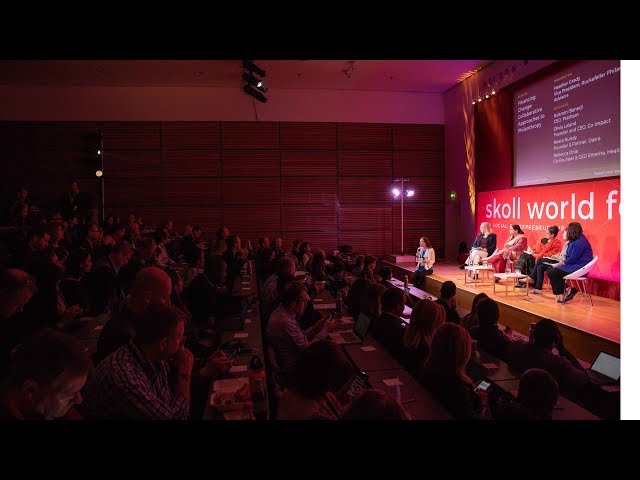
The future of Africa and the next generation of entrepreneurs are among the many global issues being addressed this year at the World Economic Forum, to be held January 23-27. In advance of the convening and to aid the discussion ahead, the Skoll World Forum partnered with the Financial Times' This is Africa magazine and designed a debate at the strategic intersection of Africa and entrepreneurship. We asked some of the continent's leading entrepreneurs and innovators to highlight some of the key lessons they learned working across and for Africa.


For Africa, Entrepreneurship is the Way

Taddy Blecher

CEO, Community and Individual Development Association


Subsistence Must not be Confused with Entrepreneurship

Lanre Akinola

Editor of This Is Africa, Financial Times Ltd.


mPedigree: An African Blueprint for Consumer Empowerment

mPedigree: An African Blueprint for Consumer Empowerment

Bright Simons

President, mPedigree Network

VIEW CONTRIBUTOR PAGE >


Article Highlights:

  • In Ghana, farmers cannot benefit from the premium prices organics get in the market because of the complex, and costly, bureaucratic certification process run from Europe.
  • When a fake medicine incident hit Nigeria in 2005, we were ready to pivot. mPedigree would focus on direct authentication of medicines by empowered consumers themselves.
  • Worldwide, counterfeit drugs and pharmaceuticals account for 30% of all medicine on sale, and kill up to 2,000 people daily.

The idea for the mPedigree Network began to take shape the moment I grabbed the first pack of kashi cereals I ever bought and saw an ‘organic seal’ on the box. The organic seal deeply intrigued me. Here was a concise promise, immensely powerful in its brevity: “trust me with your health and conscience.” In an instant, I was transformed into a believer. A believer in the unbounded power of Trust.

I would later learn more about organic agriculture and more about the fact that many rural farmers back in Ghana, my home country, grow most of their crops this way but cannot benefit from the premium prices organics get in the market because of the complex, and costly, bureaucratic certification process run from Europe.

The team of doctoral students that crystalized around this mission shared one passion from then on: to create an alternative direct-to-consumer organic scheme based on mobile telephony. We may have underestimated the challenges of getting farmers in Ghana to adopt the system, and failed to get into market, but the seeds for mPedigree had already been planted: quality assurance must start with consumers. When a fake medicine incident hit Nigeria in 2005, we were ready to pivot. mPedigree would focus on direct authentication of medicines by empowered consumers themselves.

Like many of our early advisors and team members, living in West Africa provided me a first-hand experience of shady medicine peddlers, especially of the herbal variety.

I remember the dubious-looking green pills – supposedly iron supplements – that our secondary school clinic used to prescribe for everyone who turned up with a complaint regardless of their condition. Were the stomach cramps that often followed innocuous side effects or something more sinister? What about the chloramphenicol so liberally dispensed as an anti-dote to typhoid that had become such a hit and miss affair?

We would soon learn that counterfeit and substandard medicines constituted as much as 25% of the total trade in medicines in Africa according to very credible estimates. The biggest challenge was clearly the inability to track medicines and to carefully record how, when and where problems were occurring. The entire supply chain was opaque, making it vulnerable to thefts, diversions, corruption, trafficking and widespread abuse of medicines. Worldwide, counterfeit drugs and pharmaceuticals account for 30% of all medicine on sale, and kill up to 2,000 people daily.

“Through our pioneering advocacy and lobbying efforts, two countries in Africa – Nigeria and Kenya – with more poised to follow, have integrated mobile telephony based consumer verification into their safety regulations, and in the case of Nigeria made it mandatory for malaria medicines.”

Our approach was simple: build software tools and create partnerships that will enable pharma companies to tag each individual pack of medicine with a unique ID that the patient can text-message to a special hotline for an instant response about the medicine’s authenticity and latest status.

Given the extraordinary limited resources we had at our disposal (by this time, even the small team we began with had shrank even further), it was not until 2007 that, having now relocated from Europe to Ghana, we were able to launch the world’s first, free, multi-country short-code to address a social problem that is genuinely global in scale and character. Until we showed up, no such uniform toll-free SMS hotline across national borders had ever been attempted.

It is quite remarkable then that 5 years after our first public pilot we are now expanding beyond Africa to South Asia. For the first time, an African innovation is being aggressively imitated worldwide, with copycats being reported in the specialized press monthly. Through our pioneering advocacy and lobbying efforts, two countries in Africa – Nigeria and Kenya – with more poised to follow, have integrated mobile telephony based consumer verification into their safety regulations, and in the case of Nigeria made it mandatory for malaria medicines. This is world-impacting in every respect. mPedigree’s verification codes would have by February 2013 appeared on nearly 10 million packs of medicine in Ghana, Kenya, India and Nigeria,  and a further four countries where alpha trials are now happening. Global partnerships have involved fortune 500 companies and more than 2 dozen telecom companies, as well as regulators and pharma companies, with the multiple interests working to rhythm to ensure a sustainable but free service.

Our tribulations and triumphs all tie back to one reality: we are an African social enterprise. Running on a super-lean budget has been exciting. It has forced us to focus on strong values, stay our course regardless of the distractions heaped on our path. We have also had to learn quickly how to manage our global alliances, as Africa’s many opportunities and stereotypes compete for focus in the eyes of partners.

We believe strongly that the complex organic partnerships that today make up the mPedigree Network work precisely because this kind of ‘business model hacking’ thrive best in a continent still blending complex social norms of collaboration with all the tools of the modern intellect.

 
  • Bruno

    This is a powerful story. it shows that determination goes a long way. if you push hard and believe in yourself you can break down all barriers and succeed even if it seem impossible at first.

  • sunish

    Infact for the first time i heard about such an event. Let this powerful strategy work in all third world countries so that people get the authentic medication which is a right. I hope if the market of generic medcines go high then the black market people will stop doing the illegal manufacture and selling of life saving drugs. Thank you very much for the wonderful article.