The Impact Investing Wave

Cathy Clark
Founder and Director, Columbia Business School, Research Initiative on Social Entrepreneurship


caseonbusinessmodels_300.jpg

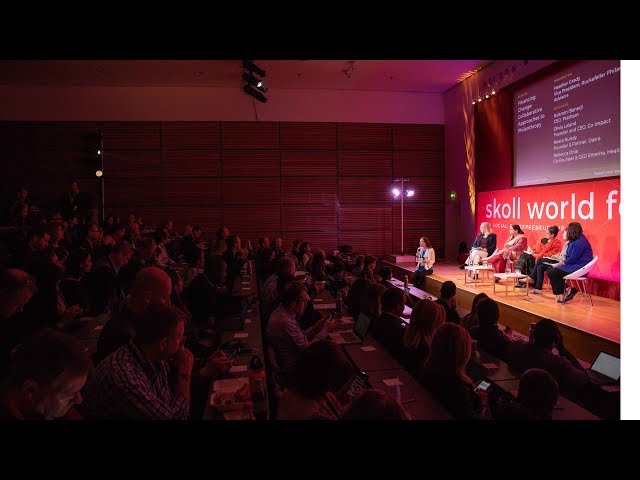
I attended the Skoll World Forum last week and had a realization. Yes, social entrepreneurs are working constantly to refine their business models, but right now, many are worried about very specific business model challenges. Forming a social business. Creating business models that produce profit. Setting up a for-profit. Considering impact investment. I was struck by the constant and urgent needs expressed by successful nonprofit social entrepreneurs to explore for-profit revenue models.

 
In the fiery turmoil of building sustainable solutions to the world’s most pressing problems, the impact investing wave has arrived in full force. Will it put out the fires, or simply flood the marketplace with hype?
 
My realization echoes themes Greg Dees has been discussing with his colleagues on the World Economic Forum’s Global Agenda Council on Social Innovation. The appetite for social business and new forms of investments is high, but the map for most social entrepreneurs to get there is undefined. A handful of entrepreneurs have created paths for their own growth, but many are treading water while they watch and try to read the waves. They are not sure if their business models are investment-worthy, or how to make them so.
 
Notably, there seems to be a concomitant confusion on the part of impact investors. Faced with the amazing work of social entrepreneurs around the globe, even savvy global impact investors are scratching their heads. How do they get a market rate return from an investment in VisionSpring, KickStart, Riders for Health, FairTrade USA or other exemplary entrepreneurial ventures? Do they lower their expectations for returns, and if so, what is their lower boundary for the impact of their investment?
 
We think we’re facing a very real gap in the marketplace: the distance between the “impact-first” social entrepreneurs and many impact investors who are “financial-first.” Foundations need to help their grantees build sustainable models in ways that strengthen their mission. Impact investors, from foundations to funds, need to paint themselves with the correct “colors of money” (to borrow from Root Capital founder Willy Foote’s wonderful Skoll World Forum presentation). Paths need to be developed to close the gap.
 
Tell us what you think about the gap between business models and capital:
  • If you’re an entrepreneur, are you considering a new form of revenue generation that would be an investable enterprise? Is it clear to you how to build that model? If not, what kinds of help would you like to see to get yourself ready?
  • If you’ve created an investable business model, where did you start?
  • Who is best positioned to fill the financing gaps for ventures that have profit potential but fall below the threshold that would interest most impact investors?
  • What are the best investment tools and models for bringing a nonprofit entrepreneur into the world of for-profit investment?

Join Cathy Clark, Adjunct Assistant Professor of Social Entrepreneurship at CASE at Duke, in the conversation.


  • Jeff Mowatt

    Profit for Purpose

    Cathy, we operate as a profit-for-purpose business in the UK. The model derives from founder, Terry Hallman’s 1996 paper and he started at the top, given the opportunity to pitch to the White House.

    The next step was to deliver prrof of concept and this cane in 1999 in sourcing the Tomsk regional initiative. We registered as a formal UK entity in 2004.

    One of the key points we make is that impact should be measured in human terms, which places us somewhat at odds with the call to make ‘social business’ more investor friendly. I was encouraged recently however to read of a survey which revealed a significant group whose motivations were not that of a maximal ROI.

    We fully understand that business must make a profit to survive, it’s the use of that profit to achieve social ootcomes which we view as key and this will be seen from a recent social impact report:

    http://socialbusiness.socia…report—march-2011_25.html

    • Cathy Clark

      Profit for Purpose

      Thanks, Jeff, for your post and links. I hadn’t been aware of your program.


      I agree, impact should be measured in human terms. But to scale the impact you need other ways of measuring progress. Operational goals, strategy goals, even advocacy goals (as many of the impressive proof points in your link are), are needed. Your point of view of the primacy of human impact though feeds into my observation of the funding gap. There is a substantial group of enterprising nonprofit change agents who do measure their impact in human terms, and some have spent over 10 years getting their impact model right as they try to address some of the most challenging social issues facing various populations. And then, when they get it right, and want to take their efforts, to quote Sally Osberg of the Skoll Foundation, “to a scale that matters,” the capital markets turn away as they fall into the funding gap. Very few foundations do PRIs. Most impact investors want market rate returns. There is, I believe, a missing middle, that we simply must grow if we want to have a healthy impact investing field or market or movement (insert your term of choice here, Antony Bugg-Levine of Rockefeller and I have tossed around all of them).

      Luckily, it is not a space entirely unoccupied or unexplored. We have a set of very diverse, very experienced patient capital funds: Acumen , RSF Social Finance, E& Co, all nonprofits doing a great job at showing how to reap real returns, both social and financial, as well as achieve transformational impact on markets, multinationals, and metrics. We just need more of them. And we need to connect the dots for entrepreneurs to help them see what comes before debt from Acumen and what can come after. Impact investors need to decide where in the market they want to play and be realistic about the blend of returns that are possible.

      I think it’s telling that all three of the funds above are experimenting with the idea of higher return market funds to add to their current nonprofit funds. The great wave of impact investing is not filling it in, so they are. We’ll be blogging about this trend and its implications in more detail over the next few months.

      • Jeff Mowatt

        Profit for Purpose

        Cathy, Yes, what been reading came from the UK Social Enterprise magazine and included thoughts from Sally Osberg on Root Capital.

        Working in a environment where there are no rules of conduct, similar to that described by Laurinda, there are all kinds of threats to some elements of our work. There is great risk of it being hijacked for private gain, rather than serving the social purpose intended.

        As founder Terry relates in a piece for Axiom News, there is flexibility in the approach to offer a financial return while the ‘social business’ itself will re-invest their gains into further impact.

        http://www.axiomnews.ca/gennews/966

        Our work in the UK began with a proposal requiring only seed funding whereby a profit making enterprise would re-invest profit into CDFIs to seed fund further community wealth creation with an estimated yield of £100 million social investment capital per annum. The concept of investing this way in a community, albeit with government funding, had been proven in Russia with the Tomsk Regional Initiative, with the outcome of 10,000 new micro enterprises. A similar approach is now being proposed by a UK group know as Forum for the Future who describe the mechanism as ‘revolving funding’.


  • Paul Rigterink

    Creating an Investable Business Model

    Before I retired I created many investable business models for US industries using the business process re engineering techniques I had been taught in industry (10 volumes of material). I simplified the process so that others could create micro business models in my "poverty" paper which can be found at my website at http://home.comcast.net/~prigter/site/ (see in particular Table 1). I am applying these techniques in Colombia and Uganda (see Food Commodities paper and Mas Dinero business vision at my website). My main problem is not filling financial gaps but filling supply gaps. How can I get micro irrigation equipment, better poultry stock, Mayan breadnut seeds, veterinary supplies, etc cheaply when they are not available locally. My goal is to double the income of 200,000 BOP farmers in Colombia every two years for the next 8 years (increase their income by a factor 16). I am pretty sure I will be successful with the help I am getting from the University of Cordoba agriculture engineers, Government leaders, and religious leaders.

    • Cathy Clark

      Creating an Investable Business Model

      Paul – your enterprise sounds fantastic and your many years of work in food security is impressive. I’m glad you feel you’re getting the help you need from important partners in your network. This is the goal – to have healthy eco-systems that support the growth and scale of impact that truly makes a difference. Impact investing is just one intermediary step along the way. Investors invest in business models and Impact Investors should be investing in business models and social impact models that are mutually reinforcing. We’re just not there yet.

      • Paul Rigterink

        Creating an Investable Business Model

        I would give impact investors the following financial data before discussing the social impact and business vision in order to close the distance between the “impact-first” social entrepreneurs and many impact investors who are “financial-first”:

         Operating Income

         Return on Investment

         Days Revenues Receivable (i.e. Days Sales Outstanding; Cash Flow)

         Profit Margin

         Billable Direct Labor

         Overhead Cost Control

         Debt/Equity

  • Laurinda

    Our for-benefit model

    Like Jeff we have been at the driving seat of developing an hybrid model for many many years. We started applying our concept in South Africa in the late 90"s and have now moved onto the European environment starting with a project in Portugal.

    Over the years we faced many challenges, unlike the UK where SE’s legislation is more advanced, the legal framework on how to structure our organisation in South Africa was the major stumbling block, this was eventually resolved using a fairly expensive compromise.

    In Portugal, we now find ourselves in an even worse situation as the Portuguese legal system is even more convoluted than the South African one, and a trillion of years away from the UK model. (CIC /CLS) .

    Now the major stumbling block for attracting and retaining impact investors starts with the legal platforms available in each and every country.

    So, regarding your first question:

    Yes, the model is very clear, what is missing is the right legal platforms as well as the political will to make the necessary changes to legal systems. In addition there is the need to educate the general investor community including the financial sector on the inherent benefits of a social enterprise not only for investors but also other stakeholders.

    Ignorance breeds fear, and fear breeds resistance.

    Your second question: Where did we start?

    By investing the founders own resources, supplemented by investments from others that shared our vision.

    Your third question: Who should invest?

    Anyone that has realist expectations, and knows that there is no immediate major returns financially; that wants to see a portion of his investment benefiting society or planet.

    In fact everyone that has taken the custodianship / stewardship role as part of his life on earth.

    Your final question: What are the best tools?

    This assumes that we have a one-shoe fits all approach. No, there are no BEST tools, there are the appropriate tools, and there are many of them. You need to identify the correct tools based on the project/s objectives and wanted outcomes.

    Laurinda Seabra

    http://www.empowerment-gateway.com

    http://www.isupportlagos.com

    • Cathy Clark

      Our for-benefit model

      Loved your comments, Laurinda, especially about the diversity of legal platforms available in each country.

      And I think the answer to #3 is also very important – start with the funders who get what you’re about, and work on terms and set expectations that work for both of you.

      I’ve been in the board for 10 years of Investors’ Circle, a US-based group of angel and early institutional investors whose main value proposition has been mission fit with the other members and with the entrepreneurs in whom we invest. These are simply people who will be patient for the right mission, and we’ve facilitated the investment of over $145 million into more than 220 companies and small funds addressing social and environmental issues.

      But we need to multiply the potential investing power of this kind of group by 10-100X to meet the demand that’s out there. And I hope if we do it right, all deals will not be one-offs, as the transaction costs for that are simply too high. We need a suite of financial products that match different investors’ interests which can be productized for more massive consumption.

      And at the core, they need investable business models, which it sounds like you have! Thanks.

      Cathy

      • Laurinda

        Our for-benefit model

        Thanks Cathy for your kind words.

        I shall be in touch at the appropriate time :-) )

        Laurinda

  • JimFruchterman

    Hype versus reality

    I think that some of the initial impact investing conversations have the flavor of wanting to have the cake and eat it too. Because a revenue-generating social enterprise looks like it is a business, investors immediately leap to the conclusion that it should offer market rate returns. And then, when the market rate returns aren’t present, usually because the social enterprise is tackling an area of partial or complete market failure, the reaction is: that’s not a good business! Revise your business plan!

    And that misses the point entirely. I actually pitched a new social enterprise idea at SWF this year, something that should definitely break-even after initial (charitable) funding. But, I was told I should retool it to make it more attractive to a VC. I could do that, but then I would re-target my product to a different customer set that already has the kind of tool I’m proposing. And not meet the social need created by the market’s failure to bring it to my originally proposed customers.

    I just wrote a paper for the SSIR called "For Love or Lucre." In it, I suggest that a social enterprise that can deliver market returns on capital should definitely be a for-profit. But, if it doesn’t deliver market returns, should you kill your idea? No, that just perpetuates the problem that you’re trying to solve. A hybrid or nonprofit form would be probably the right approach. In that case, don’t spend too much time with impact investors who want all of the financial return and all of the social return too.

    • Laurinda

      Hype versus reality

      Jim. You make a strong point, as we ourselves have been in the same position as you. One benefit that we had was the lessons learned when we got involved with black economic empowerment tools and programs in South Africa.

      That initiative allowed us to finally create a conceptual framework that meets not only the social impact needs but also has the potential to provide "sufficient" ROI for investors.

      At the end of the day, you have to identify investors that have realistic expectations. I.e. what is the ROI that will satisfy their investment needs? what is the SROI that they are looking for?

      But at the same time your business plan needs clear highlights addressing those two set of dimensions, this means that you need to clearly state what is your "perfect" investor profile up-front.

      Remember, its your project, you have to be clear when you approach any VC/AC organisations and inform them this is the investor profile your project needs, rather than just go using a shot-gun approach in your funding model.

      If they after that they want you to change your business model, my recommendation is walk away and research the market for the appropriate investors.

      Just my 2 cents.

      Regards

      Laurinda

    • Leonardo Letelier

      Hype versus reality

      Jim,

      same thing here in Brazil – although to a lesser extent.

      As you know, the social fund we run (www.sitawi.net) targets for-mission organizations (easier understood as nonprofits that run small businesses) with a grants-to-(below market)loans model.

      We have had some success (US$800k lent with no default, turning the fund three times in a little over two years) but now that we need to grow, several people jump to the conclusion that if we are lending money, we could/should receive a loan rather than a grant.

      But our mission – to develop this "market", organizations that are viable but that don’t get a loan at a traditional bank just because they focus on social impact -, and existence, only makes sense because the market is not there yet. A for-profit fund/model would require much more resources than our current set of clients could absorb and we would be forced to do mostly other deals. Some argue that even if we lend to "regular SMEs" rather than "nonprofit SMEs", we can still claim to have social impact. They just don’t see that the reason to create sitawi is to serve/impact a specific group, and, for now, that means sticking to the grants-to-loans model, even if it turns some "investors" away.

      I am not "against-markets" (I went to HBS after all), it’s just that I believe "our" market is not there yet. When it’s ready, there are plenty of for-profit options we can explore in Brazil. When it makes economic and social sense, not before.

      Leonardo

      Btw, too bad we didn’t chat at Skoll, but do check our cool new institutional video (www.youtube.com/watch?v=geqvnygvqUc)

    • Jeff Mowatt

      Hype versus reality

      What more can I add? Professor David Harvey perhaps:

      http://www.youtube.com/watch?v=qOP2V_np2c0

      Essentially, empowering financiers has been discredited as a paradigm, whereas empowering people has not.

      VCs may present the rhetoric of a Damascene conversion yet the belief in endless growth is just below the surface.


      • DanielBassill

        Hype versus reality

        Thanks for sharing the video. Dr. Harvey uses visualization in a very effective way to help bring understanding to a complex problem. I’d like to find places where he and others are using the same tools to map out steps that might lead to a new direction.

        I’m not looking for generalities, but for someone who might use the same graphic techniques to show the steps from aggregating information, building understanding, expanding ownership, implementing ideas, evaluating, correcting, rebuilding, etc. This is a business process that show steps that need to be repeated over time to reach a desired conclusion.

        The blueprints used to show steps to build a skyscraper might be the best example of what I’m thinking of. In this case however, we probably don’t know what the finished product might look like, or have a consensus on how to get there.

        • Paul Rigterink

          Hype versus reality

          Daniell

          This is how to make cartoon animations for your clients using Do-it-yourself animation sites like Xtranormal , Animasher.com , GoAnimate , and http://www.doink.com

          http://online.wsj.com/artic…8404576134203647487090.html

          Here is one for antiwar people

          http://www.youtube.com/watch?v=yAyCdfOXvec

        • Jeff Mowatt

          Hype versus reality

          Hi Dan, The visualization is part of a series produced by the RSA in London, who have recently begun discussing the concept of Profit with Purpose, which may be found on their own website and as a discrete Linkedin group.

          One I’d not seen before today offers a critique of charity:

          http://comment.rsablogs.org.uk/…/

          • Cathy Clark

            Hype versus reality

            Love the RSA site and series. Thanks for sharing, Jeff!

            Cathy

    • Cathy Clark

      Hype versus reality

      Hi Jim,

      Loved your post (and your SSIR article too, BTW). Your comments pretty much EXACTLY mirror what I was talking about. There, in fact, SHOULD be a gap between revenue-generation in general, and investable business. But we seem to have confounded the two to the point where both sides are confused. And I think our supply and demand sides are each lacking some of what they need. Let me explain…

      Some social entrepreneurs are developing revenue-generation business models, and many of them need an initial infusion of capital in order to get off the ground. Quite a few are actually coming to the point where this would be a better, smarter use of dollars than slogging for grants, because if they are successful, they will build more sustainable and robust business models. Let’s call these the demand side players. Some of them have plans to produce market returns and can be very convincing about that. But those market returns are going to be slow and risky and require, for those less experienced than you, which is most, a great deal of hand-holding as they set up forprofit subsidiaries and experiment with hybrid forms. We’re missing the steps and support to help these guys get through the last door toward sustainability. And given the investment to date in some of these star organizations, that is truly a wasted opportunity.

      Next we have those who do NOT believe they are going to produce “market-rate returns.” Or don’t want to pay investors back in this way, as they’d rather use the profits to subsidize some customers or some other mission-related part of their activity. And as a result they are not ripe for the picking for many impact investors. But they should be ripe for some impact first investors, or patient capital investors, and there is a truly missing segment of funds and institutions in this area. This seems to be what you heard at the SWF.

      Paired with these two missing segments, we have the supply side, the impact investors. The great thing about the term impact investing is that it has painted a broad swath across what have been previously disjointed kinds of activities (e.g., community investing, microfinance, small and medium global enterprise development, philanthropic PRIS and debt, etc.) into one happy new field or asset class. But the fact remains that the goals of different investor types can be very distinct. The kind of returns a stand-alone VC focused on job quality must earn compared to the returns a mutual fund doing early-stage VC investing as a small percentage of one fund must earn compared to the returns a pension fund must earn compared to the returns of a nonprofit donor fund issuing debt must return are entirely different. This great notion of “market rate” is a bit of a misnomer and it’s leading to this sense, expressed again so clearly at the SWF, of frustration all around. Where’s the dealflow, said the investors? Hey, we’re right here, said the social entrepreneurs on the other side of the room. But they’re not speaking the same language of expectation, and until we create more of the middle, the funds who can earn 2-8% doing creative financing through PRIS, convertible debt, guarantees, and allowing the different slices of capital (or colors of money) to collectively participate in their comfort zone in layered deals, we’ve got a broken market. Or at least one that could be more effective. Maybe what we need to see if more innovation at the fund level about the expertise new impact funds can develop to create a beautifully painted bridge between grant funding and 25% returns.

      Cathy

  • Geri Stengel

    Assess tolerance

    Perhaps because I’m an entrepreneur, I see opportunity: the opportunity for investment firms to provide new tools to investors who are considering impact investing. Just as investors in general <a href="http://www.kiplinger.com/tools/riskfind.html ">rate their risk tolerance</a>, impact investors can rate their impact/financial tolerance. Depending on their impact/financial tolerance, they would be advised to invest in appropriate types of investments.

    • Cathy Clark

      Assess tolerance

      Thanks, Geri. That’s exactly the kind of rationality this market needs. We’re trying to do it on the impact side through GIIRS – the Global Impact Investing Rating System (http://www.giirs.org). To be launched later this year, GIIRS will be like the Morningstar of impact investments and funds, a rating of their social and environmental commitment and impact. (Full disclosure: I am part of the advisory council working on GIIRS.) Then, presumably, at least the impact side will have a little less guesswork. And on the financial side, the tolerance needs to be much more concretely expressed. I’ve had conversations about this tolerance with a major bank, a private VC and a philanthropic investor all in the last week, and I can tell you, even privately, their expectations are far from clear. What most people want is to make the most they can, while still giving caveats to THEIR investors about the risks they’re taking in the space. This is not yet the standard we will require!

      Thanks for posting!

      Cathy

  • Steve Carlson

    Great topic

    What is a market return, really? It seems like some reframing is in order. Risk free rate is essentially between zero and 1.5% in US, with the 1.5% being about the top for FDIC insured money market funds, deposit limit capped, and those are often promo rates. Higher rates require taking interest rate, credit, equity, or speculative asset pricing risks. You can’t look at the return on bond funds as a sustainable return with this entry point on the yield curve. Equities are virtually flat for a decade unless one happens to successfully time the market. Real estate has been a loser, many other assets appear to be in bubbles. So if an Impact Investor starts with the assumption that he can earn more with a VC, PE, or Angel investment than is earned on average, hey, what can you do? The baseline needs to be a realistic go forward look at returns and risks and it would seem that Impact Investments at lower yields could be a non-correlated form of diversification and present a return between cash and fantasy land returns. Is there really a need for better assessment, structuring, vetting, and presentation of opportunities?

    • Cathy Clark

      Great topic

      I agree 100% with your comment. What is the right benchmark? It depends not on whether your asset class is "impact," but on what asset class your investment style puts you in. And then the gaming starts between historical actual returns and hopeful, forward-looking potential returns. Not all impact investing is early-stage and not all benchmarks should be VC-level.

      Cathy

  • Kevin Jones

    Valuing more than money

    There is no need for a hybrid structure if you have investors who truly value more than financial return; if they are among those who will take a lower, concessionary financial return because they truly value, put a price on, the social value they are getting. and that social value, in their minds, lets them take a lower return. they are, as the new nesta research says, likely to want deeper levels of engagement than most venture fund managers know how to deal with. they want to visit, they want to help, if they are not channeled they can intrude. but they can be a great cohort. something between an investors circle and a fund. phi trust in france has a model i like that is that kind of hybrid.

    hybrid structures, are to my way of thinking, an illusion. you can safeguard the mission through the cap table, through the business model, a whole lot of ways. and through accepting lower financial returns on some deals; accepting that value is holistic, some shows up on the balance sheet, some in a hug from a child or a diploma that would not have been gotten without workforce development funds raising salaries so boys and girls get their own rooms in junior high, etc. the market exists to measure value, not to dictate what value is.

    quoting jed, mostly, in a lot of that, but also our own work at good capital, and things i am seeing. all you need to do is just change the way investors think and act about money, deconstruct several toxic inherited myths, overturn the power structures that reify those myths and build a different market serving a different vision of what value is. either that or we are toast, as the goldman clones rape the world and live in walled gardens with glass roofs, keeping out the poor. for a while. insert apocalyptic scenario here.

    seriously, it’s time to get over this and get about making new things happen. there are investors who see things the right way. there are impact first impact investors. focus on them. explain what they are getting out of the deal. focus on what’s happening, not the risks. but the opportunity, too. you just have to mix meaning and money in new ways. sept 7-9 sf. that’s what socap11 is all about money plus meaning, what’s it mean to you?

    • Jeff Mowatt

      Valuing more than money

      That’s pretty much our own perspective too Kevin, with investors that buy in to the social objective, i.e. when reasoning that this for-purpose model could exist by mutual agreement of its investors:

      ‘This is not a small consideration, since most boards and stockholders would object. But, if an a priori arrangement has been made with said stockholders and directors such that this direction of profits is entirely the point, then no objection can emerge. Indeed, the corporate charter can require that these monies be directed into community development funds, such as a permanent, irrevocable trust fund. The trust fund, in turn, would be under the oversight of a board of directors made up of corporate employees and community leaders.’

      That was the essence of a plan for rural broadband deployment offered to UK government back in 2004. Investing in CDFIs offered tax benefits, yet they drew little interest from conventional investors. As we now know, most including Nesta had not anticipated the need – before the crisis of 2008.

      The same goes for what you say about a hug from a child, as might well be illustrated in the primary focus of what I posted earlier – children abandoned to state care. A recently produced video quotes Mother Teresa – ‘one of the greatest diseases it to be nobody to anybody’

      Compassion, as founded on the golden rule of reciprocity, rather than the rhetoric of politicians is coherent with such for-purpose business. One who had understood this long ago, seems to have been something of a pioneer:

      http://socialbusiness.socia…ocial-entrepreneur-_27.html

    • Cathy Clark

      Valuing more than money

      Thanks for joining us, Kevin. I’m pleased to know I’ve managed to engage you in the debate!

      So, first, let’s talk about concessionary financial return. I like that you called a spade a spade. Do you think everyone in the marketplace is ready to acknowledge this as a fundamental part of impact investing? I think most decidedly not, and I’m still not sure they should. I’m also very sure that every investment will not be high social and high financial, best blended value as Jed Emerson would say, either and boy oh boy do we need to acknowledge that! We need to get better at telling the truth on where the funds fall around their objectives on both scales. And over time their results on both.

      I definitely think there’s a place for the value-driven individual who is willing to concede financial return for ego benefit, and even to do that at a fund level, but I don’t think the whole SOCAP market is going to be built that way – do you? I don’t think the largest funds who have built the microfinance field acknowledge this as part of their investing rationale. I think certain parts of the market will need those like IC and Good Cap to set examples and then there needs to be a link between those like these who concede and those who pay for what it costs to actually get the returns they want and then those who ride on the work of others in later stage markets. The problem is you can’t ride fast and securely if many of the horses are weak and falling down. We need to build the track, sell some tickets, and build a generation of fantastic riders, supporting those who are coming at this from different directions, making them all strong. And someone needs to bear those costs. I think it is much more likely to be philanthropic sources moving up into impact investing plus TA than to expect newer bank and pension funds to move down into concessionary returns. What do you think?

      Cathy

  • Rod Schwartz

    Its Complicated

    Dear Cathy

    Thanks for your post and all the exciting stuff you folks do at Duke/Fuqua/CASE

    One day I would love to meet up–lets see if I get to Durham before you come to London!

    I must confess, I am not a great fan of this impact/financial bifurcation

    It appears to simplify, but it makes people believe there are two investment markets

    Really, I think there is just one

    In this market, the interplay of investor appetites for risk, financial return and (increasingly!) social return takes place

    Out of this mix comes demand for a variety of investment opportunities

    One type is the social or impact investment, and we are all trying to increase activity of this type

    Because investor preferences are complex, the assessment of the social is highly personal and the tradeoffs are infinite, the best advice we have given to social entrepreneurs is just to be clear about the package they are offering–this includes the financial returns which are possible and the likely social impacts and how they are/will being measured

    There is no guessing what investors want–they are not uniform at all

    I can recall a Social Investment Speed Dating event we did at ClearlySo (www.clearlyso.com) last year

    At the event I heard a pitch from an entrepreneur which was, in my view, awful

    Nevertheless, they secured investment

    Clearly my view on the proposition’s appeal was very different from that of the investor

    We cannot imagine which frog some princess will see as a potential prince, to borrow a literary metaphor

    However, unless social entrepreneurs are clear what they do, it may prove challenging for that willing princess to find you :-)

    best regards, rod

    • Cathy Clark

      Its Complicated

      Thanks so much for your kind words about Duke and CASE. I was lucky enough to see you in person moderating your reform vs. rebuild panel at the SWF, which was fantastic by the way, and have admired your work for some time. And yes, I would love to get together in person. Durham is a very nice place to visit – as is London!

      I agree with your good points and yet I want to add more. Yes, every investor is different and yes the variety is infinite. And that’s a good thing for all. But, until we have some greater systemic clarity I think some entrepreneurs are finding it extremely difficult to navigate the investment market. Like Jim, above, they’re being given the wrong answers because the slice they’re really after is so hard to locate. We’re building this market as we speak, so do we think the variety should be quite so infinite? Wouldn’t a bit more recognition of who is the right kind of target help some? Maybe for individual investors this is impossible, but as we go up the chain, funds need to start being more clear about their boundaries and strengths. I think it will help the investors too, actually, because I see so many struggling to find deals that meet their criteria. Once we do that, my hypothesis is we’ll see that some of the steps in the chain are very weak. And until we do that, maybe we’ll never know why this marketplace didn’t take hold in 10 years the way we’re hoping it will now.

      What do you think? Based on your experience in London is there a missing middle for the nonprofit to forprofit hybrid entrepreneur to get the funding they need?

      Cathy

      • Rod Schwartz

        Its Complicated

        Dear Cathy

        Thanks for your comment and your very kind words about the SWF panel

        With input from Victor D’Allant we came up with this novel format

        Some of it worked, but some of it clearly did not

        The audience did its part in making sure I know which was which!

        Anyway, we learn from experimentation, even when (or especially if) the path is not so smooth

        I guess that is kind of my point in answer to your reply

        We do not feel like we are at the stage where we have "systemic clarity"

        I feel it is unlikely we get it for some time to come

        The market is still at a very, VERY early stage of development

        we can try to channel it, as many wish, but this may not help

        In fact, it may undermine the exploratory but necessary experimentation process we so badly need

        I recognize that it means that some socents will be frustrated

        However, I suspect attempts to narrow the spectrum will lead to more frustration–however broad we make the channels a large block of socents will feel excluded–and will be ecluded by where we draw the lines

        What is needed is a boader and deeper pool of intermediaries

        You might think, "well of course he would say that", as ClearlySo is a social intermediary–but I assure you I DO NOT want many more competitors :-)

        But that is what the sector needs right now–people whose job it is to take a wheel spinning in one direction at a certain speed and another revolving in a different way, but to act as an intermdiary gear and connect them, by understanding the particuliarities of each and enabling the two to connect

        As the social impact investment market grows then there will be sufficient scales of common streams to permit a bit more clarity

        We are only at the beginning of the beginning,or at best the middle of the beginning

        But we can take comfort from the fact that with so much more to do, we will each be usefully engaged for some time to come!!

        The UK will launch the "Big Society Bank" in the coming months

        It will have initial capital of about £300 million (about $500 million) with at least another $500 million coming from dormant bank accounts over the next few years

        As UK domestic financial markets are much smaller than those in the USA, this bank could have an enormous impact

        It will distort markets, as I have argued in our Social Business Blog (http://www.clearlyso.com/sbblog/?p=1636), but just maybe, the benefits will exceed the costs, both known and unintended

        keep in touch

        rod

        • Cathy Clark

          Its Complicated

          I do agree with you, Rod, that more intermediaries are needed. I just wanted to provoke discussions of what types as I think there are some basic needs in the marketplace that are still unmet as entrepreneurs and investors struggle to find overlapping expectations. There may be absolutely no shortcuts at this time and the high involvement intermediary may be the way it goes, but I feel as if we are caught up in the hype to the point where entrepreneurs are having more trouble, rather than less, in finding the best partners for their work. I could be seeing it wrong, it’s just an impression.

          I cannot wait to see what the next year brings as this market starts to really roll…

          Cathy

  • Deborah Rozman

    Impact Investment wave

    Cathy,

    I think the main gap between business models and capital is thinking that for-profit social enterprises should yield market rate returns. In my view, "Impact" investment by definition should rate social return on investment more important than financial return, while still expecting some financial return. We are not going to change this world if investors don’t assign a portion of their portfolios to this type of investment. Impact investment is about mission. I would suggest an impact investor’s portfolio include: a)investments that yield a good rate of return b)non-profit investments that yield no finanical return and c) patient money investments that yield a good social return and may yield a good financial return. I call it mission-aligned investment and it represents a shift in the way people work with money. I am a serial entrepreneur having started several for profit and non profit social enterprises over the past 40 years. Most recently I along with others started the non-profit Institute of HeartMath and the for profit HeartMath Inc (Quantum Intech Inc) and these 2 business models nurture and leverage each other as well as provide different vehicles for creating impact and raising funds for the same mission. Setting up a non-profit and an affiliated for-profit requires legal and strategic planning and I will be writing about this next month in my 3BL blogs. On your question, "Who is best positioned to fill the financing gaps for ventures that have profit potential but fall below the threshold that would interest most impact investors?" — my answer is patient money impact investors who identify themselves as such and are transparent about results so that others may see how it works. On your question, "what are the best investment tools and models for bringing a nonprofit entrepreneur into the world of for-profit investment?" My answer is to partner with a successful for-profit entrepreneur on the same mission. The non-profit entrepreneur mindset is often different than that of the for-profit entreprenuer, but together than can create the best of both worlds.

    • Cathy Clark

      Impact Investment wave

      Thanks and I look forward to your upcoming blogs!

      I guess I fundamentally do not agree that all impact investors should be impact first investors. It’s just not how I see the marketplace. I see a spectrum and I know of many investors I could name now who are financial first, but with significant dedication to impact (SJF, CityLight, etc.) The ability of this new investing field to bridge both interests is what makes it strong and interesting. It is also at the moment a bit of an Achilles Heel, as entrepreneurs try to navigate their way through what is explicit and what is not.

      I do like your idea of partnering with a for-profit rather than creating a hybrid structure. I wonder if you have any successful examples of that? It sounds like a form of the contract hybrid discussed recently in the SSIR – instead of owning a for-profit subsid, you contact with someone for what you need. It works for some, but doesn’t for others (see our Lifeline Energy profile in our Business Model blog). But is a good option to have on the table.

      Cathy

  • Stephen Rockman

    impact investing

    I’m hoping that in a year or two these discussions will be redundant – until then I guess they are a necessary part of growing up.

    I’m with kevin on this: hybrid is unnecessary. we’ve found it relatively easy in setting up our fund to set investors expectations: transparency is the key – we’re up front about blending altruism & impact & financial return. sure if you compare the possible upside to what a seed investor would target in the tech sector then you may be disappointed but if investors genuinely buy into to the alternative ways of creating value/etc then this need not be a hard sell.

    in the same way that entrepreneurs need to target the right source of funding, funds themselves also need to target the investors who get it. frankly it’s not rocket science. we have some great investors in merism capital and altho the journey is just beginning we’re all having a blast. seed impact investing is emotional but the opportunity to get in early and work with the founders is a great way to create blended value and maximise returns.

    investing is a relationship & in other sectors, its always been the case that entrepreneurs and investors have interests aligned. not sure why once again there’s special case pleading for socents.

    (& btw, the CIC structure in the UK is a major barrier to impact investing)

  • Alycia Kellman

    Hybrid Models for High Impact Businesses

    Thank you for getting this discussion started. As counsel for the Grassroots Business Fund, I have been particularly interested in what type of legal structures other impact investing funds have found useful.


    If your basic intent is simply to invest in social enterprises, then yes, I would agree with Kevin and Stephen that a hybrid is unnecessary, but our organization, the Grassroots Business Fund, set out to do something slightly different.


    The Grassroots Business Fund is an impact investment organization that was founded in 2004 as a program of the International Finance Corporation (IFC). We became an independent nonprofit organization in 2008. We differentiate ourselves from other organizations by delivering a unique blend of patient capital investments (loan or equity) and grant-funded capacity building services in areas like financial management or accounting. Together, this helps our investees in developing countries improve and scale up their operations, achieve sustainability, and attract more commercial partners.


    To accomplish these goals, we came to realize that a hybrid model would be most effective. The Grassroots Business Fund, which has until now operated solely as a nonprofit, is in the process of setting up a for-profit fund.


    If we were to operate solely as a for-profit fund, we could not provide the same level of technical assistance and business development services that we will continue to give through our nonprofit arm. Especially in tougher sectors and less developed geographies, we found that there was a need for grant funded business development services to support businesses that provide social benefits. But grants of technical assistance cannot easily be given through for-profit legal forms. Similarly, it is also difficult for a nonprofit to access appropriate funding (which is limited to grants or loans) for quasi-equity investment activities. Our hybrid model will allow us to receive funds from both philanthropic sources who donate to our nonprofit and impact investors interested in seeking a financial return through our fund.


    I think that the structures that work for different organizations will vary according to the unique mission of their investors/donors/stakeholders, etc. I would never argue that a hybrid model suits everyone, but we at Grassroots Business Fund have found it to be a flexible structure that allows us to combine a wide range of activities and generate synergies that could not be done with a single legal entity.

    Alycia

    http://www.gbfund.org

    • Cathy Clark

      Hybrid Models for High Impact Businesses

      Thanks, Alycia, for your comments about the emerging structure of your fund. This is a trend we’ve seen all over the place – nonprofit impact investing funds starting for-profit arms to separate investing from technical assistance. It is, in my opinion, one of the clearest trends we’ve seen during our business model interviews over the past year! What’s interesting about it is that it relies on 2 premises – one that more investment capital can be raised as a for-profit (sounds right on in this market) and two that more subsidy capital can be raised for the nonprofit if the investing services are more clearly separated (jury is still out on that one). The other premise that many doing this rely on is that their nonprofit track record will sell their for-profit fund adequately to new investors. I’m not sure this has been easy, but seems to be working for many so far.

      There are many examples already of hybrid funds – look at Pacific Community Ventures or SJF Ventures and SJF Institute, which were examples I showed my student Ben Powell a number of years ago before he started Agora Partnerships, another example. It is an overall boon for the marketplace, I believe, to have institutions that can fully exploit the forms at our disposal to provide real assistance and readiness help to entrepreneurs at different stages of their development. So much of what’s really needed to take a venture to a scale where its impact matters is actually really expensive. It’s a cost that is hard to incur inside a for-profit fund structure.

      It is also perhaps the best example of a possible solution to my original query as well – how do you bridge the distance between funds and entrepreneurs with different objectives? Create a structure where funds with different thresholds are institutionally aligned in interest and thus a pipeline for entrepreneurs to follow as they become less and less needful of subsidized help. I predict we’ll see a lot more of this in the next year. Should we imagine a world in which every impact investing fund is a hybrid legally? Kevin says not but I wonder if there will not be much more common than we think, 10 years from now.

      This will be my final post as we wrap up this discussion. Thanks all for the great comments and thoughts!

      Cathy

  • Terence Milbourn

    Crowd VC Introduction

    Somehow, it has become all about the middlemen now, about remote funds, big banks, obscure charities and anonymous aid organizations helping equally anonymous ‘victims’. The personal connection is missing; results are mostly invisible.

    Yet strangely enough, interest in philanthropy is at an all time high with many major benefactors looking for new ways to help and achieve the maximum impact with their donations and investment.

    I was tired of the failure, corruption and waste of systemic aid and the explosion of poorly funded, vaguely competent charities. I began to think – we need to bring ‘lending-a-hand’ back to where it once started: as the basic human activity of taking care of the people you are connected to. What we all need is somewhere, some way we can invest impact capital so that we can all become “philanthropic capitalists”, and provide funds directly to help meaningful development projects start, grow stronger and expand.

    So I started something called Crowd VC – Community Powered Capital. The original idea behind Crowd VC was really quite simple – to become the first multi-language, open-source crowdfunding platform.

    To me, what made crowdfunding such an appealing idea is that it seemed it could offer hope to many poor people – of improving their own situations through their own efforts – if used to direct investment to social impact projects. And where I decided it could have the greatest effect was in the Least Developed Countries (LDC) of the world.

    Why the LDC? Because the real solutions to the struggles of the world’s poorest people are more complex and harder to sell, even to enthusiastic philanthropists, than the aid-solves-everything, ‘Make Poverty History’ approach. Governments and NGOs have put them in the “too hard” basket for years, so now they comprise almost 1 billion people living on less than a $2 a day. Apparently nobody gives a shit – and the world really should give a shit and tackle this; its biggest moral challenge.

    And anyway, I prefer things which are tough to do – more ‘smarts’ needed; less competition on the ground; bigger potential rewards downstream.

    So at Crowd VC we are building a Community Powered Capital platform which is pluggable for each of the 4 major types of funding source alternative – pledge, lending, revenue-share and equity models, plus several different types of payment gateway including M-Pesa and Bitcoin, Orange Money etc. We also will include different payment gateways which are non-monitory (i.e. work effort and contribution), to boost participation in the community.

    The current plan is the platform will launch in November, in 15 of the 26 National languages of Africa, have federated project-flow between same language sites, and operate together with relationships we are developing at The Robert Owen Institute, AKVO and Grow VC and later we hope, the Honey Bee Network, World Bank, IMF, and many of the major NGOs.

    In Stage-1 of our plan we will fund social investment projects via Community Powered Capital directly from our sites. In Stage-2 we will introduce Angel and Venture Capital funding through our relationship with Grow VC and have the opportunity to participate financially.

    In Stage-3 of our growth (as one of the goals of the Crowd VC platform is to develop a method to repatriate funds earned abroad by each country’s Diaspora, and of transmitting that capital at no or ultra low cost), the most likely channel for this to be transacted would be behind a Mutual Fund or Investment Bonds.

    It can be taken as read that Investment Bankers will be needed to structure these this fund/bonds and ensure compliance with securities regulations in the US, UK and other jurisdictions.

    So reading this thread with great interest and thinking in terms of what Deborah called "mission-aligned investment", I then read Stephen’s comment "the CIC structure in the UK is a major barrier to impact investing" and started to wonder about the best way to structure Crowd VC.

    Now you guys and gals know what I am doing, and planning, any ideas you could throw my way would be much appreciated.

  • Steve Patzkowski

    investable business model

    Cathy, I’ve created an investable business model by starting with a very proven and profitable business model (merchant account credit card processing services) and incorporating a social impact value proposition that we made the core of our offering – we donate 25% of our gross revenue to the non-profit of our clients’ choice and subsequently help non-profit organizations create a new residual income stream from their existing business supporters: http://www.FeesToFunds.com

    Steve Patzkowski

    CEO

    Fees To Funds